Why Accounts Get Flagged When Scaling Ads — Even with Clean Proxies and Anti-Detect Browsers
 2026.06.26 07:07
 YT.Shi
There's a moment most media buying teams know well. Testing phase goes cleanly. Accounts stay healthy, spend flows, the setup looks solid. Then you start scaling — more accounts, higher budgets, broader geo coverage — and within days something starts breaking. Flags. Restricted accounts. Sudden delivery drops. The kind of instability that wasn't there a week ago.
The natural instinct is to look at the tools. Was the proxy provider recycling IPs? Did the browser fingerprint leak something? Did the warmup sequence miss a step? Teams spend hours debugging individual components, and usually everything checks out. The proxies were clean. The anti-detect browser profiles were properly configured. The accounts were aged and active. Yet the system still flagged them.
This is the scaling paradox that doesn't get talked about enough: the problem rarely lives inside a single component. It emerges from the relationships between components at volume.
Testing is an Isolated Environment. Scaling is Not
When you run a test with two or three accounts across isolated profiles, you're operating in something close to a controlled environment. Each account has its own IP, its own browser fingerprint, its own behavioral sequence. The signals are clean and well-separated. Detection systems have no meaningful data to connect them.
Scale changes the math entirely.
At 20, 30, 50 accounts running simultaneously — even with careful tooling — patterns start emerging that weren't visible before. Not because your setup got worse. Because the platform now has enough data to start analyzing clusters instead of individual accounts. The system isn't looking at one account anymore. It's building a picture of a network.
This shift from account-level analysis to cluster-level analysis is what catches most teams off guard. You can optimize a single account's signals almost indefinitely. But once you're operating at volume, the question becomes whether the group of accounts looks natural — and that's a much harder problem.
What Detection Systems Are Actually Looking For
The common assumption is that platforms flag accounts based on specific technical signals: a datacenter IP, a suspicious browser canvas hash, a mismatched timezone. Those things matter at low scale. At high scale, they become almost secondary.
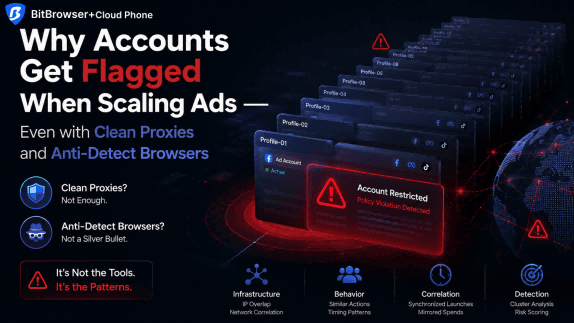
What platforms are running at volume is closer to pattern correlation. Three overlapping layers:
Behavioral layer. Accounts that follow the same action sequences — logging in at similar intervals, running identical campaign structures, pausing and resuming with the same timing, even interacting with the ad interface in the same order — create a behavioral signature. Individually, none of these actions looks wrong. Collectively, they form a recognizable pattern. Platforms have been training these models for years on exactly this kind of data.
Infrastructure layer. Even with separate proxy IPs, accounts sharing the same provider subnet, the same ASN, or the same residential pool segments will eventually overlap in ways that matter. Two accounts that never share an IP directly might still share network path characteristics that correlate them in the platform's infrastructure model. Browser environment parameters — screen resolution distributions, WebGL renderer strings, font sets — that come from the same anti-detect setup also create structural overlap even when fingerprint randomization is enabled.
Correlation layer. This is where it gets subtle. Correlation signals emerge from timing relationships between accounts that look like they're coordinated. Accounts that launch campaigns within the same hourly windows. Accounts that all pass the same warmup behaviors in the same sequence. Accounts where ad spend patterns mirror each other across profiles. None of this points to any single tool being broken. It points to a system being operated by a single actor at scale.
The system doesn't flag accounts because any one of these layers crossed a threshold. It flags them because the combination reached a risk score that justifies intervention.
Why Proxies and Anti-Detect Browsers Don't Solve This Alone
Both tools are genuinely useful — but they're solving a narrower problem than most people assume when deploying them at scale.
An anti-detect browser isolates browser-level fingerprint signals. It gives each profile a distinct canvas hash, a different navigator.userAgent, a unique WebGL signature. That's real isolation at the browser layer. What it doesn't do is isolate the behavioral patterns of whoever is operating those profiles, or the timing relationships between accounts, or the infrastructure-level correlations that come from how the proxies are distributed.
Similarly, a clean proxy provides a legitimate IP address. It doesn't create behavioral independence between accounts. It doesn't eliminate timing correlation. It doesn't prevent the platform from noticing that fifteen accounts all ran the same warmup sequence in the same order across three days.
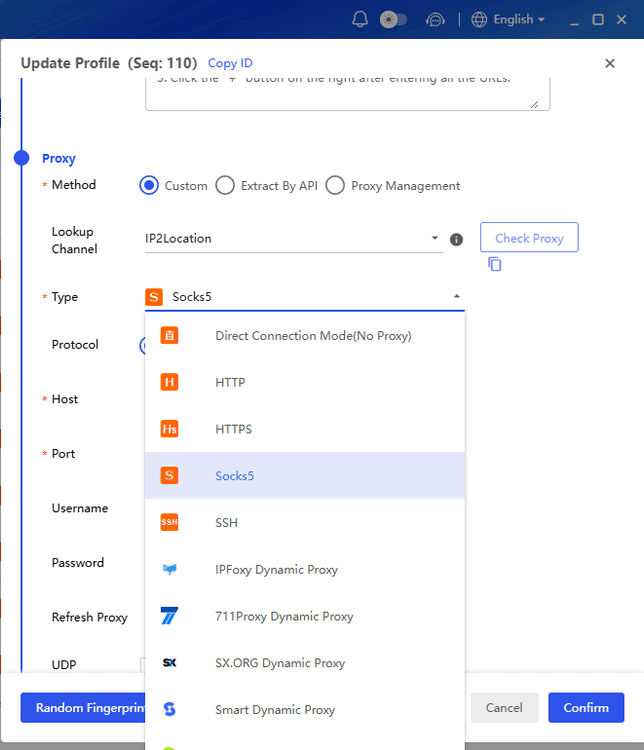
They are tools, not full isolation systems. The distinction matters because it changes how you think about the problem. If proxies were complete isolation, adding more proxies would solve scaling issues. It doesn't — and teams that discover this the hard way usually do so after significant account loss.
What the tools are missing is systemic diversity — variation in the behaviors, timing rhythms, launch sequences, and infrastructure patterns across accounts at the cluster level. That's not something a single tool can provide. It requires thinking about the account portfolio as a system and introducing genuine variation at every layer where correlation can form.
Building Independent Account Environments
For teams managing multiple advertising accounts, the first step is reducing direct technical linkage between profiles. This typically involves combining separate proxy resources with isolated browser environments.
Platforms can collect hundreds of browser-level signals, including device fingerprints, cookies, local storage data, WebGL information, screen parameters, and other environmental identifiers. If multiple accounts repeatedly appear from highly similar browser environments, correlation risk increases.
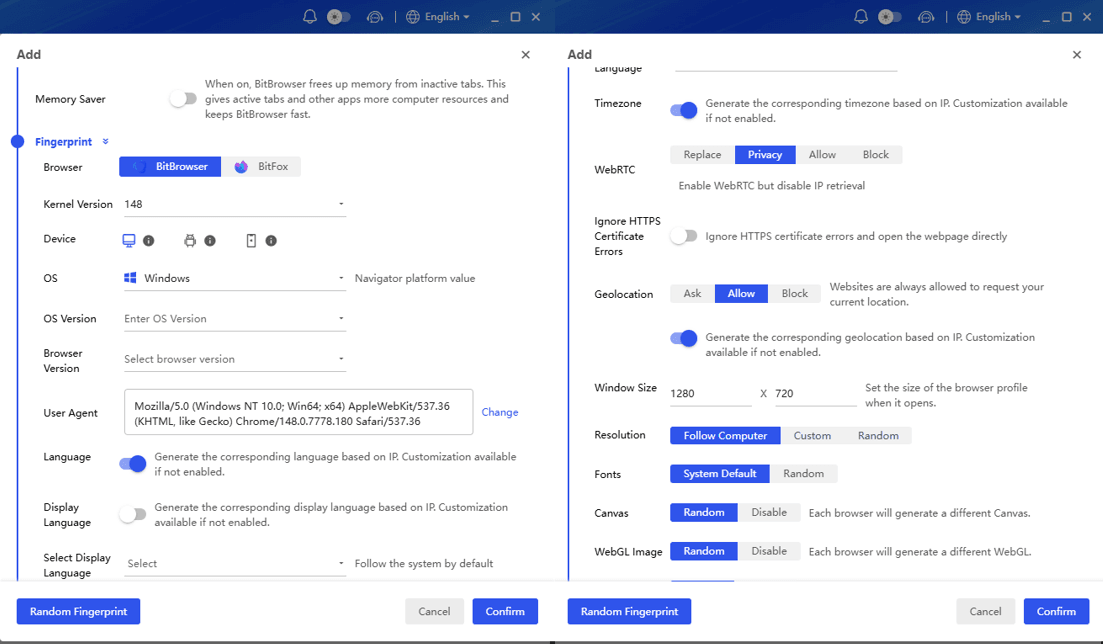
Tools such as BitBrowser are designed to address this challenge by creating independent browser profiles, each with its own fingerprint configuration, cookies, proxy assignment, and browsing environment. This helps reduce direct browser-level associations between accounts and allows operators to maintain greater separation between sessions.
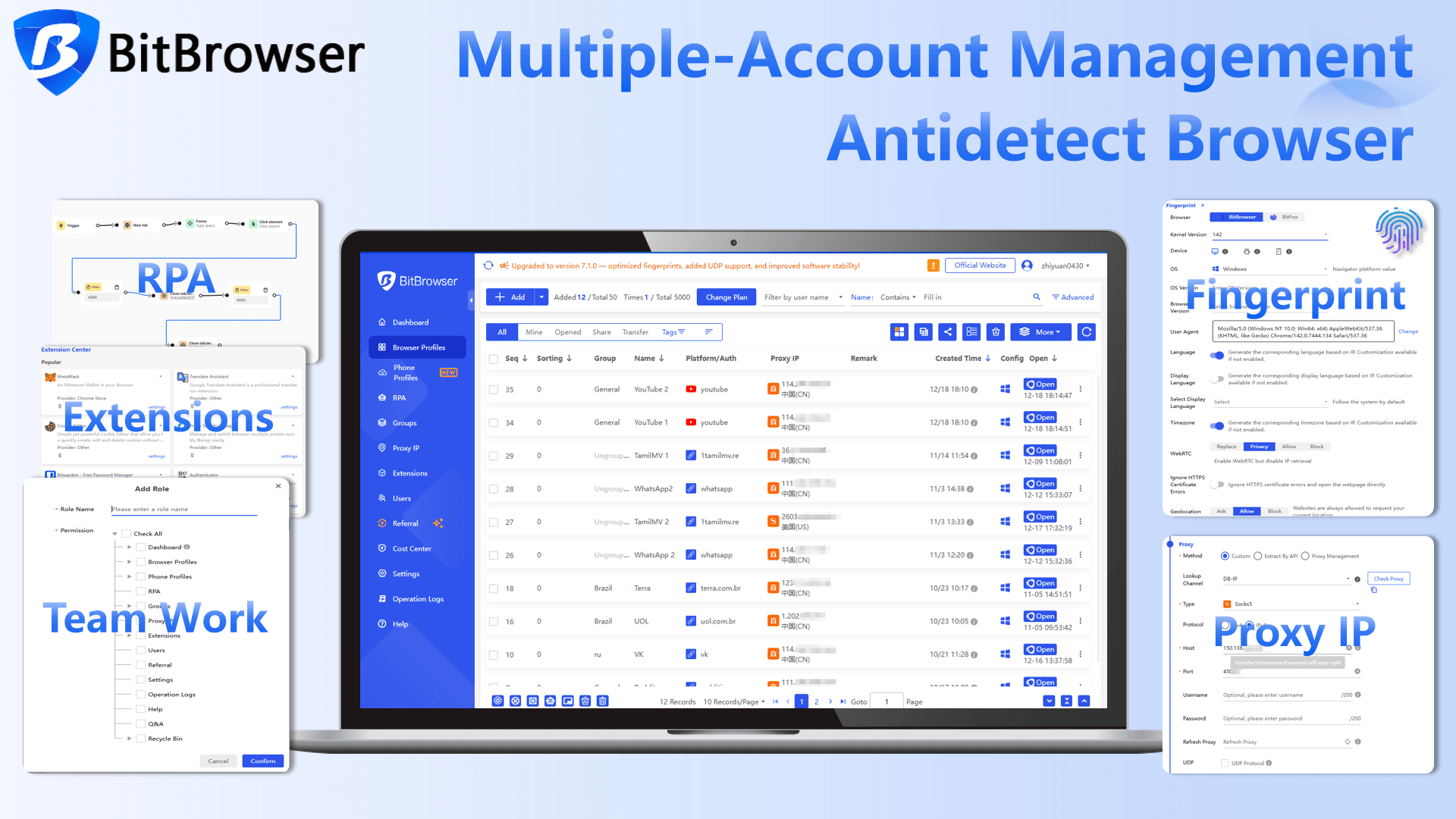
However, browser isolation should be viewed as a foundation rather than a complete solution. As account volume grows, behavioral patterns, timing correlations, and infrastructure relationships often become more important than individual browser fingerprints.
The Hidden Mechanism Behind Most Flagging Events
When accounts get flagged during scaling, the surface explanation usually points to one thing. The IP was reused. The fingerprint matched something on a blocklist. The account triggered a specific policy rule. These explanations feel satisfying because they're specific and actionable.
The actual mechanism in most cases is different. What triggered the flag was that system consistency became detectable.
This is worth unpacking. Every operational setup has a fingerprint at the system level — not in the browser sense, but in terms of how the whole operation behaves. What hours accounts are active. How campaigns are structured. What the spend ramp looks like. How accounts react to delivery changes. When you have three accounts, this fingerprint is invisible. When you have fifty accounts that all emerged from the same operational playbook, the fingerprint becomes the single most identifiable signal in your traffic.
Platforms have moved well past checking individual technical signals. The models that matter now are the ones looking at operational consistency across account clusters. IP correlation matters as an input to those models — but it's rarely the only input, and often not the decisive one.
This is why teams sometimes get flagged with genuinely clean infrastructure. The proxies are legitimate residential IPs, the browser profiles are properly randomized, the accounts have real warmup history — and the system still flags them. Because the flag isn't about any single technical indicator. It's about the recognizable shape of a scaled operation.
Scale Reveals What Testing Hides
There's a useful principle here that affects how teams should think about their testing setup: a clean test result is not evidence that your system will hold at scale. It's evidence that your system is not yet visible to cluster-level detection.
As volume grows, the number of behavioral repetitions in the dataset increases proportionally. A launch sequence that appears once looks like normal user behavior. The same sequence appearing across thirty accounts in the same weekly window looks like automation. The platform's models get better signal at higher volume — which means scaling doesn't just expose existing weaknesses, it actively creates conditions where previously invisible patterns become detectable.
This creates a counterintuitive dynamic. The teams that scale fastest often get flagged faster — not because they're less careful, but because they're generating more data for detection systems to work with. The flag isn't a failure of their tools; it's a consequence of reaching the detection threshold faster.
Common warning signs that correlation is building before accounts start getting flagged:
· Delivery becomes inconsistent across accounts in the same cluster
· Accounts that passed warmup cleanly start showing policy warnings without clear trigger events
· Spend patterns begin diverging from expected projections without obvious cause
· Multiple accounts face review simultaneously rather than individually
When several of these appear together, the issue is almost never at the individual account level. The cluster is generating a pattern that the platform has started scoring.
What Infrastructure Stability Actually Contributes
At the scale where cluster detection becomes relevant, the infrastructure question shifts from "are my proxies clean?" to "are my IP environments genuinely independent?"
The difference matters. Clean proxies from the same pool can still correlate at the network level — same ASN, adjacent IP ranges, similar usage patterns on the carrier side. Genuine independence requires that accounts in the same portfolio are drawing their network identity from environments that don't share structural characteristics in ways the platform can model.
This is part of why mobile carrier-based IP environments have become more relevant for teams operating at scale. Mobile IPs rotate through real carrier infrastructure, carry genuine device and network context, and distribute across IP ranges that don't exhibit the clustering patterns common in datacenter or even many residential proxy setups. They don't eliminate the behavioral and correlation problems — nothing at the IP layer does that — but they reduce one significant input into the correlation model.
Proxies.sx operates in this space as an AI-oriented proxy infrastructure layer, built on a proprietary modem farm and real-device SDK network with daily IP rotation from live carrier environments. For teams running multi-account operations where independent session environments matter, the architecture differs from standard residential reseller setups in ways that affect the correlation surface — particularly at the IP and network context layer. New users can apply promo code WELCOME15 for 15% off the first order.
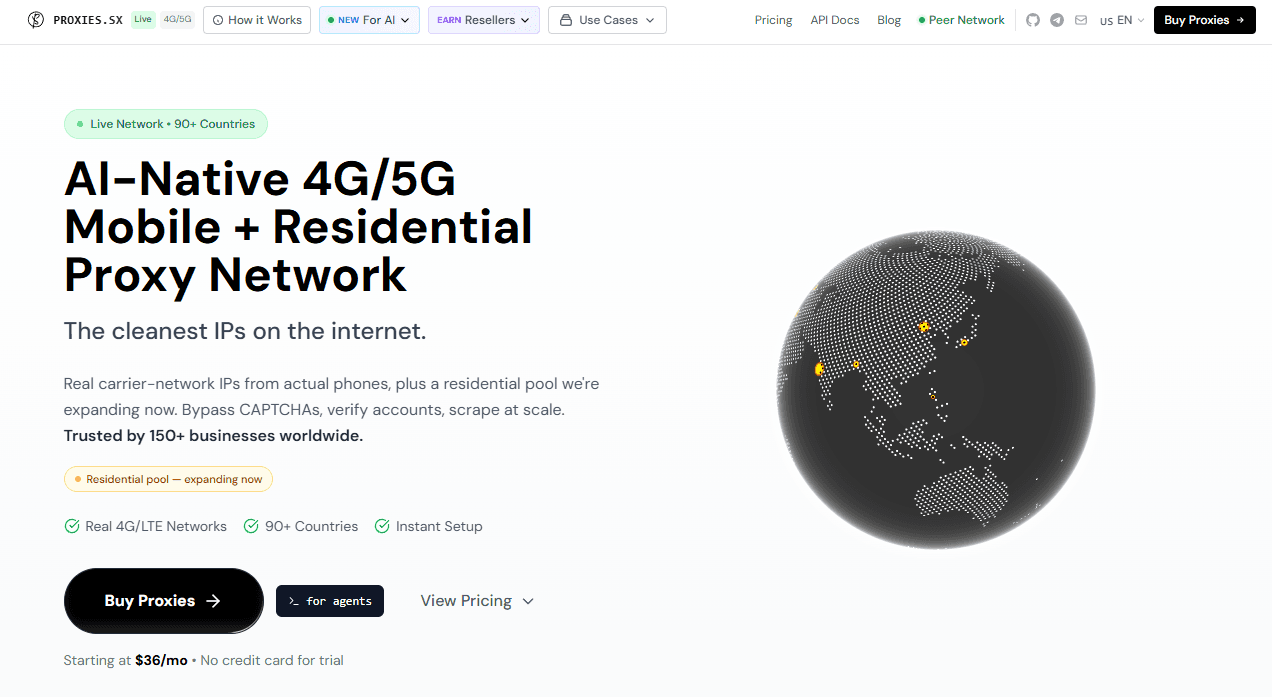
What stable mobile IP environments contribute isn't magic — it's one less structural correlation vector. The behavioral and timing layers still require independent operational discipline.
A Practical Audit for Scaled Operations
Before assuming the problem is a flagged account, check whether the system as a whole is generating detectable patterns:
IP layer
· Are accounts drawing from the same proxy provider subnet or ASN?
· How much IP range overlap exists between profiles operating in the same geo?
· Are IPs rotating on timing patterns that correlate across accounts?
Behavioral layer
· Do all accounts follow the same warmup sequence in the same order?
· Are campaign launch windows clustered in the same daily hours?
· Do spend ramp patterns look similar across the portfolio?
Environment layer
· Are browser profiles generating fingerprint distributions that cluster around the same parameter ranges?
· Are device environments — resolution, GPU, OS — distributed across realistic variation, or concentrated in a narrow band?
· Does the technical setup look like a set of independent users, or a system with a recognizable configuration?
Operational layer
· Is the same person or team running all accounts on the same schedule?
· Do accounts respond to platform events (delivery drops, budget changes) in synchronized ways?
· What does the account portfolio look like as a behavioral unit, not as individual profiles?
None of these questions have perfect answers. The goal isn't elimination of all correlation — that's operationally impossible at real scale. The goal is understanding where the correlation surface is concentrated, and whether there are structural patterns that are generating detection risk unnecessarily.
FAQ
Why do accounts only get flagged at scale, not during testing?
Detection systems analyzing cluster-level behavior need a cluster to analyze. During testing, the account set is too small to generate reliable pattern signals. Scaling provides the data volume that makes behavioral and infrastructure correlations visible to the models that actually trigger flags.
Do proxies prevent account bans?
They reduce one category of risk — IP-based identification — without addressing behavioral or correlation-based detection. Clean proxies in a scaled operation with uniform behavioral patterns still generate significant detection risk. The IP layer and the behavioral layer require separate approaches.
What is account correlation, and why does it matter?
Account correlation is the degree to which multiple accounts share detectable characteristics across any signal layer — IP ranges, behavioral sequences, launch timing, spend patterns, infrastructure configurations. At low correlation, accounts look like independent users. At high correlation, they look like a single operation. Detection systems score correlation at the cluster level.
Can anti-detect browsers fully prevent detection at scale?
At the browser fingerprint level, properly configured anti-detect browsers provide real isolation. They don't address behavioral synchronization, infrastructure-level correlations, or operational patterns. Those require independent operational approaches for each account, not just independent browser environments.
What actually causes instability when scaling, if the individual setup is clean?
Usually: the cluster has become visible as a system. Individual accounts test clean; the group as a unit generates a pattern. This is a systems problem, not a tooling problem, and it responds to systemic changes in how accounts are operated — not to swapping one tool for another.
Is there a way to know in advance that scaling will trigger detection?
Not with certainty. But teams that audit their operational consistency before scaling — checking for behavioral uniformity, infrastructure clustering, timing synchronization — tend to encounter fewer sudden flagging events. The signal is usually present before the actual flag; it just requires looking at the portfolio level rather than the account level.
Where This Leaves Most Teams
The framing of "clean proxies plus anti-detect browser equals safe scaling" was never entirely accurate — it was a simplification that held reasonably well at low volume and stopped holding as detection models matured.
What's actually required is something closer to operational hygiene at the system level. Not just clean individual components, but genuine diversity in how accounts behave, when they act, what infrastructure they draw on, and how their portfolios look as behavioral units to an outside observer. This is harder to achieve than swapping proxy providers or upgrading browser configurations, because it requires thinking about the operation as a whole rather than as a collection of individual setups.
The tools — anti-detect browsers, mobile proxy infrastructure, account management workflows — are inputs to that system. They become effective when the system around them is designed with correlation reduction in mind. Without that design, they're solving the wrong problem with genuinely good technology.
Teams that figure this out don't necessarily scale slower. They scale more durably.

 Multi-Account Management
 Prevent Account Association
 Multi-Employee Management
Recommended
See More