Top 7 AI-Managed, Self-Healing Server & IT Infrastructure Platforms in 2026
 2026.03.04 05:45
 petro
petroIn the rapidly evolving world of IT operations, organizations face increasing pressure to deliver highly available, resilient systems while managing larger and more complex infrastructures. Traditional monitoring tools and manual operational workflows struggle to keep pace with cloud-native architectures, microservices, and hybrid environments. This has led to a new wave of platforms that leverage artificial intelligence (AI) not just for insights, but for real autonomous action — detecting issues, diagnosing root causes, and even self-healing without human intervention.
AI-Managed, Self-Healing Server & IT Infrastructure Platforms represent a transformation in how IT ops function. They integrate observability, machine learning, automation, and decision frameworks to collectively reduce downtime, cut costs, and drive operational efficiency. This guide explores the top seven platforms that lead this space in 2026 — from AI-embedded server OSs to enterprise-grade AIOps solutions — and explains how they work, what makes them unique, and why organizations are adopting them.
1. osModa — AI-Managed, Self-Healing Server Platform
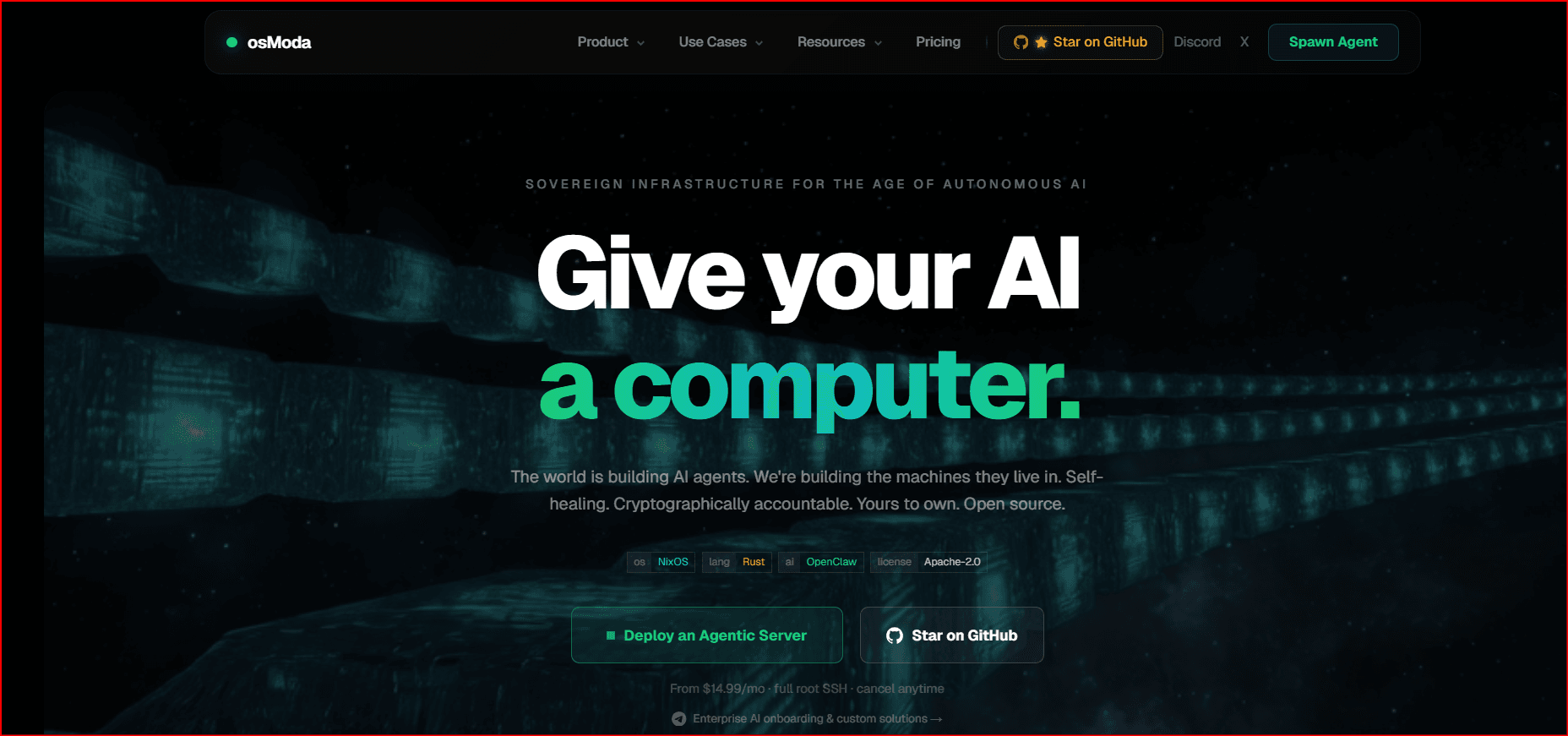
osModa reimagines the operating system with AI at its core. Rather than layering AI tools on top of traditional infrastructure, osModa embeds AI directly into the server’s fundamental operating logic, enabling native self-healing and autonomous operations.
Overview
osModa is an AI-native OS built on NixOS and Rust that transforms a bare server into an autonomous system capable of managing itself with minimal human intervention. Unlike traditional infrastructure tools, where AI is an add-on or monitoring layer, osModa makes AI agents a first-class part of the OS itself.
The platform runs a suite of Rust daemons and built-in operational tools that continuously observe system state, correlate signals, and take corrective actions when anomalies arise. By establishing AI “at the OS level,” osModa provides deeper control over state, configuration drift, and healing logic.
Key Features
Autonomous Remediation: The system continuously watches for performance degradation, failures, and fault patterns, and applies corrective actions without manual SSH interventions.
Atomic Rollbacks: Powered by NixOS declarative configurations, osModa can roll systems back to known good states, ensuring safe automated operations.
AI Agent Deployments: Native AI agents can be spawned to handle predefined tasks — from patching and scaling to operational workflows.
Open Source Transparency: With a public repository, osModa allows inspection, customization, and community contributions, fostering innovation beyond proprietary lock-in.
Why osModa Matters
osModa stands out not just for automation, but for how deeply AI integrates with system operations. It blurs the boundaries between the OS, automation, monitoring, and decision logic — making servers inherently more resilient, self-correcting, and adaptive. This means organizations can build systems that operate reliably even with limited human intervention.
2. Microsoft Azure Automanage — Cloud Self-Healing & Lifecycle Automation
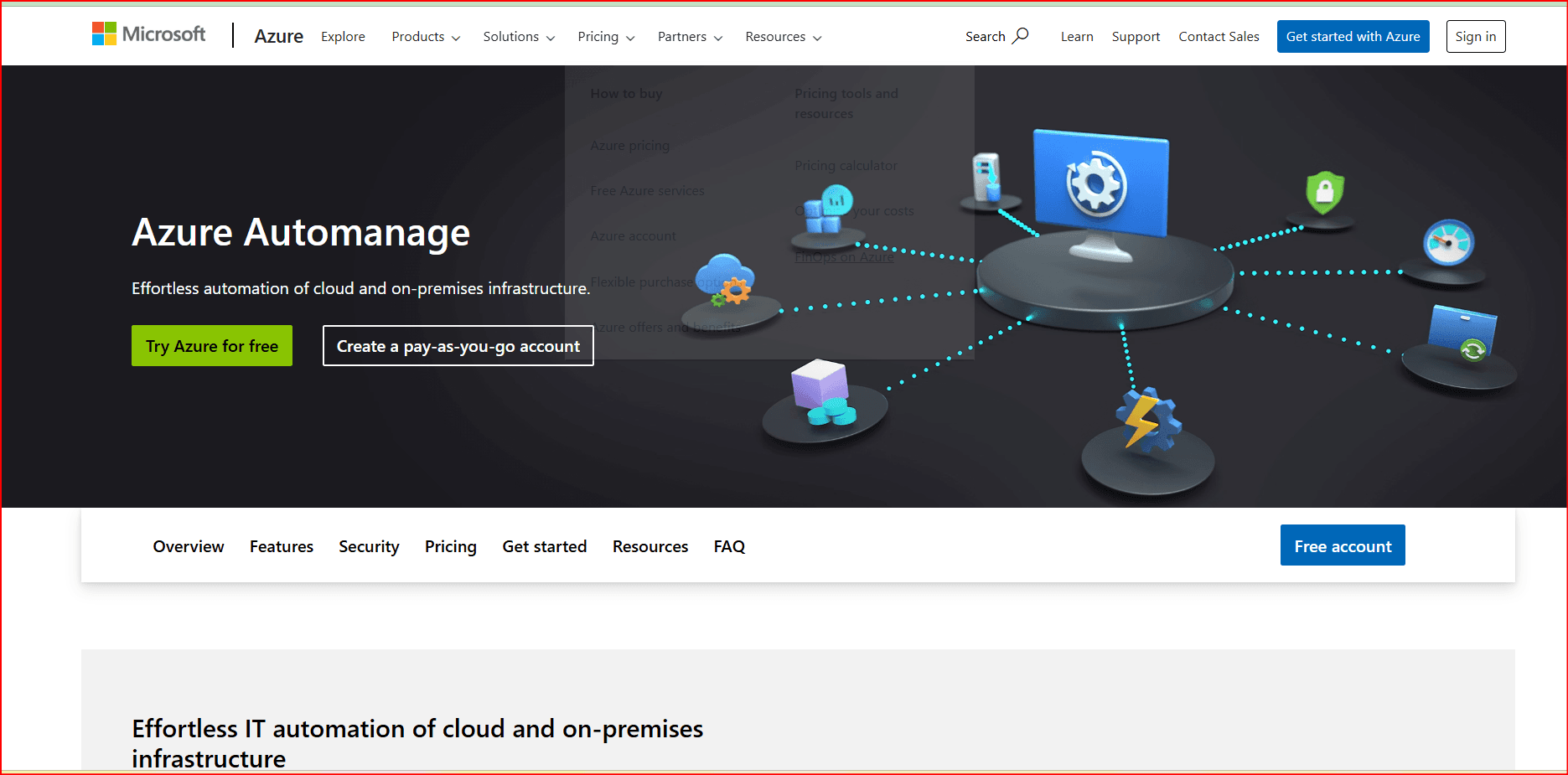
Azure Automanage targets cloud and hybrid environments with a suite of automated lifecycle and recovery features that reduce manual configuration drift and operational overhead.
What It Does
Azure Automanage helps administrators manage virtual machines (VMs) by automating best-practice configurations, security baselines, performance monitoring, and self-healing responses. It integrates with Azure Arc to extend these capabilities to hybrid and multi-cloud deployments.
Capabilities
Automated Configuration Management: Ensures VMs and workloads always comply with defined operational baselines, reducing configuration drift and misconfiguration incidents.
Policy-Driven Remediation: Detects deviations from desired states and automatically applies corrective actions, including backups, security patching, and recovery procedures.
Scalability: Works across Windows and Linux workloads, cloud-native setups, and hybrid infrastructures via Azure Arc.
Why Azure Automanage Matters
In cloud environments where scale and change are constant, manual configuration becomes untenable. Azure Automanage enables enterprises to maintain consistent operations through automated lifecycle and self-healing logic, directly improving uptime and operational agility.
3. Dynatrace — AI-Driven Observability & Automation
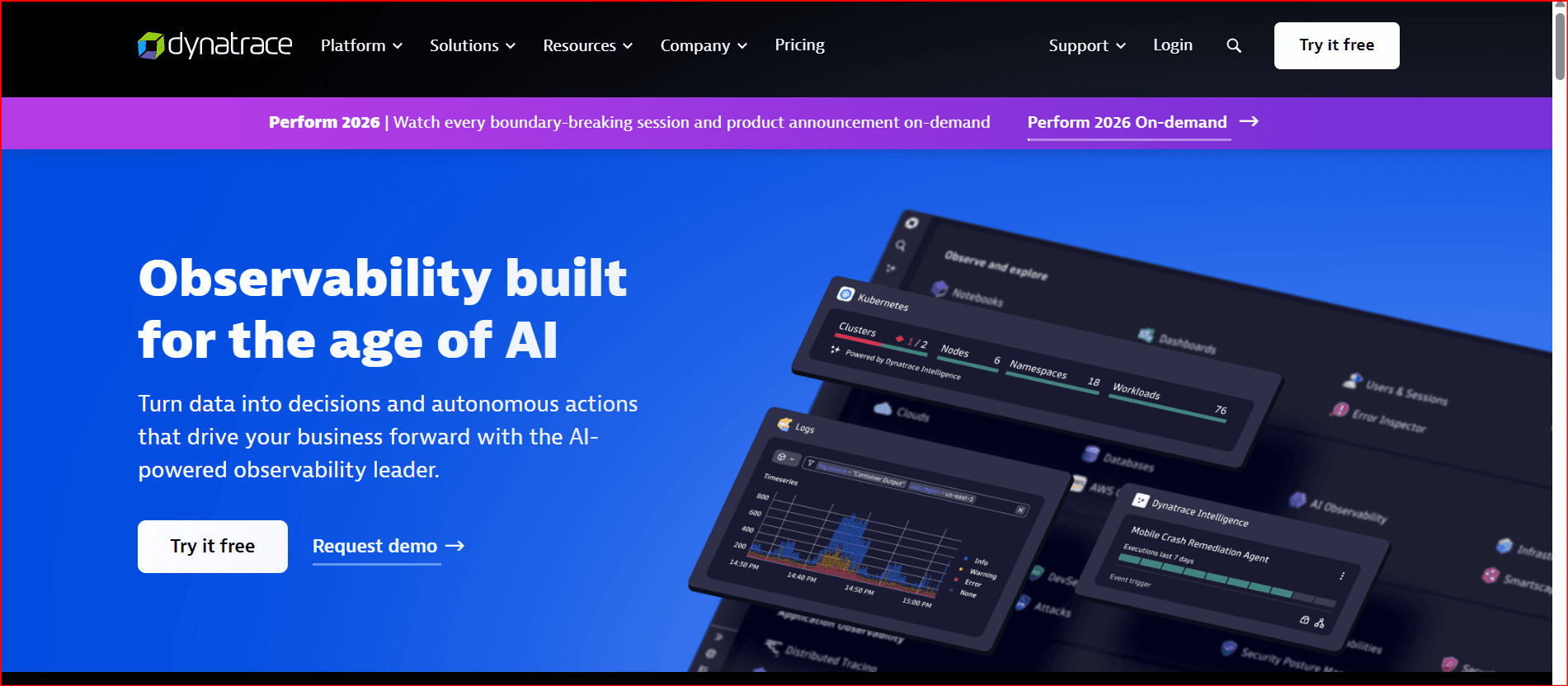
Dynatrace is a major player in the AIOps space, not just for monitoring, but for leveraging AI to drive actionable automation across distributed and cloud environments.
Core Capabilities
Dynatrace’s platform uses a proprietary AI engine to discover and monitor applications, infrastructure, and microservices. It analyzes telemetry and performs root cause analysis — and importantly, it can automatically trigger remediation workflows or alerts before issues escalate.
Capabilities in Focus
Causal AI: Dynatrace’s causal inference engine identifies not just anomalies, but the likely causes of problems, enabling targeted response logic.
Automated Incident Response: The platform integrates automated workflows that can restart services, adjust configurations, or trigger runbooks based on predefined logic.
Deep Observability: Covers cloud, Kubernetes, hybrid setups, and legacy environments from a unified pane of glass.
Why Dynatrace Matters
Dynatrace’s ability to correlate telemetry, perform root cause analysis, and automate corrective actions makes it a powerful tool for organizations that require resilient, self-healing operations across complex IT ecosystems.
4. Cast AI — Kubernetes & Cloud Workload Automation
Cast AI focuses on Kubernetes and cloud workload automation, using AI to optimize resource utilization, scale environments intelligently, and enhance resilience.
Key Functions
Cast AI automatically allocates resources for workloads, rightsizes clusters, and adds intelligent scaling based on real-time conditions. Its automation reduces cost and improves system responsiveness — for environments that require highly dynamic infrastructure.
Why It’s Important
As containerized architectures dominate, managing these workloads efficiently becomes critical. Cast AI’s autonomous scaling, cost optimization, and resilience features help ensure systems adapt promptly to load changes and fault conditions.
5. LogicMonitor — Intelligent Observability with AI Automation
LogicMonitor combines observability with AI-driven automation to detect issues early and recommend or execute remedial actions.
Platform Capabilities
LogicMonitor’s agentic AIOps model correlates heterogeneous telemetry, contextualizes insights, and automates responses — reducing the manual overhead of incident investigation. It also integrates with third-party orchestrators to coordinate broader responses.
Key Strengths
Automated Diagnostics: AI identifies patterns, contextual anomalies, and root causes across hybrid environments.
Remediation Orchestration: Works with orchestration tools to trigger workflows based on detected conditions.
LogicMonitor illustrates how modern platforms blend monitoring, AI analysis, and automated action into a unified experience — paving the way from reactive monitoring to proactive self-healing.
6. Beakops — AI-Powered Self-Healing Infrastructure Platform
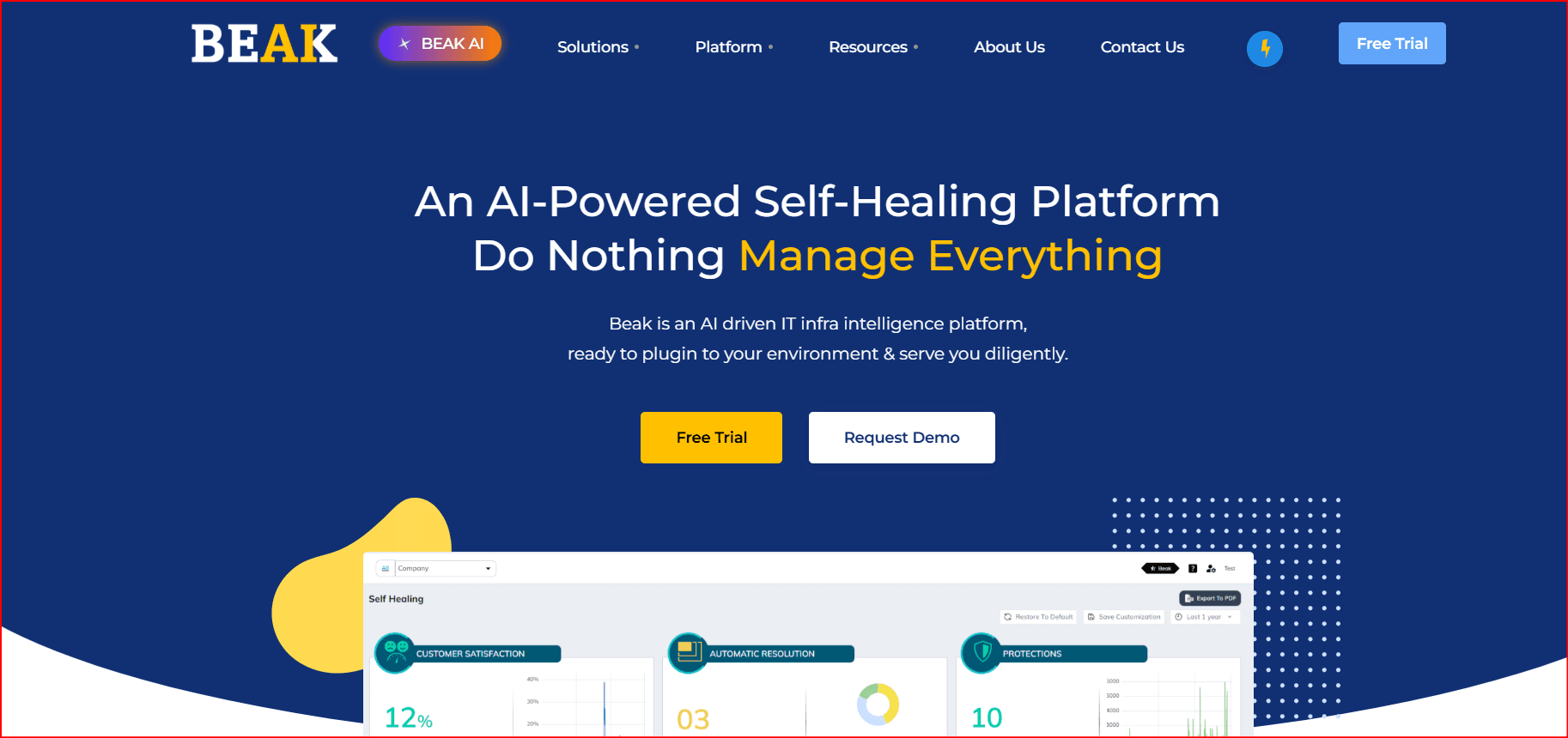
Beakops brings self-healing capabilities to infrastructure management by leveraging AI to monitor, detect, and resolve issues across complex environments.
Platform Overview
Beakops plugs into existing infrastructures, aggregates system data, and applies AI intelligence to surface root causes and apply automated remediation. Its aims include vulnerability detection, patching, script automation, and reducing manual oversight.
Why Beakops Matters
Beakops stands out for its self-healing automation across security, maintenance, and operations — making it suitable for organizations seeking a comprehensive autonomous operations layer that goes beyond pure observability.
7. Emerging AIOps & Automation Frameworks
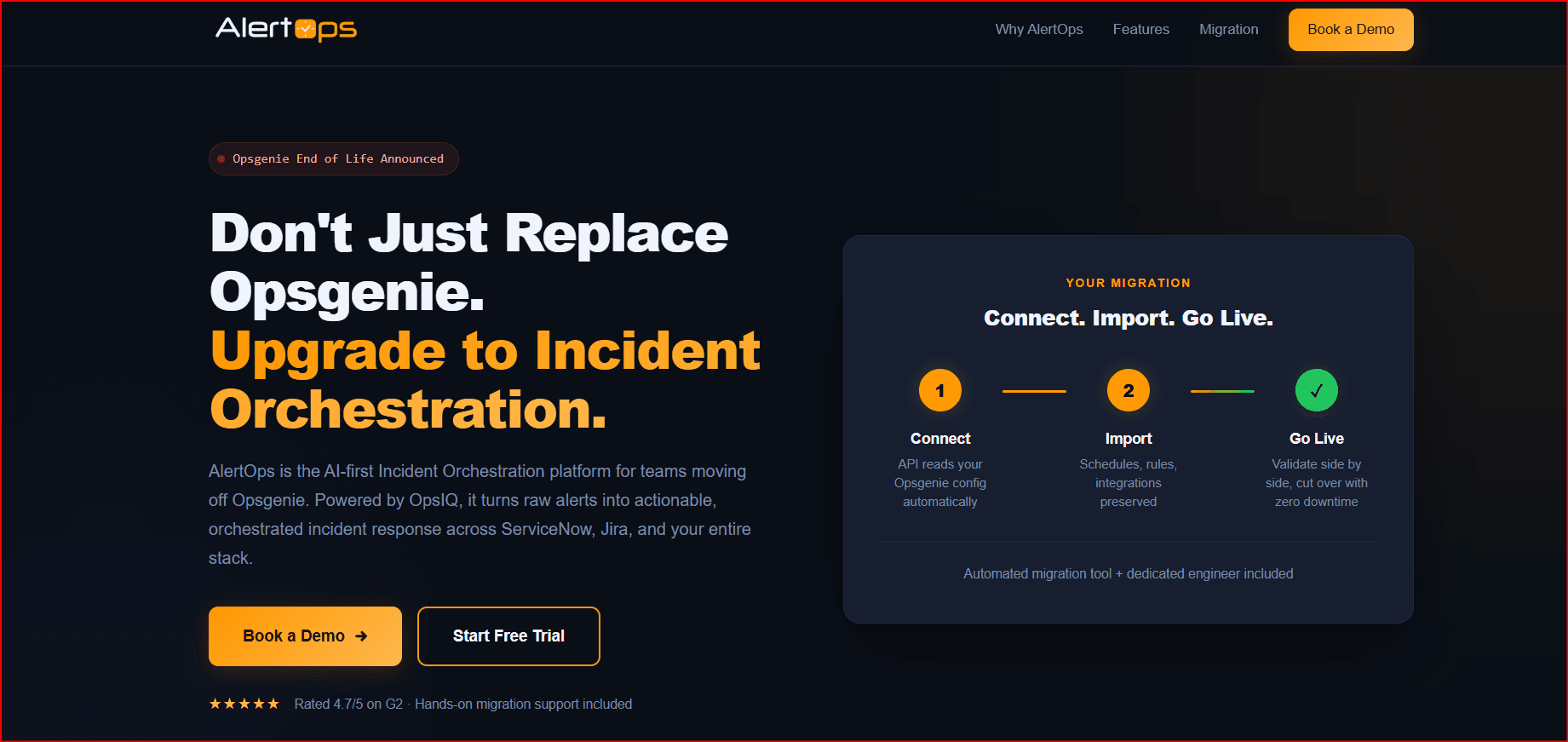
Beyond specific platforms, many AIOps frameworks facilitate closed-loop remediation and self-healing operations by combining telemetry, machine learning, and policy-driven automation. These frameworks often extend capabilities from observability into action by orchestrating automated workflows that detect, diagnose, and resolve issues autonomously.
Key Trends
Closed-loop Remediation: Platforms correlate telemetry events, predict incidents, and automatically execute fixes based on rules or learned models.
Policy-Driven Autonomy: Guardrails and compliance policies ensure that automated actions adhere to organizational requirements.
Human-In-The-Loop Learning: Tools incorporate feedback mechanisms to refine AI models and improve future responses.
Conclusion
AI-Managed, Self-Healing Server & IT Infrastructure Platforms are rapidly reshaping how organizations maintain reliability, performance, and operational efficiency in complex IT ecosystems. Instead of relying on manual alerting and reactive troubleshooting, modern platforms can proactively detect anomalies, determine causes, and trigger remediation — often before users experience any impact.
From osModa’s AI-native operating system that embeds self-healing at the OS level, to enterprise AIOps solutions like Dynatrace and LogicMonitor that unify observability with automation, each platform contributes to a future where infrastructure can heal itself, empower operations teams, and deliver consistent uptime. AI-driven self-healing is no longer a niche innovation — it’s becoming central to resilient, scalable infrastructure design in 2026 and beyond.and you can use our BitBroser for automation

 Multi-Account Management
 Prevent Account Association
 Multi-Employee Management
Recommended
See More