Mobile Proxies vs Static Proxies: What’s the Difference and Which Should You Choose?
 2026.03.01 07:46
 petro
petroMobile Proxies vs Static Proxies: Complete Comparison Guide
When choosing a proxy, one of the most common questions is:
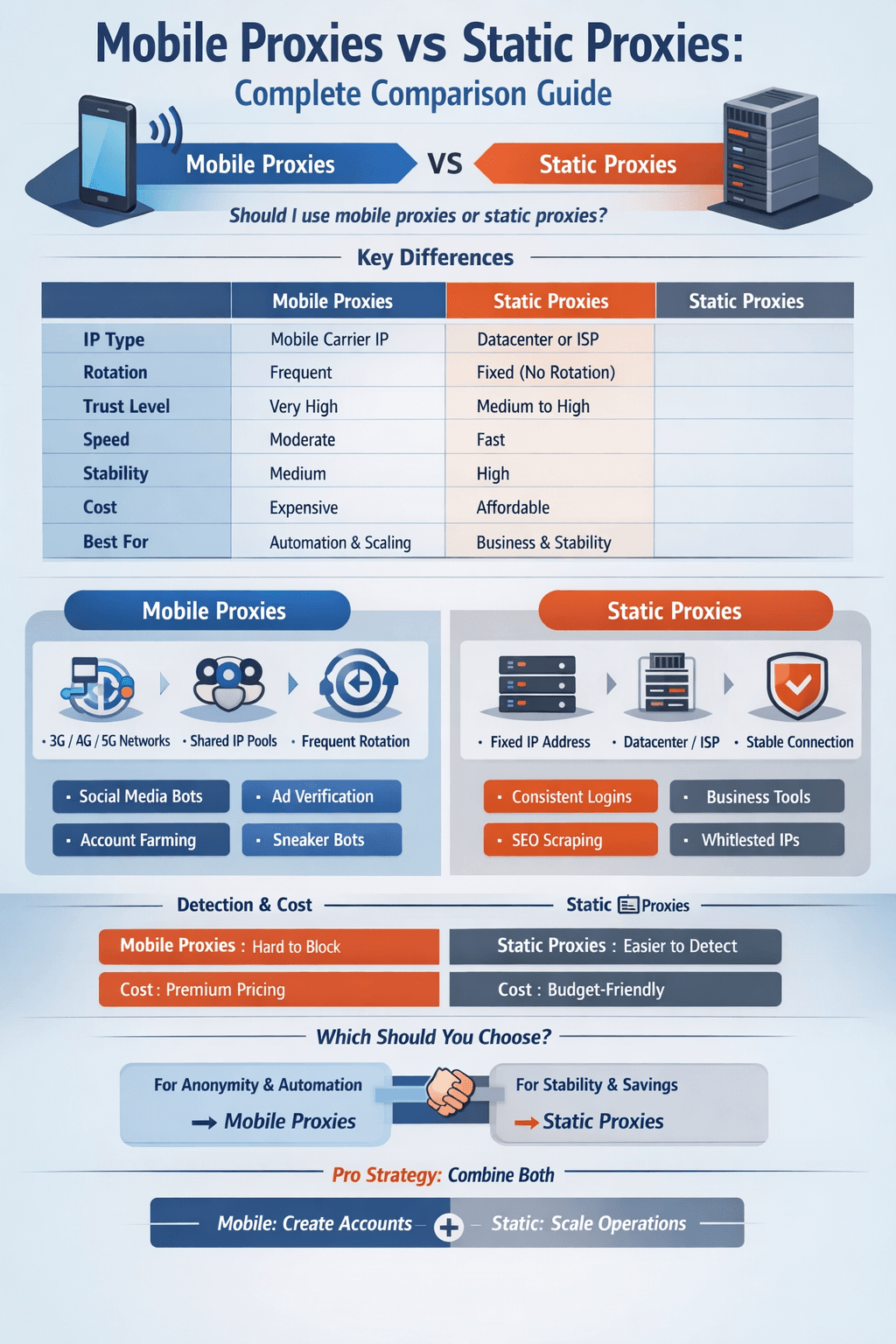
Should I use mobile proxies or static proxies?
Both have powerful use cases — but they serve very different purposes. In this guide, we’ll break down the differences in terms of:
- IP type
- Rotation behavior
- Detection resistance
- Stability
- Speed
- Pricing
- Best use cases
What Are Mobile Proxies?
Mobile proxies route your traffic through real mobile devices connected to cellular networks (3G/4G/5G).
Your IP address comes from a mobile carrier such as:
- Verizon
- AT&T
- Vodafone
Key Characteristics
- IPs belong to real mobile carriers
- IPs are usually shared among many users
- Frequent automatic rotation
- Extremely high trust score
Why Mobile Proxies Are Powerful
Mobile IPs are considered high-trust because thousands of real users share the same carrier NAT IP pools. Platforms are more tolerant of behavior coming from mobile networks.
This makes them very effective for:
- Social media automation
- Ad verification
- Account farming
- Sneaker bots
- High-risk automation
What Are Static Proxies?
Static proxies provide a fixed IP address that does not change.
They can be:
- Datacenter proxies
- Static residential proxies
- Dedicated ISP proxies
Key Characteristics
- One consistent IP
- More stable connection
- Often dedicated (not shared)
- No automatic rotation
Static proxies are ideal when you need:
- Stable sessions
- Whitelisted IP access
- Long-term login consistency
Core Differences: Mobile vs Static Proxies
Feature | Mobile Proxies | Static Proxies |
IP Type | Mobile carrier IP | Datacenter or ISP |
Rotation | Frequent | None (fixed IP) |
Trust Level | Very high | Medium to high |
Speed | Moderate | Usually faster |
Stability | Medium | High |
Cost | Expensive | Affordable |
Best For | Automation & scaling | Business & stable access |
Detection Resistance
Mobile Proxies
- Hardest to block
- Shared carrier IP pools
- Platforms avoid banning mobile IP ranges aggressively
Static Proxies
- Easier to detect (especially datacenter IPs)
- Can be flagged if overused
- ISP static proxies are safer than pure datacenter IPs
Speed & Performance
- Static datacenter proxies are usually the fastest.
- Mobile proxies are slower because traffic passes through cellular networks.
If performance is critical (e.g., scraping large datasets), static proxies often win.
Cost Comparison
- Mobile proxies → Premium pricing
- Static proxies → Budget-friendly
Mobile proxy providers charge more due to limited IP availability and hardware infrastructure.
Best Use Cases
Use Mobile Proxies If You:
- Run social automation tools
- Manage multiple accounts
- Need maximum anonymity
- Operate in high-risk environments
Use Static Proxies If You:
- Need consistent login sessions
- Access business dashboards
- Whitelist IPs in SaaS tools
- Run SEO or scraping tools at scale
Which One Should You Choose?
It depends on your goal:
- For stealth & anti-detection → Mobile proxies
- For stability & cost-efficiency → Static proxies
- For business workflows → Static ISP proxies
- For aggressive automation → Mobile proxies
Many professionals combine both:
Mobile proxies for account creation
The Role of BitBrowser in Proxy Setup
BitBrowser is an anti-detect multi-profile browser that:
Creates isolated browser fingerprints
Separates cookies and storage
Assigns one proxy per profile
Prevents cross-account contamination
How It Works
Each BitBrowser profile:
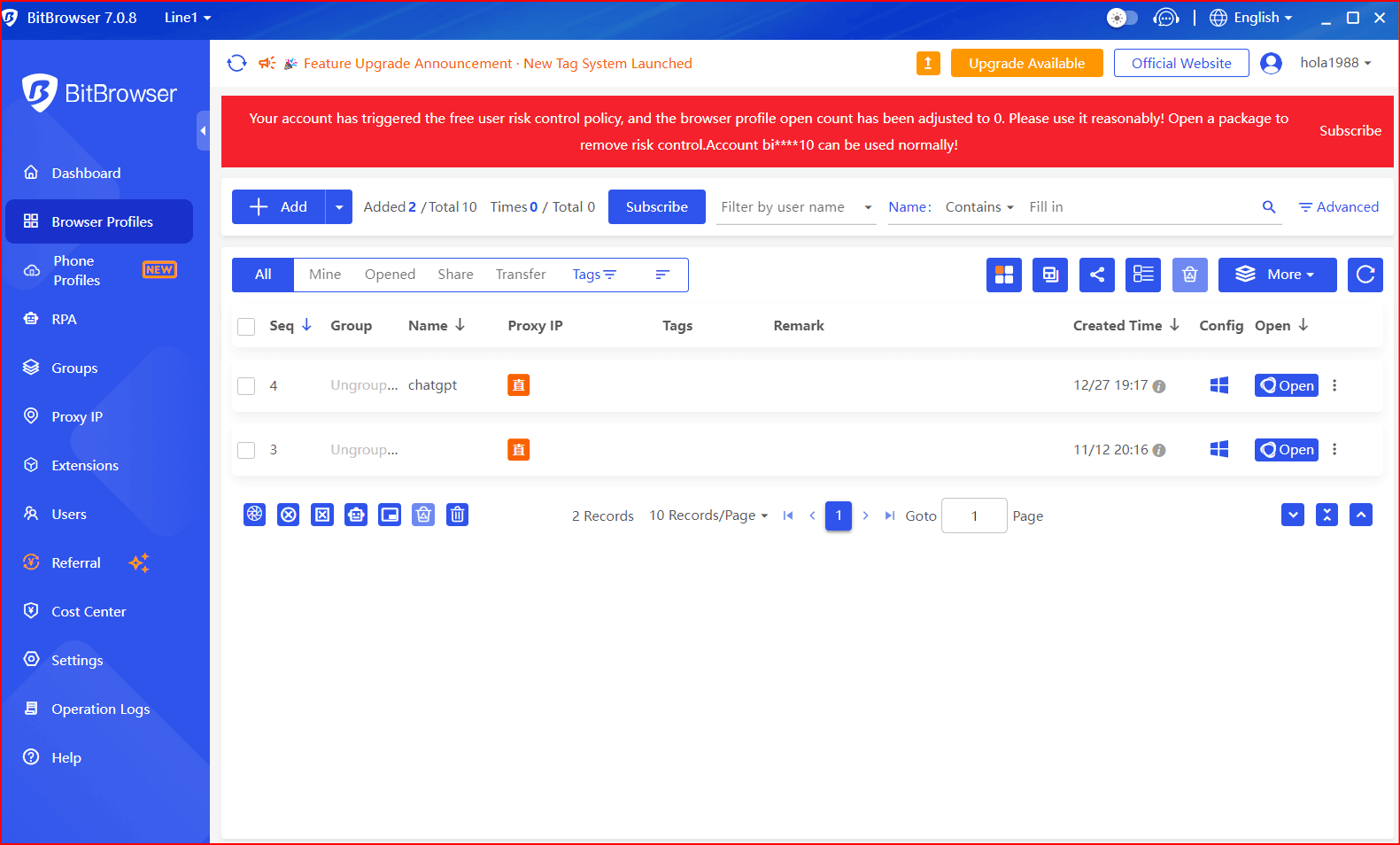
Has its own fingerprint
Uses a unique proxy
Stores independent sessions
Acts like a completely different device
This means:
Mobile Proxy + BitBrowser profile = Maximum stealth
Static Proxy + BitBrowser profile = Clean long-term stabilityStatic proxies for daily management
Final Verdict
There is no “better” option — only the right tool for the right job.
If your priority is trust and low ban rates, mobile proxies dominate.
If your priority is stability, speed, and lower cost, static proxies are the smarter choice.

 Multi-Account Management
 Prevent Account Association
 Multi-Employee Management
Recommended
See More