How to Get Crypto Airdrops in 2026: A Practical Guide for Beginners
 2026.03.28 02:25
 YT.Shi
Introduction
Crypto airdrops are often described as a way to earn free tokens, which is why they attract so many beginners. At first glance, the process seems simple. You complete a few tasks, connect a wallet, and wait for rewards to arrive.
In reality, things are more nuanced. Some airdrops are worth your time and can lead to meaningful rewards. Others offer very little value or never distribute tokens at all. There are also risks, especially if you interact with unknown projects without proper precautions.
This guide walks through how crypto airdrops actually work in 2026, how to find legitimate opportunities, and how to approach them in a way that is both efficient and safe.
What Is a Crypto Airdrop
A crypto airdrop is a distribution of tokens by a blockchain project to users. These tokens are usually sent directly to a wallet address after certain conditions are met.
Common participation requirements include:
● Connecting a wallet to a platform
● Using a product or decentralized application
● Following social media accounts
● Joining community channels such as Telegram or Discord
● Holding a specific token at a snapshot time
The purpose behind airdrops is not random generosity. Projects use them to attract users, reward early supporters, and build activity within their ecosystem. In many cases, airdrops are part of a broader growth strategy rather than a one time giveaway.
Why Crypto Projects Distribute Free Tokens
Understanding why airdrops exist helps you identify which ones are more likely to be valuable.
1. Marketing and awareness
Launching a new crypto project is competitive. Airdrops help projects reach a wider audience quickly. Users who receive tokens are more likely to explore the platform and share it with others.
2. Community building
Strong communities are essential in crypto. By distributing tokens, projects encourage users to participate, engage, and stay involved over time.
3.Token distribution and decentralization
Some protocols need tokens to be widely distributed for governance or utility purposes. Airdrops help achieve a more decentralized user base.
When you see an airdrop, it is useful to ask what the project gains from it. If the incentive structure makes sense, the opportunity is more likely to be legitimate.
4. Network Testing and Feedback
Many projects use airdrops to encourage people to try out their beta versions before the official launch. This helps developers test the system under real world conditions and find technical bugs early.
By rewarding these early testers with tokens, the project can ensure the platform is stable and secure for everyone when it fully opens.
Types of Crypto Airdrops You Should Know
Not all airdrops require the same level of effort and not all offer the same potential rewards. Understanding these categories helps you allocate your time toward the most promising opportunities.
1. Standard airdrops
These involve simple marketing tasks such as submitting a wallet address or following official social accounts. While they are the easiest to join, they often provide smaller rewards because the low barrier to entry attracts a massive number of participants.
2. Holder airdrops
These reward users who maintain a balance of specific cryptocurrencies in their non-custodial wallets. Eligibility is usually determined by a snapshot taken at an unannounced time. If you hold the required assets during the snapshot, tokens are typically sent directly to your wallet or made available through a claim portal.
3. Bounty airdrops
These require active contribution to the project’s growth. Tasks are often more demanding and include writing technical articles, creating video tutorials, or translating documentation for international communities. Because these actions provide real value to the developers, the resulting rewards are often more substantial.
4. Interaction and retroactive airdrops
This category has become the gold standard for high value distributions in 2026. Users earn eligibility by actively using a project’s products during its early stages. Common activities include bridging assets across chains, swapping tokens on decentralized exchanges, or testing new features on a testnet. Many of the most successful airdrops in recent history have rewarded users based on their consistent on chain activity.
5. Points based and incentive programs
Many modern projects now use transparent points systems to track user engagement before a token launch. You can earn points by providing liquidity, completing daily check ins, or referring other active users. These programs offer a clear roadmap to eligibility and allow participants to see their potential share of the future airdrop in real time.
6. Exclusive airdrops
Some distributions are strictly limited to a project’s most loyal supporters or early adopters. This might include long term NFT holders, active governance voters, or users who participated in private beta testing. While these are the most difficult to access, they frequently offer the most significant financial rewards due to the limited number of eligible participants.
How to Get Crypto Airdrops Step by Step
Getting started with airdrops is straightforward if you follow a structured and secure approach.
1. Stay informed about new opportunities
Finding airdrops early is one of the most important factors for maximizing rewards. You can do this by:
● Following crypto news websites and newsletters
● Tracking project founders and lead developers on X
● Joining Discord and Telegram communities for real time alerts
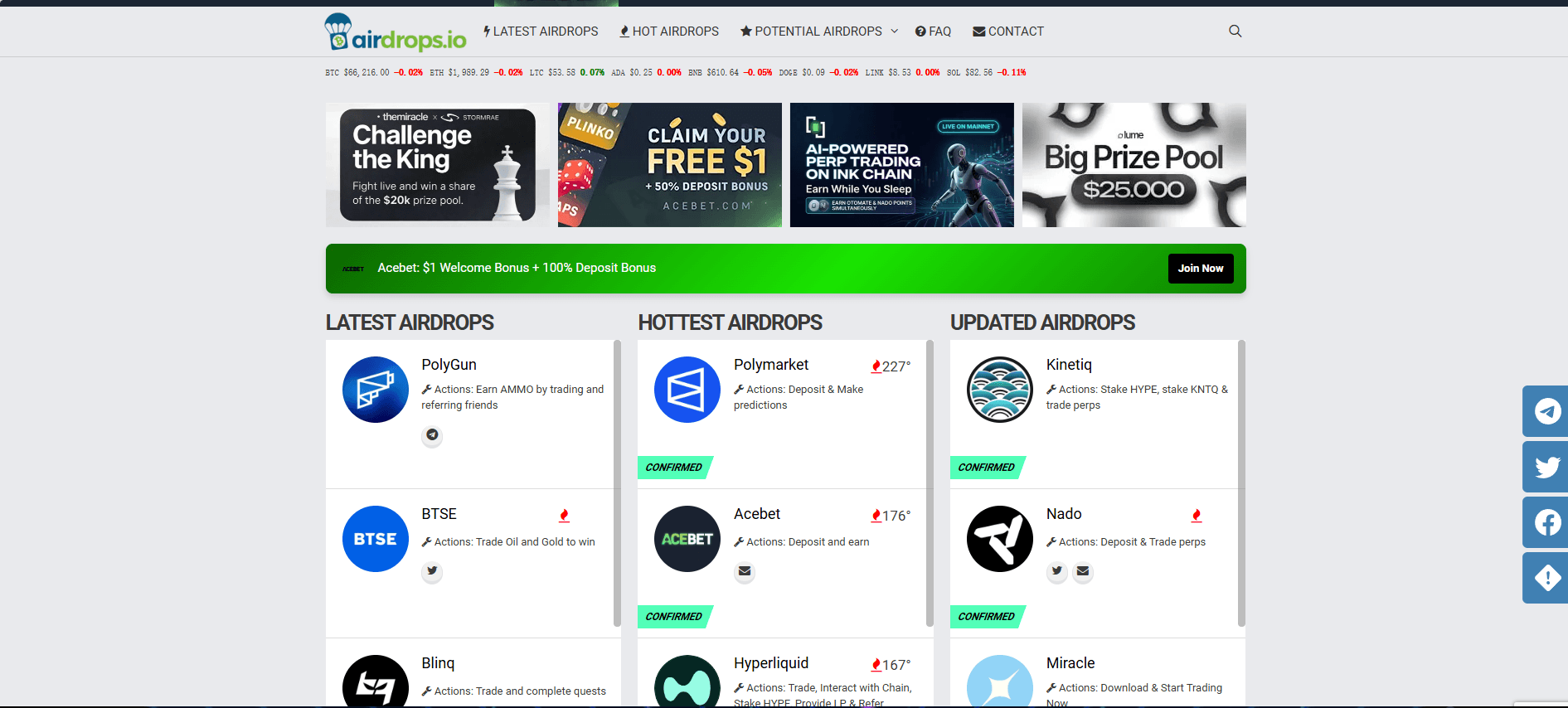
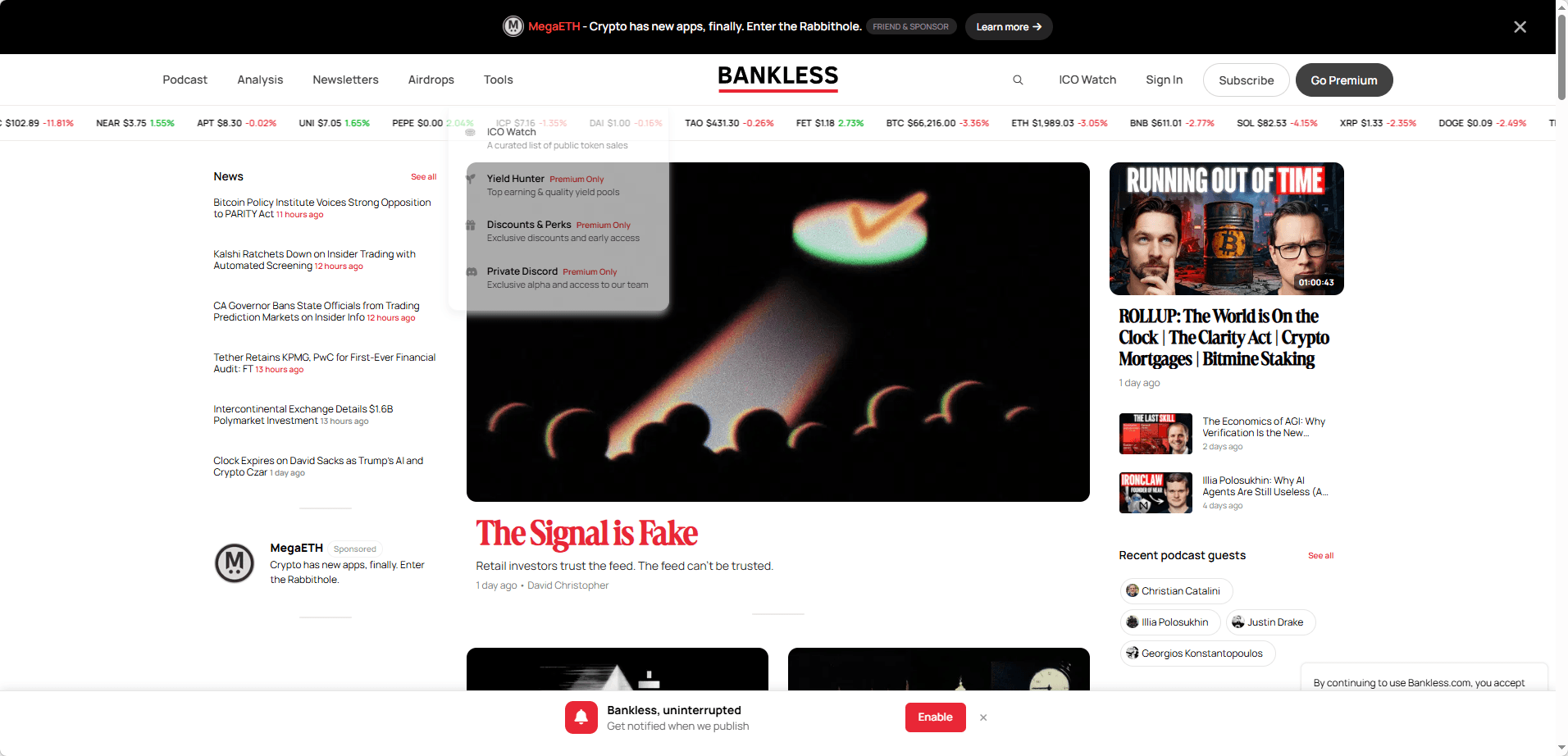
● Using specialized airdrop aggregators like Airdrops.io or Bankless
● Monitoring "Points" dashboards on decentralized applications
Early participation often leads to better reward multipliers because projects prioritize initial supporters before the platform becomes crowded.
2. Set up a secure wallet infrastructure
You need a reliable wallet to interact with different blockchains. Common options include MetaMask for Ethereum, Trust Wallet for mobile, and Phantom for Solana.
Essential safety practices in 2026 include:
● Backing up your seed phrase on physical media like paper or metal
● Never entering your private keys into any website or pop up
● Using a dedicated "Burner Wallet" for new and unverified projects
● Maintaining a separate "Cold Wallet" that never interacts with airdrop sites
It is strongly recommended to keep your main holdings in a vault that is completely disconnected from the wallets you use for daily airdrop farming.
3. Research each project for legitimacy and value
Before connecting your wallet to any platform, evaluate its potential to avoid scams or wasted gas fees.
Key metrics to check:
● Funding and Investors: Look for reputable Venture Capital firms like a16z or Paradigm
● On-chain Activity: Verify if the project has actual users and locked liquidity
● Total Diluted Valuation (FDV): Assess if the potential token supply makes sense
● Social Sentiment: Check if the community engagement is organic or just bot driven
Skipping this due diligence increases the risk of "wallet drainer" scams that can steal your entire balance.
4. Complete tasks with precision and consistency
Modern airdrops often look for genuine users rather than one time participants. Missing a small requirement can disqualify you from large allocations.
Pay close attention to:
● On-chain Footprint: Ensure your wallet has a history of normal transactions
● Sybil Prevention: Avoid funding multiple wallets from the same exchange account
● Snapshots and Deadlines: Follow project updates closely to ensure you are active during key periods
Consistency matters more than volume. Interacting with a protocol once a week is often more rewarded than performing fifty transactions in a single day.
5. Track your participation and claim windows
As you join more programs, managing different tasks and deadlines becomes complex.
An effective tracking system should record:
● Project Name and Network: Knowing which chain the tokens will be on
● Active Tasks and Milestones: Tracking your progress in points based systems
● Wallet Used: Remembering which burner wallet is linked to which project
● Claim Deadlines: Setting alerts so your earned tokens do not expire
Using a dedicated spreadsheet or a Notion dashboard helps you stay organized and ensures you never leave money on the table.
Where to Find Legitimate Crypto Airdrops
Instead of searching randomly across the internet, establishing a systematic approach using established platforms is a highly efficient way to discover valuable campaigns. Popular and reliable sources include:
1. Airdrop Aggregator Websites
Platforms like Airdrops.io and Bankless.com maintain curated lists of active and upcoming distributions. These sites categorize opportunities by difficulty and potential reward.
2. Crypto Data and Tracking Platforms
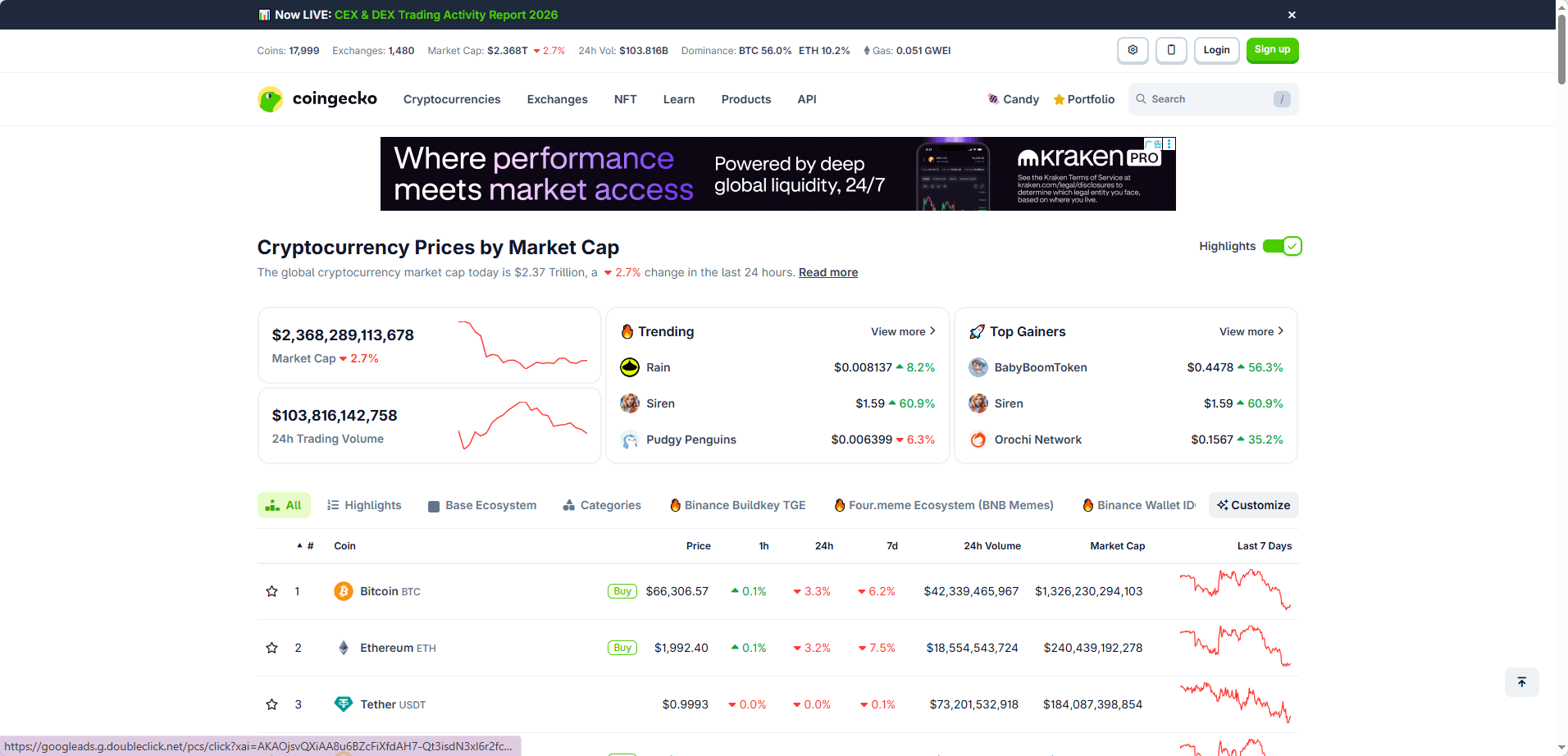
Major websites such as CoinMarketCap.com and CoinGecko.com frequently host exclusive promotional events and feature dedicated sections for tracking upcoming token generation events.

3. Ecosystem and Analytics Dashboards
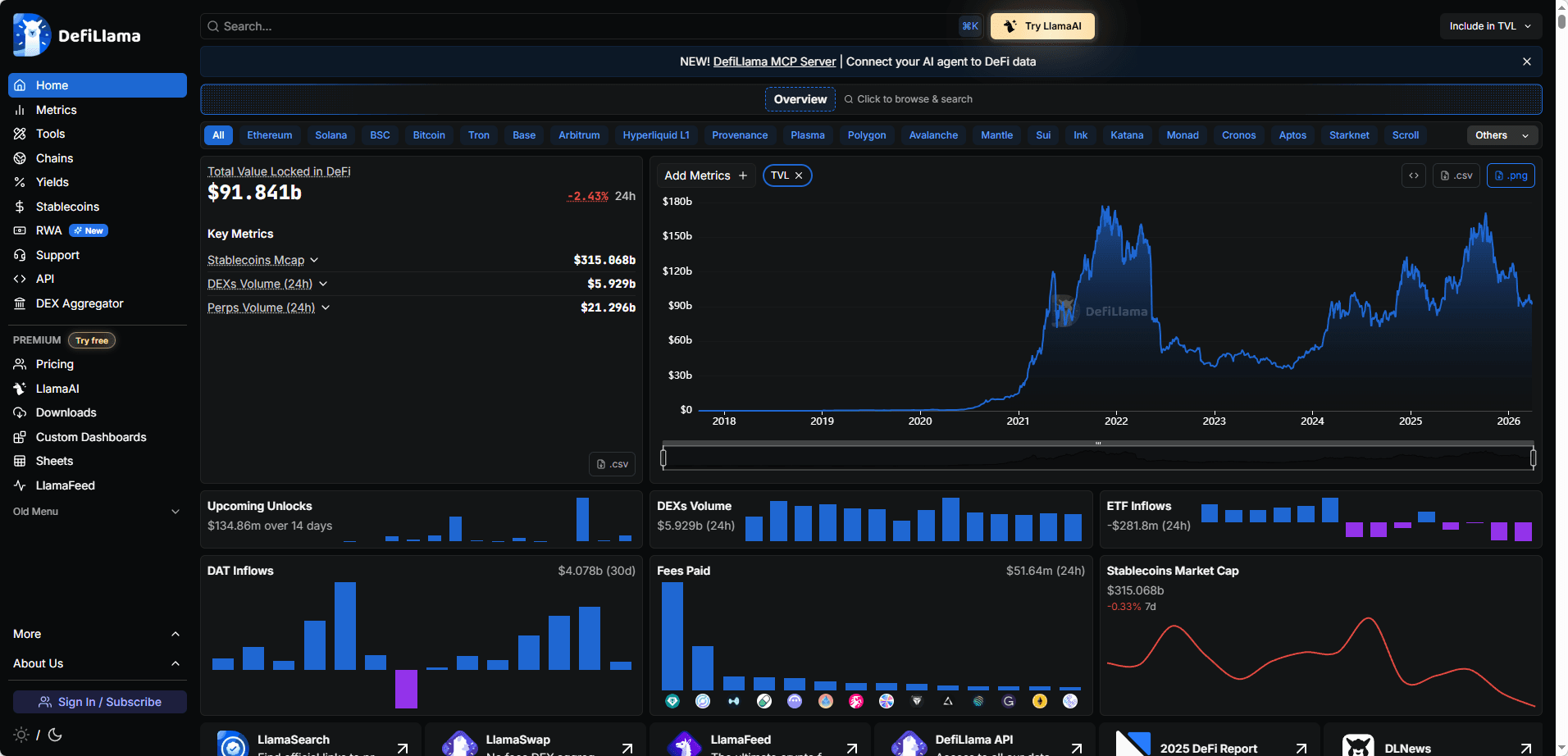
Tools like DefiLlama.com provide specific filters for protocols that do not yet have a token. This is an excellent way to identify early stage decentralized finance applications that might launch a retroactive reward program.
4. Official Social Media Channels
Following protocol founders, venture capital firms, and official project accounts on X is crucial. Many alpha announcements and point program details are shared directly by the core teams first.
5. Dedicated Community Forums
Engaging in specialized Discord servers, Telegram discussion groups, and Reddit communities allows you to share insights with other participants and verify the legitimacy of new links before connecting your wallet.
Tips to Maximize Your Airdrop Results
Once you understand the basics, the next step is improving efficiency and results.
Focus on quality over quantity
Not all airdrops are worth your time. Prioritize projects with strong fundamentals instead of joining every available campaign.
Be consistent over time
Airdrops often reward long term interaction rather than one time actions. Regular engagement increases your chances of qualifying.
Stay organized
Managing multiple tasks across different projects can become overwhelming. Keeping clear records helps you stay on track.
Understand participation limits
Some airdrops restrict participation to one account per user. Others may track IP addresses or user behavior patterns. Ignoring these rules can lead to disqualification.
Tools like BitBrowser are designed for this purpose, helping keep accounts separated and reducing the chances of unintended linking.
This becomes particularly important when scaling your participation, which is where proper multi account management and environment control start to play a bigger role.
How to Use BitBrowser to Safely Manage Multiple Airdrop Projects
As you participate in more airdrop projects, managing multiple accounts in a structured way becomes essential. A clear setup helps reduce the risk of account linking while keeping your workflow efficient.
Here is a simple way to manage multiple airdrop accounts using BitBrowser:
1. Create a browser profile for each account
Set up a separate profile for every account and keep one wallet and one set of social accounts within each profile. Avoid reusing profiles.
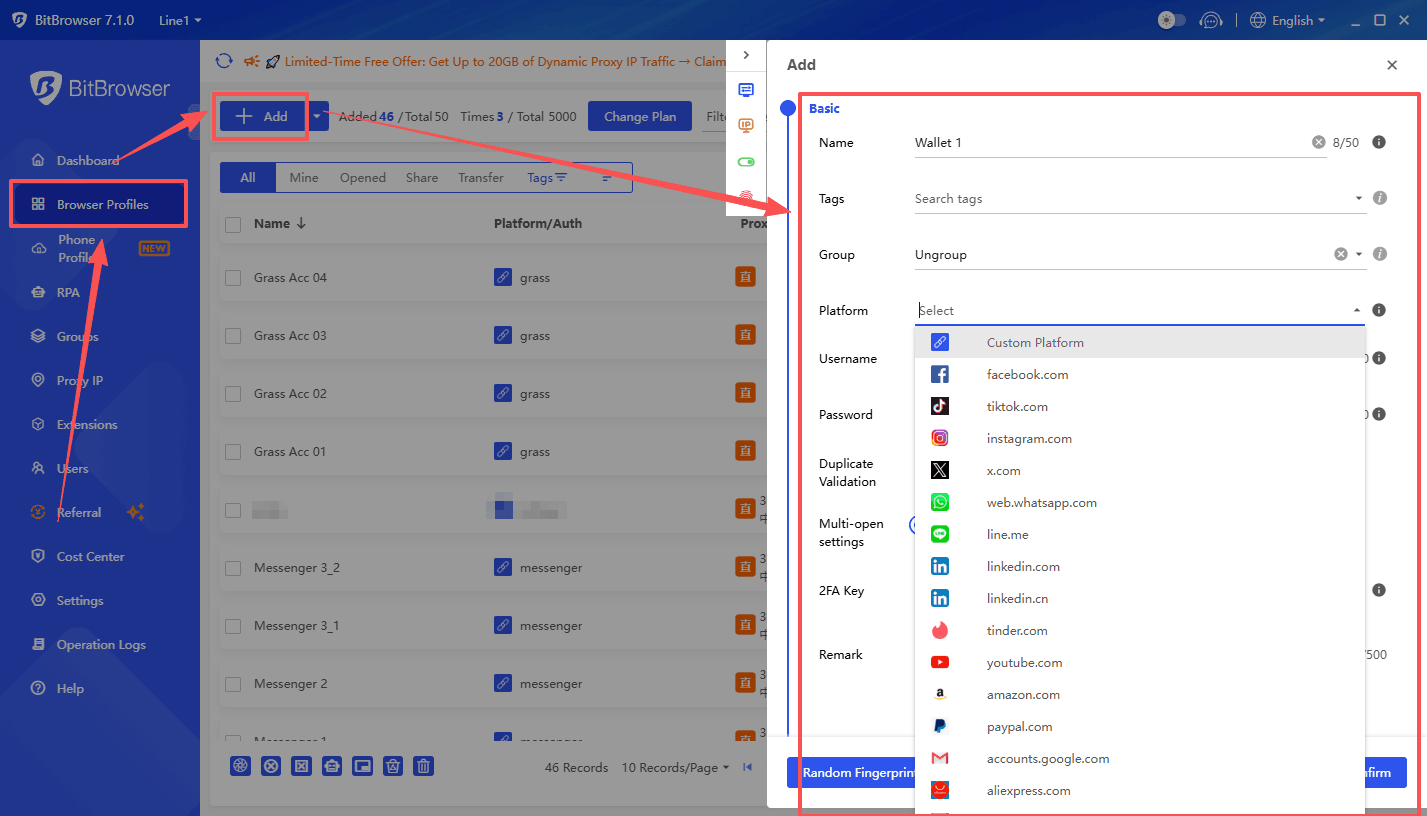
2. Use a dedicated wallet per profile
Install a wallet like MetaMask inside each profile and do not reuse the same wallet across different accounts.
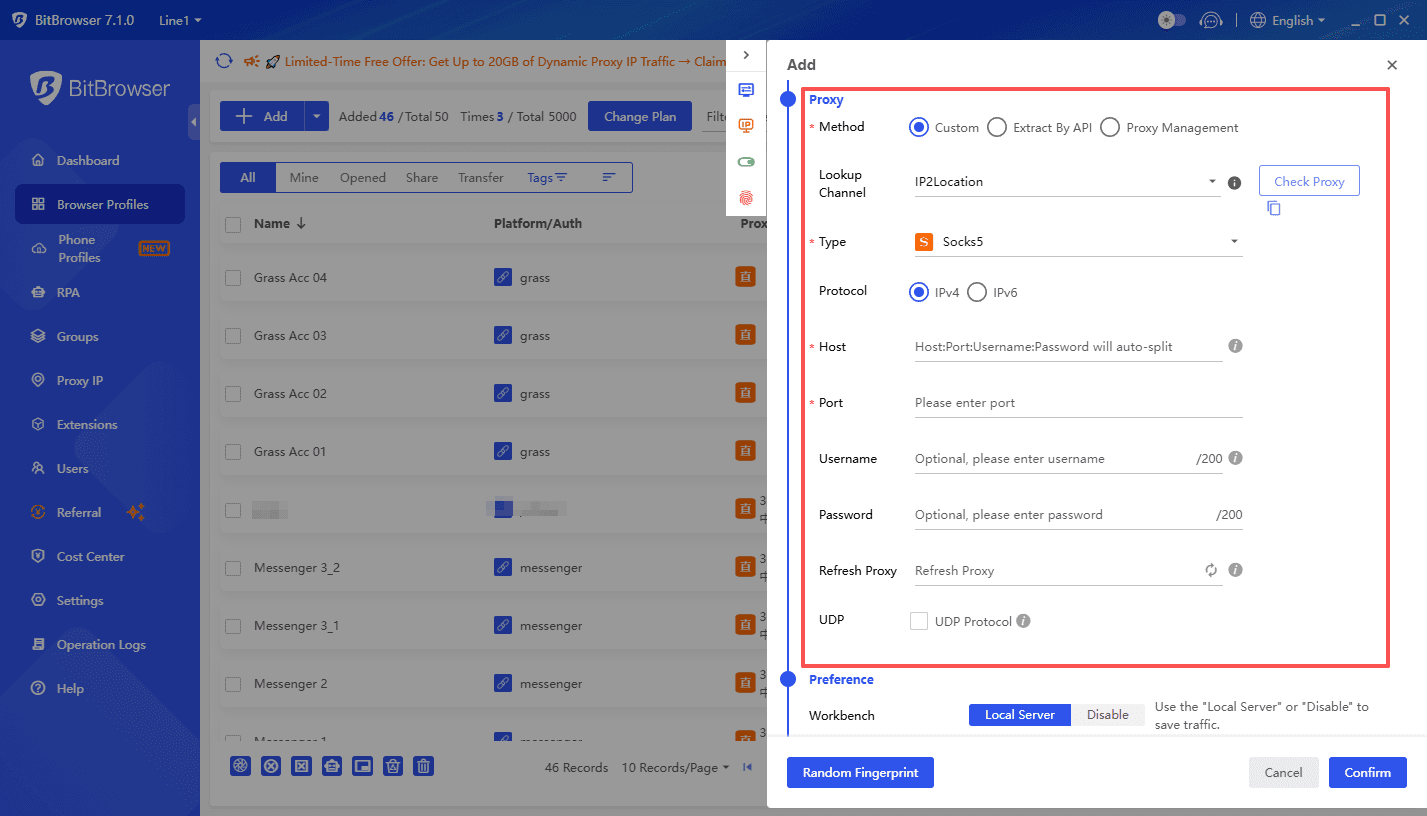
3. Assign a stable IP
Bind a fixed IP or proxy to each profile and avoid frequent changes. Keep the same IP paired with the same account.
4. Keep social logins consistent
Log in to Twitter, Discord, and Telegram within the same profile and avoid switching environments.
5. Perform actions naturally
Avoid completing identical tasks across accounts at the same time. Spread out interactions and revisit projects when needed.
6. Track your progress
Keep a simple record of profiles, wallets, and completed tasks so you do not miss important steps or deadlines.
A setup like this allows you to manage multiple airdrop projects more safely while staying organized as your participation grows.
Sign up for BitBrowser now and get 10 permanent free accounts
Conclusion
Crypto airdrops in 2026 are no longer simple giveaways. They reward users who stay active, choose the right projects, and participate consistently.
With a solid setup that includes secure wallets, clear tracking, and efficient workflows, you can improve both safety and results. As you scale across multiple airdrops, tools like BitBrowser help keep accounts isolated and organized, reducing the risk of linking.
With the right strategy, crypto airdrops remain a practical way to earn tokens and explore new opportunities in the crypto space.
Gemini said
这份操作指南在逻辑上非常清晰且准确,完全涵盖了新手进入空投领域的基础路径。
但在 2026 年的加密环境中,随着项目方对“空投猎人(Sybil Farmers)”审查的日益严格,以及“积分制(Points System)”的普及,这份指南在安全性和进阶效率上还有一些非常关键的“干货细节”可以补充。
以下是为您丰富后的版本,保持了您的原有风格,且不使用破折号:
How to Get Crypto Airdrops Step by Step
Getting started with airdrops is straightforward if you follow a structured and secure approach.
1. Stay informed about new opportunities Finding airdrops early is one of the most important factors for maximizing rewards. You can do this by:
-
Following crypto news websites and newsletters
-
Tracking project founders and lead developers on X
-
Joining Discord and Telegram communities for real time alerts
-
Using specialized airdrop aggregators like Airdrops.io or Bankless
-
Monitoring "Points" dashboards on decentralized applications
Early participation often leads to better reward multipliers because projects prioritize initial supporters before the platform becomes crowded.
2. Set up a secure wallet infrastructure You need a reliable wallet to interact with different blockchains. Common options include MetaMask for Ethereum, Trust Wallet for mobile, and Phantom for Solana. Essential safety practices in 2026 include:
-
Backing up your seed phrase on physical media like paper or metal
-
Never entering your private keys into any website or pop up
-
Using a dedicated "Burner Wallet" for new and unverified projects
-
Maintaining a separate "Cold Wallet" that never interacts with airdrop sites
It is strongly recommended to keep your main holdings in a vault that is completely disconnected from the wallets you use for daily airdrop farming.
3. Research each project for legitimacy and value
Before connecting your wallet to any platform, evaluate its potential to avoid scams or wasted gas fees.
-
Funding and Investors: Look for reputable Venture Capital firms like a16z or Paradigm
-
On-chain Activity: Verify if the project has actual users and locked liquidity
-
Total Diluted Valuation (FDV): Assess if the potential token supply makes sense
-
Social Sentiment: Check if the community engagement is organic or just bot driven
Skipping this due diligence increases the risk of "wallet drainer" scams that can steal your entire balance.
4. Complete tasks with precision and consistency
Modern airdrops often look for genuine users rather than one time participants.
-
On-chain Footprint: Ensure your wallet has a history of normal transactions
-
Sybil Prevention: Avoid funding multiple wallets from the same exchange account
-
Snapshots and Deadlines: Follow project updates closely to ensure you are active during key periods
Consistency matters more than volume. Interacting with a protocol once a week is often more rewarded than performing fifty transactions in a single day.
5. Track your participation and claim windows As you join more programs, managing different tasks and deadlines becomes complex. An effective tracking system should record:
-
Project Name and Network: Knowing which chain the tokens will be on
-
Active Tasks and Milestones: Tracking your progress in points based systems
-
Wallet Used: Remembering which burner wallet is linked to which project
-
Claim Deadlines: Setting alerts so your earned tokens do not expire
Using a dedicated spreadsheet or a Notion dashboard helps you stay organized and ensures you never leave money on the table.

 Multi-Account Management
 Prevent Account Association
 Multi-Employee Management
Recommended
See More