Traffic Arbitrage in 2026: A Complete Beginner's Guide to Getting Started
 2026.06.05 07:03
 YT.Shi
Traffic arbitrage is one of those internet business models that sounds fancy, but it is basically this. You buy traffic for a price. You send that traffic to a page where you earn more than you spent. The difference is your profit. But yes, it can get complicated fast if you do not track properly, if you pick the wrong offer, or if you ignore platform rules.
In 2026, traffic arbitrage is still alive, but it looks a bit different than the old days of sending cheap clicks to overloaded ad pages. Platforms are stricter, ad costs can spike overnight, and users are more sensitive to low quality experiences. The upside is that tools are better, tracking is easier, and there are more monetization options than ever.
This guide is for beginners who want a practical, step by step view of traffic arbitrage. What it is, how the business models work, what traffic sources actually make sense, what tools you need, and how to avoid the most common mistakes.
What Is Traffic Arbitrage (Simple Definition, Real Examples)
Traffic arbitrage is when you purchase visits from a traffic source and direct them to something that earns revenue, usually at a higher rate than your cost per visit.
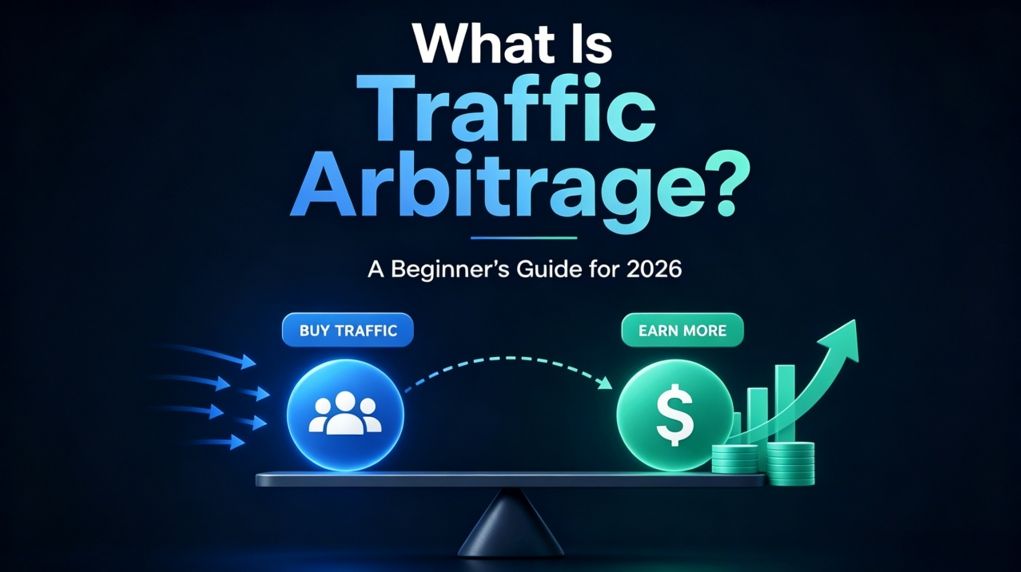
A very simple example:
● You buy 10,000 clicks from a native ads network.
● Your total spend is $200.
● You send the traffic to a page that earns $260 from ads or affiliate sales.
● Profit is $60, before tools and fees.
In real life, you usually test small first, then scale.
Another example is affiliate arbitrage:
● You buy social ads and send users to a quiz style landing page.
● The landing page pre sells an offer, then sends users to an affiliate program.
● You earn commissions when users sign up or buy.
A key point beginners miss is that traffic arbitrage is not just about buying cheap traffic. It is about matching the right traffic intent to the right monetization. Cheap clicks that do not convert are not cheap. They are expensive.
Also, the word arbitrage sometimes makes people think it is always shady. It does not have to be. Legit traffic arbitrage is simply performance marketing with good tracking and a tight margin.
Trends in Traffic Arbitrage for 2026 (What Has Changed)
The biggest change in 2026 is that platforms are stricter and smarter. That sounds scary, but it just means you need to be more professional.
First party tracking matters more. Cookies are less reliable, and some browsers block more trackers. Server side tracking and clean event setups are becoming normal, even for small teams.
Landing pages need to load fast. Slow pages kill conversions and can raise your ad costs. People bounce quickly. This is not optional anymore.
Creative testing is constant. What worked last month might be dead this month. The winners rotate. You need a steady testing routine.
AI content is everywhere, so real value stands out. If your page feels generic, users leave. Even if you use AI to draft, you still need to add real examples, structure, and clarity.
Compliance is tighter. Health claims, finance claims, before and after images, misleading buttons. These trigger rejections and bans. Many beginners fail here, not because the model is broken, but because they did not read policies.
The good news is that if you build clean funnels and track properly, traffic arbitrage is still a real skill you can compound.
Main Traffic Arbitrage Business Models
There are several popular traffic arbitrage models in 2026, each with its own traffic sources, monetization methods, and growth opportunities.
1. Affiliate Marketing Arbitrage
Affiliate marketing arbitrage is one of the most common and beginner friendly models. Marketers acquire traffic through paid ads, social media, search engines, or content platforms and direct users to affiliate offers. Revenue is generated when visitors complete specific actions such as making a purchase, signing up for a service, or starting a subscription.
This model remains popular because it requires no product development or inventory management. Many affiliates focus on niches such as finance, software, ecommerce, education, and mobile apps, where commissions can be relatively high.
2. AdSense and Display Advertising Arbitrage
In this model, publishers drive traffic to content websites and earn revenue through display advertising. The goal is simple: acquire visitors at a lower cost than the advertising revenue generated from page views and clicks.
Success often depends on producing valuable content, attracting consistent traffic, and optimizing ad placements. Many publishers combine SEO, social media promotion, and native advertising to scale this type of arbitrage.
3. Lead Generation Arbitrage
Lead generation arbitrage focuses on collecting potential customer information and selling those leads to businesses. Common industries include insurance, legal services, home improvement, healthcare, and real estate.
Because businesses are often willing to pay significant amounts for qualified leads, this model can be highly profitable when traffic quality is strong and conversion rates are well optimized.
4. Ecommerce Arbitrage
Instead of promoting affiliate offers, ecommerce arbitrage marketers send traffic directly to online stores and generate revenue through product sales. Profits can be increased through upsells, repeat purchases, and customer retention strategies.
This approach is commonly used by ecommerce brands and Shopify store owners who combine paid advertising with organic traffic channels to drive long term growth.
Traffic Sources That Still Work in 2026
Choosing the right traffic source is one of the most important decisions in traffic arbitrage. Different sources attract different types of users, so the best option often depends on the offer you are promoting.
● Native advertising remains a popular choice because it can deliver large volumes of traffic and works particularly well for content driven funnels, advertorials, and affiliate offers. Success usually comes from testing different headlines, images, and landing page angles.
● Search advertising continues to attract high intent users who are actively looking for solutions. While competition and advertising costs can be higher, search traffic often converts well when paired with relevant offers and optimized landing pages.
● Social media advertising on platforms such as Facebook, Instagram, and TikTok remains a major traffic source in 2026. Short video content has become especially effective for lead generation, ecommerce, and affiliate marketing campaigns, though advertisers must pay close attention to platform policies and account quality.
● Push notifications and pop traffic can sometimes provide inexpensive clicks and fast testing opportunities, but traffic quality varies significantly. These sources are generally better suited to experienced marketers who understand filtering, optimization, and campaign tracking.
For beginners, the best approach is to focus on a single traffic source that aligns with the offer. Learning one platform well is usually far more effective than trying to master several traffic sources at the same time.
Key Channels and Tools for Traffic Arbitrage in 2026
To run traffic arbitrage like a business, you need a basic stack. Not a huge stack. Just the essentials.
Tracking tool: You need to track clicks, costs, conversions, and ROI by ad, by keyword, by placement, and by creative. Voluum, RedTrack, Binom, and similar tools are common. Pick one and learn it properly.
Analytics: GA4 still matters for behavior signals, but do not rely on it alone. Use it to understand bounce rate, scroll depth, and top pages.
Landing page builder or CMS: Many use WordPress with a fast theme, or dedicated landing page tools. Keep pages simple, mobile friendly, and fast.
Spy and research tools: These help you see market trends, angles, and creatives. Use them for inspiration, not copying.
Creative tools: A simple setup like Canva plus basic video editing is enough for many campaigns.
Account and workflow tools: If you run multiple ad accounts or test many variations, you will need clean separation. This is also where an antidetect browser can help. Many traffic arbitrage marketers use tools like BitBrowser to manage multiple profiles, keep sessions separated, and reduce login friction when working across ad platforms and partner dashboards. Use it responsibly and always follow each platform’s rules, but from an operations standpoint, it can make daily work less chaotic.
How Beginners Can Get Started With Traffic Arbitrage in 2026 (Step by Step)
Here is a practical beginner path that keeps risk under control.
Step 1: Pick one niche and one monetization method
Choose a niche you can write and build pages for without making wild claims. Finance, utilities, software trials, education, simple lifestyle products. Then pick one method, like affiliate or lead gen.
Step 2: Choose one traffic source
Native or social is common for beginners, but choose based on your offer. Do not spread yourself thin.
Step 3: Set up tracking before spending money
This is where people mess up. Set up your tracker, postbacks or conversion events, and test that conversions fire correctly. Do a test conversion if possible.
Step 4: Build one simple funnel
A common starter funnel is: ad to landing page to offer. Your landing page should match the ad angle, explain the next step clearly, and load fast on mobile.
Step 5: Launch with a small test budget
Run multiple creatives and a few targeting variations. Do not judge a campaign from twenty clicks. But also do not burn money with no signals. Look for early indicators like CTR, time on page, and conversion rate.
Step 6: Optimize, then scale
Kill the obvious losers. Duplicate winners and scale slowly. Scaling fast often breaks what was working. And yes, if you are managing multiple ad accounts, creatives, or logins, keeping your browser profiles separated can save time and headaches. Some beginners start with separate Chrome profiles, then later move to an anti detection browser like BitBrowser when their operation grows and they need cleaner workflow.
Best Practices for Traffic Arbitrage
Traffic arbitrage profits often come from small improvements stacked together. Not one big trick.
● Track everything that matters. At minimum, track cost per click, earnings per click, conversion rate, and profit by ad and by landing page. If you cannot see it, you cannot fix it.
● Focus on intent match. Your ad promise must match your landing page, and your landing page must match the offer. When this chain breaks, you pay for clicks that bounce.
● Keep landing pages simple. One main goal, one clear next step. Too many buttons, popups, or unrelated links can ruin performance.
● Test creatives regularly. Make it a habit. Even one new image and one new headline per day can compound.
● Watch page speed. Use lightweight images, good hosting, caching, and avoid heavy scripts. This alone can change ROI.
● Build relationships with networks. For affiliate and lead gen, a good account manager can help with payouts, caps, and offer recommendations. That matters more than people admit.
Common Mistakes Beginners Make (And How to Avoid Them)
Most beginner losses are not because traffic arbitrage is impossible. They are because of avoidable mistakes.
● No tracking, or broken tracking. People run ads, see clicks, and guess. Then they scale guesses. Make tracking your first job.
● Chasing cheap traffic. Cheap does not mean good. If the traffic does not convert, it is wasted.
● Ignoring compliance. A banned ad account can stop your momentum for weeks. Read policies, avoid misleading claims, and keep your pages honest.
● Overcomplicated funnels. Beginners build five step funnels, quizzes, popups, and upsells, all at once. Start simple. One page, one goal, one offer.
● Scaling too fast. A campaign that works at $50 per day can fail at $500 per day due to placement changes and audience saturation. Scale in steps.
● Not thinking about user experience. In 2026, user experience is not just nice. It affects ad approval, conversion rate, and even your monetization rates.
Final Thoughts
Traffic arbitrage in 2026 is still a real way to make money online, but it rewards people who treat it like a process. Solid tracking, clean landing pages, clear offer match, and steady testing. If you do those boring basics, you are already ahead of most beginners.
And when you start running more campaigns, more logins, or more ad accounts, your day to day workflow can get messy fast. That is where tools like BitBrowser come in. It is an anti detection browser that helps you manage separate browser profiles for different ad accounts and platforms, which can make operations smoother as you scale.

 Multi-Account Management
 Prevent Account Association
 Multi-Employee Management
Recommended
See More