Can You REALLY Make Money on Temu? (2026 Truth)
 2026.02.22 05:19
 petro
petroIn just a short time, Temu has become one of the most talked-about e-commerce platforms in the world. Known for its incredibly low prices and aggressive marketing campaigns, Temu has rapidly expanded across North America, Europe, and other global markets. But what exactly is Temu, and how can it afford to sell products so cheaply?
This article explores what Temu is, how its business model works, and how the company makes money.

What Is Temu?
Temu is an online marketplace launched in 2022 and owned by PDD Holdings, a multinational commerce group also behind the Chinese e-commerce platform Pinduoduo.

Temu connects consumers directly with manufacturers and third-party sellers, primarily from China. The platform offers a wide range of products, including:
Clothing and fashion accessories
Electronics and gadgets
Home and kitchen products
Beauty and personal care items
Toys and hobby supplies
Unlike traditional retailers, Temu does not typically manufacture its own products. Instead, it operates as a marketplace that facilitates transactions between buyers and sellers.
Temu is primarily app-based but also operates through its website. Its strategy focuses heavily on social media marketing, referral programs, and gamified shopping experiences.
Why Are Temu’s Prices So Low?
One of the biggest questions consumers ask is: how can Temu sell products at such low prices?
There are several reasons:
1. Direct-From-Factory Model
Temu eliminates many middlemen by connecting customers directly with manufacturers. This reduces markup costs typically added by wholesalers and retailers.
2. Bulk Production & Scale
Many products are mass-produced at very large volumes, which lowers manufacturing costs per unit.
3. Long Shipping Times
Products are often shipped directly from overseas warehouses, which reduces storage costs in local markets.
4. Subsidized Growth Strategy
Temu has reportedly spent heavily on marketing and discounts to rapidly gain market share. In some cases, the company may operate with thin profit margins — or even temporary losses — to grow quickly.
How Does Temu Make Money?
Despite low prices and frequent discounts, Temu generates revenue through multiple streams.
1. Commission on Sales
Temu charges sellers a percentage of each sale made on the platform. This commission model is similar to other marketplaces like Amazon or eBay.
Every time a product is sold, Temu earns a cut of the transaction.
2. Advertising & Sponsored Listings
Sellers can pay to promote their products inside the Temu app. Sponsored listings appear higher in search results or on featured pages.
This advertising revenue becomes significant as more sellers compete for visibility.
3. Seller Service Fees
Temu may charge sellers additional fees for services such as:
Logistics and shipping support
Warehousing
Payment processing
Participation in promotional campaigns
These service fees add another layer of income for the platform.
4. Data & Optimization
Temu collects large amounts of shopping behavior data. While the company does not typically sell personal data directly, it uses analytics to:
Improve product recommendations
Optimize pricing
Increase conversion rates
Encourage repeat purchases
Better optimization leads to higher sales volume, which increases commission revenue.
5. Local Seller Programs
In some markets, Temu allows local sellers to store and ship products domestically. This improves delivery times and allows Temu to expand its product categories.
These partnerships create additional revenue opportunities through service fees and local fulfillment charges.
Is Temu Profitable?
Temu’s rapid expansion suggests a long-term growth strategy rather than short-term profit maximization.
Many analysts believe Temu is prioritizing:
User acquisition
Brand recognition
Global market expansion
Profitability may increase over time as the company reduces subsidies, strengthens logistics, and builds seller competition within the platform.
Challenges and Risks
Temu also faces several challenges:
Product quality concerns
Shipping delays
Regulatory scrutiny in certain countries
Competition from Amazon, Shein, and AliExpress
How the company handles these challenges will play a key role in its long-term success.
How to Configure Temu Stores/Accounts in BitBrowser
Once you scale beyond one Temu account, account organization becomes critical.
Instead of constantly logging in and out — which increases risk — BitBrowser allows you to create isolated browser profiles for each account.

Step 1: Create a New Browser Profile
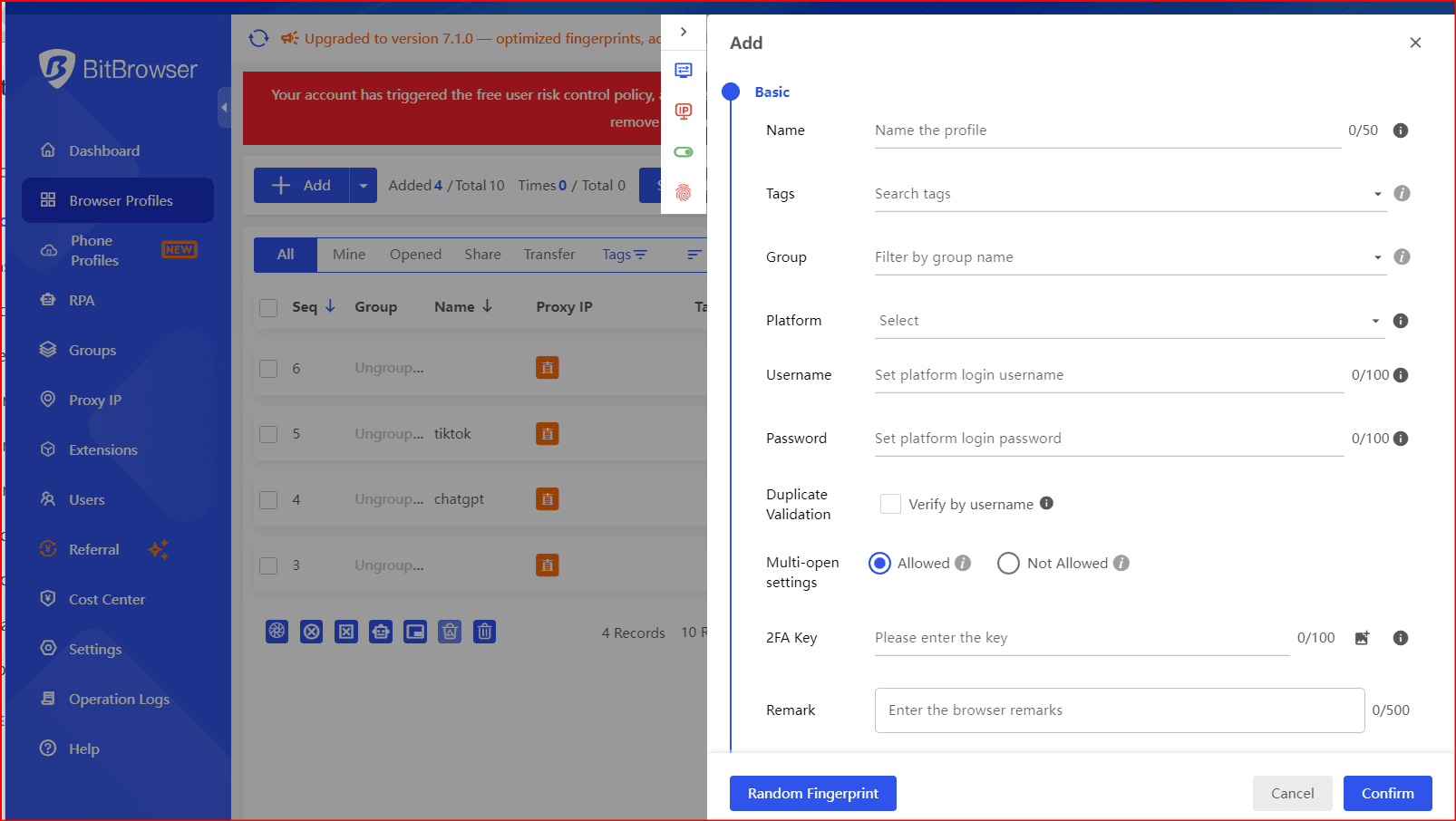
Open BitBrowser and click “New Profile.”
Name it clearly, for example:
Temu US Store #1
Temu Affiliate UK
Temu Testing Account
Clear naming simplifies management.
Step 2: Configure a Proxy
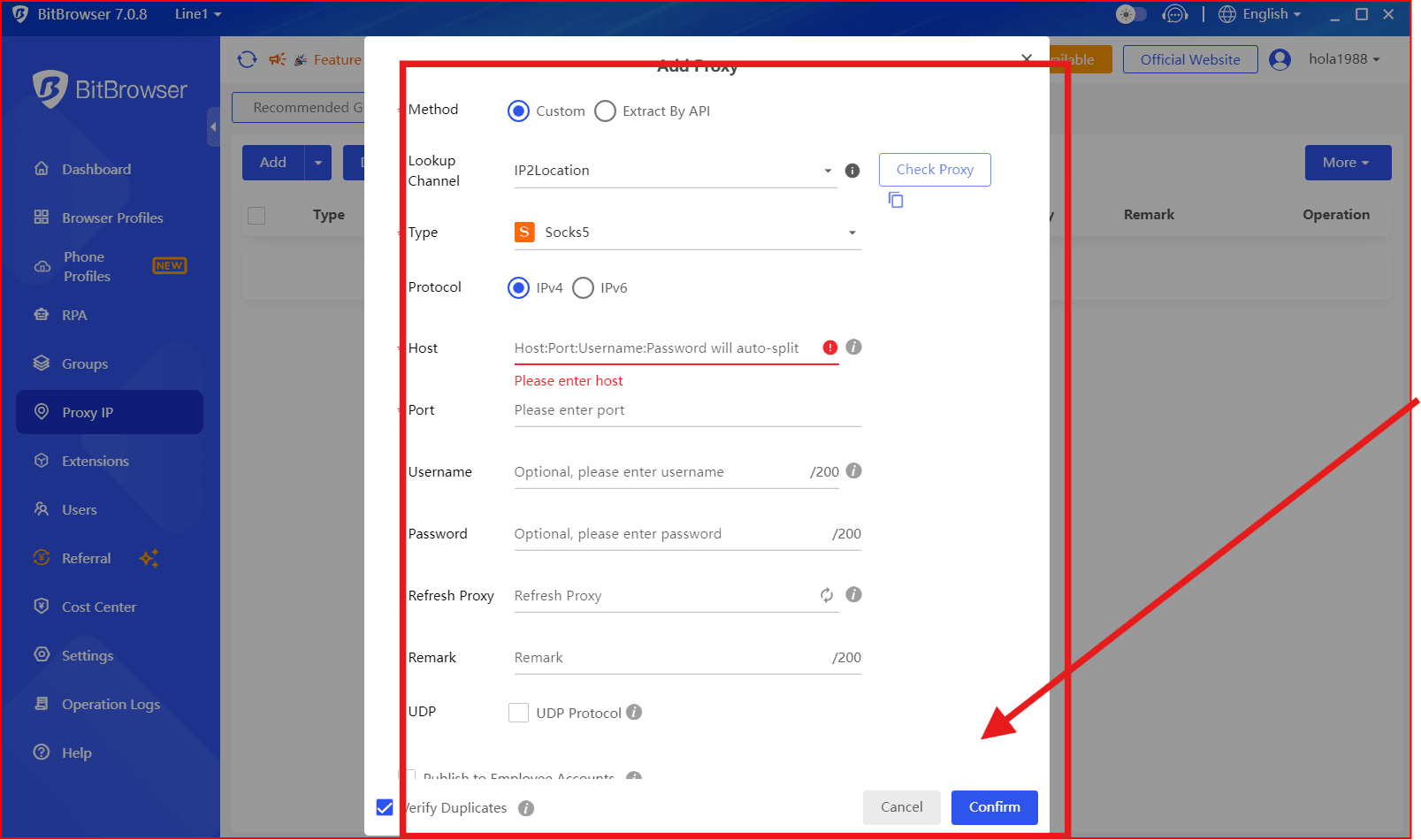
In the proxy section:
Choose HTTP, HTTPS, or SOCKS5
Enter IP, port, username, and password
For multi-account management, unique IPs reduce account linkage risk.
Tip: Match proxy country to your target market.
Step 3: Add Platform URL
Select “Other” in the platform section and input the Temu website link.
Step 4: Configure Browser Fingerprint Settings
Enable automatic fingerprint generation:
User Agent
Timezone
WebRTC
Canvas
Language
Geolocation
BitBrowser generates unique fingerprints per profile to minimize detection risks.
Step 5: Add Account Notes
Use the notes section to record:
Niche
Login email
Recovery phone
Affiliate campaign type
Payout method
Target region
This becomes extremely useful when managing 5+ accounts.
Step 6: Launch and Log In
Open the profile and log into Temu normally.
Each profile keeps:
Cookies separated
Login sessions isolated
Reduced repeated verification
Step 7: Use Groups for Organization
Group accounts by:
Temu US
Temu UK
Seller Stores
Affiliate Campaigns
Testing Profiles
Structured organization improves workflow efficiency.
Conclusion
Temu can be a practical side-income opportunity in 2026, but results depend on strategy and consistency.
Most users earn small rewards.
Structured marketers can build scalable income streams.
Success requires:
Traffic
Smart testing
Campaign optimization
Careful account management
With realistic expectations and structured execution, Temu remains one of the more accessible entry points into online income opportunities.

 Multi-Account Management
 Prevent Account Association
 Multi-Employee Management
Recommended
See More