build-ai-visibility-tracker-n8n-playbook
 2026.03.29 20:21
 petro
petroAs AI tools like ChatGPT, Perplexity, and Gemini become new gateways to information, a new question emerges:
“Is my brand visible in AI-generated answers?”
Traditional SEO tools don’t fully answer this.
That’s where AI visibility tracking comes in.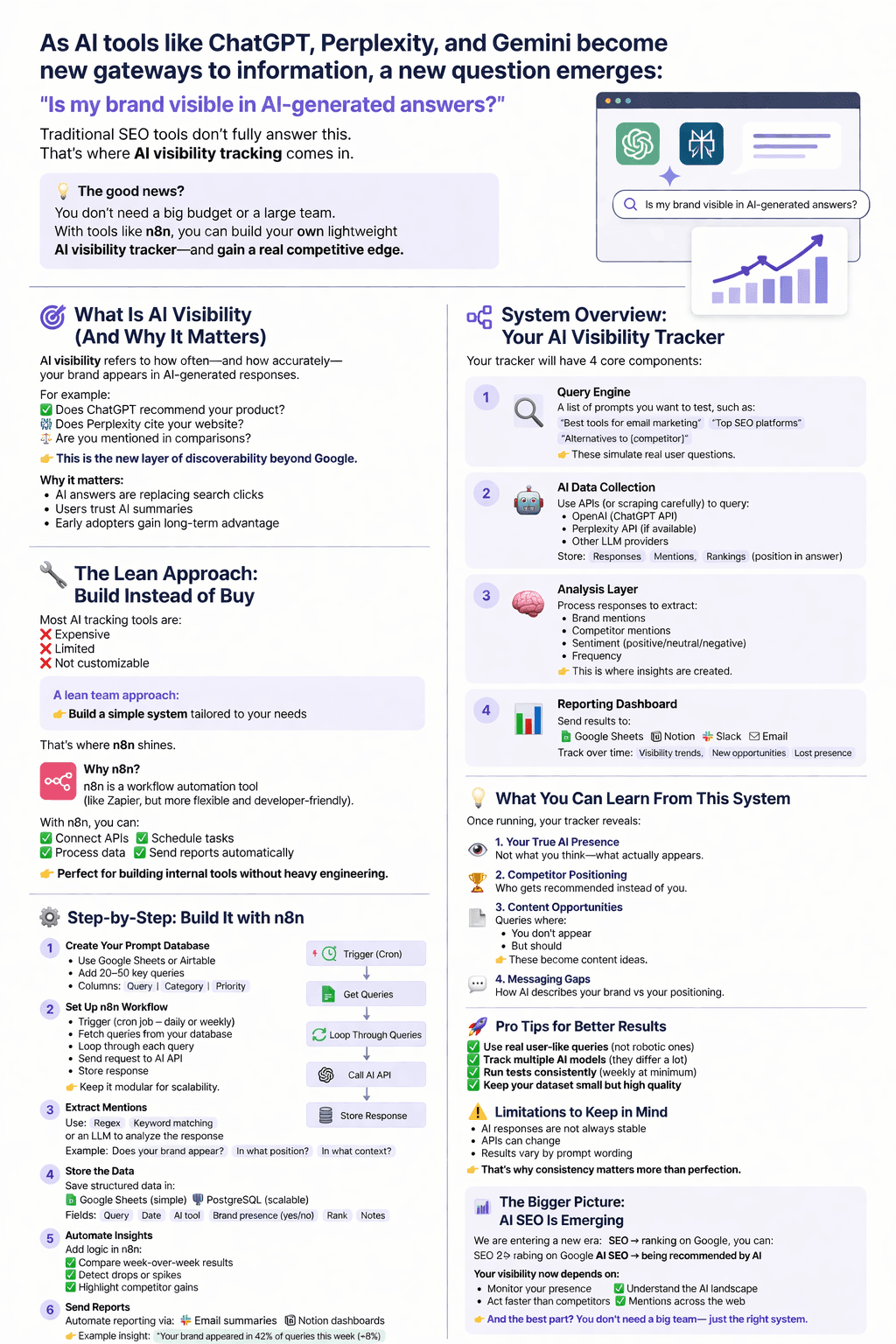
The good news?
You don’t need a big budget or a large team.
With tools like n8n, you can build your own lightweight AI visibility tracker—and gain a real competitive edge.
What Is AI Visibility (And Why It Matters)
AI visibility refers to how often—and how accurately—your brand appears in AI-generated responses.
For example:
- Does ChatGPT recommend your product?
- Does Perplexity cite your website?
- Are you mentioned in comparisons?
? This is the new layer of discoverability beyond Google.
Why it matters:
- AI answers are replacing search clicks
- Users trust AI summaries
- Early adopters gain long-term advantage
The Lean Approach: Build Instead of Buy
Most AI tracking tools are:
- Expensive
- Limited
- Not customizable
A lean team approach:
? Build a simple system tailored to your needs
That’s where n8n shines.
Why n8n?
n8n is a workflow automation tool (like Zapier, but more flexible and developer-friendly).
With n8n, you can:
- Connect APIs
- Schedule tasks
- Process data
- Send reports automatically
? Perfect for building internal tools without heavy engineering.
System Overview: Your AI Visibility Tracker
Your tracker will have 4 core components:
1. Query Engine
A list of prompts you want to test, such as:
- “Best tools for email marketing”
- “Top SEO platforms”
- “Alternatives to [competitor]”
? These simulate real user questions.
2. AI Data Collection
Use APIs (or scraping carefully) to query:
- OpenAI (ChatGPT API)
- Perplexity API (if available)
- Other LLM providers
Store:
- Responses
- Mentions
- Rankings (position in answer)
3. Analysis Layer
Process responses to extract:
- Brand mentions
- Competitor mentions
- Sentiment (positive/neutral/negative)
- Frequency
? This is where insights are created.
4. Reporting Dashboard
Send results to:
- Google Sheets
- Notion
- Slack
Track over time:
- Visibility trends
- New opportunities
- Lost presence Step-by-Step: Build It with n8n
Step 1: Create Your Prompt Database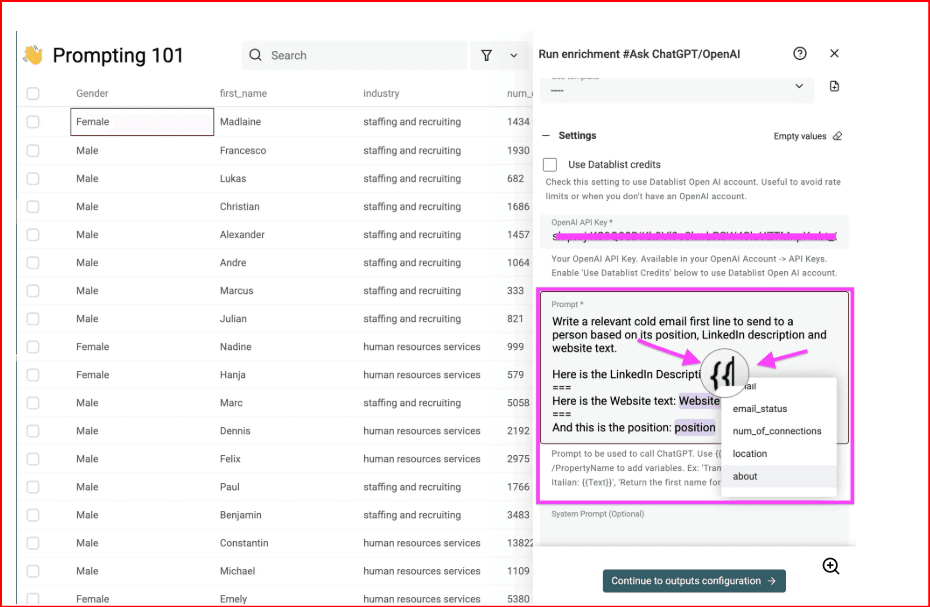
Start simple:
- Use Google Sheets or Airtable
- Add 20–50 key queries
Columns:
- Query
- Category
- Priority
Step 2: Set Up n8n Workflow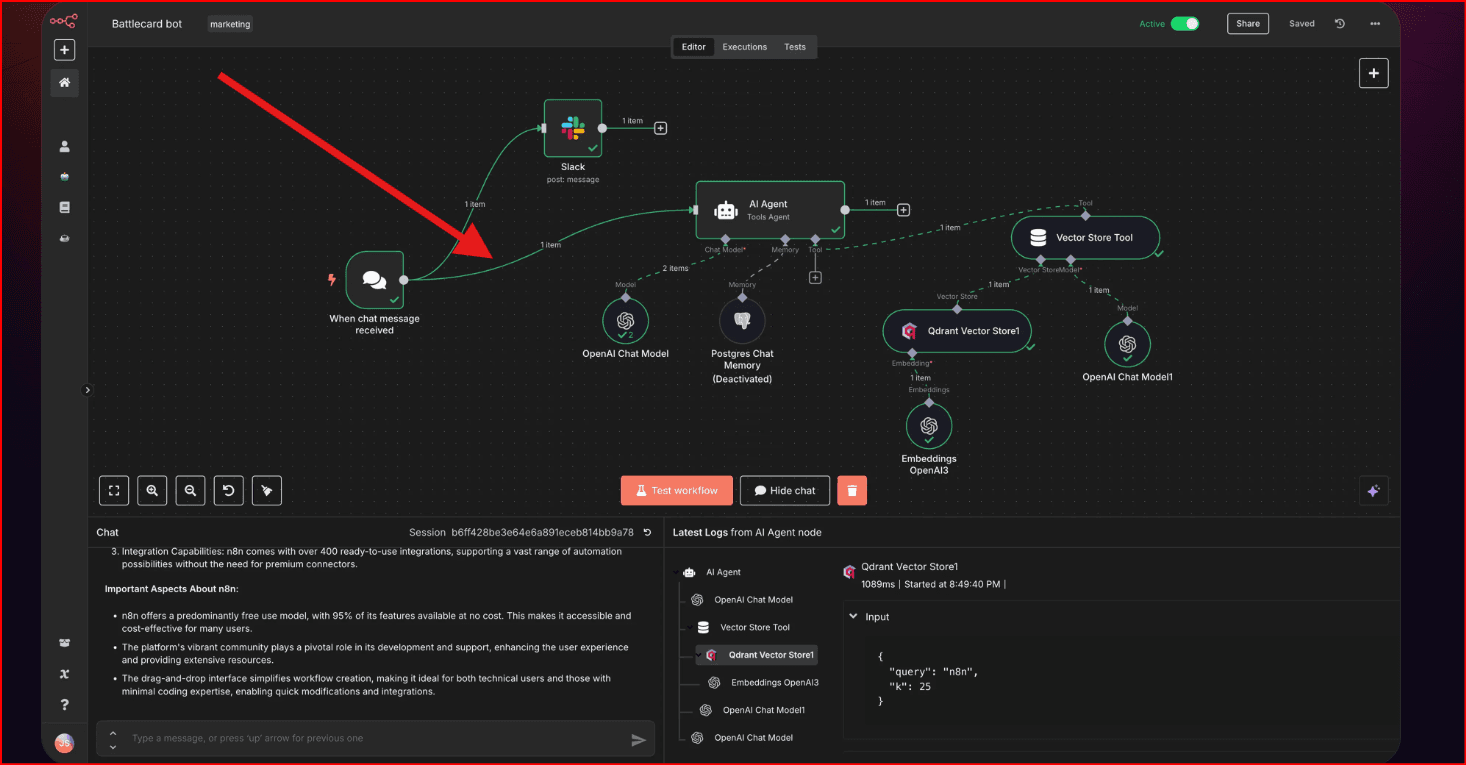
Core workflow:
- Trigger (cron job – daily or weekly)
- Fetch queries from your database
- Loop through each query
- Send request to AI API
- Store response
? Keep it modular for scalability.
Step 3: Extract Mentions
Use:
- Regex
- Keyword matching
- Or an LLM to analyze the response
Example:
- Does your brand appear?
- In what position?
- In what context?
Step 4: Store the Data
Save structured data in:
- Google Sheets (simple)
- PostgreSQL (scalable)
Fields:
- Query
- Date
- AI tool
- Brand presence (yes/no)
- Rank
- Notes
Step 5: Automate Insights
Add logic in n8n:
- Compare week-over-week results
- Detect drops or spikes
- Highlight competitor gains
Step 6: Send Reports
Automate reporting via:
- Slack notifications
- Email summaries
- Notion dashboards
? Example insight:
“Your brand appeared in 42% of queries this week (+8%)”
What You Can Learn From This System
Once running, your tracker reveals:
1. Your True AI Presence
Not what you think—what actually appears.
2. Competitor Positioning
Who gets recommended instead of you.
3. Content Opportunities
Queries where:
- You don’t appear
- But should
? These become content ideas.
4. Messaging Gaps
How AI describes your brand vs your positioning.
Pro Tips for Better Results
- Use real user-like queries (not robotic ones)
- Track multiple AI models (they differ a lot)
- Run tests consistently (weekly at minimum)
- Keep your dataset small but high quality
Limitations to Keep in Mind
- AI responses are not always stable
- APIs can change
- Results vary by prompt wording
? That’s why consistency matters more than perfection.
The Bigger Picture: AI SEO Is Emerging
We are entering a new era:
- SEO → ranking on Google
- AI SEO → being recommended by AI
Your visibility now depends on:
- Brand authority
- Content clarity
- Structured information
- Mentions across the web
Final Thoughts
Building your own AI visibility tracker is not just a technical project—it’s a strategic advantage.
With a simple n8n workflow, you can:
- Monitor your presence
- Understand the AI landscape
- Act faster than competitors
? And the best part?
You don’t need a big team—just the right system.

 Multi-Account Management
 Prevent Account Association
 Multi-Employee Management
Recommended
See More