Top 5 Proxy Providers Tested for Web Scraping in 2026
 2026.09.27 13:36
 petro
Web scraping in 2026 is no longer simply a matter of routing requests through a different IP address. Modern websites rely on increasingly sophisticated systems to identify automated traffic, including rate limiting, IP reputation analysis, CAPTCHA challenges, behavioral signals, request-pattern monitoring, and dedicated anti-bot technologies.
For developers, SEO professionals, data teams, and automation specialists, this means that choosing the right proxy infrastructure can directly affect the reliability of a scraping project.
A good proxy service should provide more than basic connectivity. Factors such as IP diversity, subnet selection, HTTP/SOCKS5 compatibility, API access, geographic targeting, connection stability, traffic policies, and deployment speed can all influence how efficiently a crawler operates.
This is where BitBrowser can play an important complementary role.
BitBrowser allows users to create separate browser profiles with their own proxy configuration, cookies, local storage, extensions, and browser settings. Instead of repeatedly changing proxies and rebuilding browser sessions inside the same environment, developers can organize different projects, locations, or automation tasks into independent browser profiles.
Quick Comparison: Proxy Providers for Web Scraping
| Provider | Main Strength | HTTP/SOCKS5 | API | Suitable Use Case |
|---|---|---|---|---|
| ProxyLine | Extensive subnet selection and automation | Yes | Yes | SEO scraping, SERP monitoring, automation |
| SpaceProxy | Affordable IPv4/IPv6 infrastructure | Yes | Yes | Large static proxy pools and general crawling |
| ProxyStores | Flexible IP and location selection | Yes | Available through service tools | Location-sensitive scraping and SEO monitoring |
| TakeProxy | Straightforward private proxy infrastructure | Yes | Yes | Small-to-medium automation projects |
| OnlyProxy | Additional proxy source for testing and diversification | Depends on plan | Verify current plan | Backup pools and lighter scraping workloads |
1. ProxyLine — Strong Choice for Flexible Scraping Infrastructure
Website: https://proxyline.net/
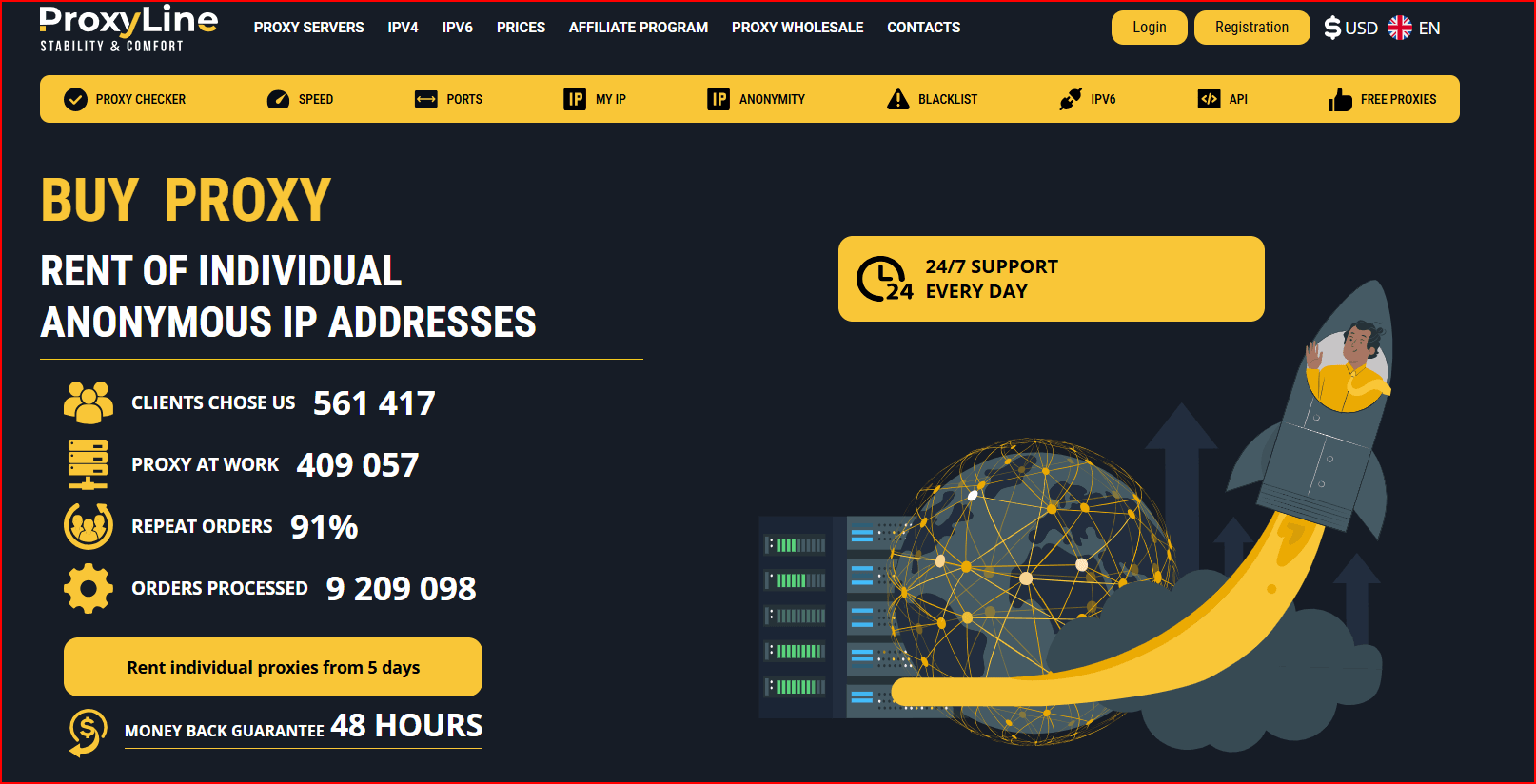
ProxyLine was one of the first providers I examined because its infrastructure is clearly designed around private IPv4 and IPv6 proxies, automation, parsing, SEO workloads, and larger proxy deployments.
The service specifically lists applications such as search-engine parsing, competitor research, SEO analysis, keyword collection, and automated data processing.
For developers building scraping systems, one of ProxyLine's most useful characteristics is the level of control available over the proxy infrastructure.
ProxyLine Features
ProxyLine currently advertises:
- HTTP proxy support
- SOCKS5 support
- IPv4 proxies
- IPv6 proxies
- Dedicated/private proxies
- Shared IPv4 proxies
- Manual IP selection
- Manual subnet selection
- City selection
- IP authorization
- API access
- Automatic proxy activation
- 24/7 support
The provider also reports access to more than 4,700 networks and subnets.
That level of subnet diversity can be useful for larger scraping deployments because simply purchasing many IP addresses is not always enough. If those addresses are concentrated within a small number of network ranges, the practical diversity of the proxy pool may still be limited.
ProxyLine for SEO and SERP Scraping
ProxyLine specifically promotes several SEO-related applications, including:
- search-engine parsing;
- keyword collection;
- competitor monitoring;
- SEO data analysis;
- automated research.
This makes the service relevant for projects such as:
- Google SERP monitoring;
- keyword-position tracking;
- competitor-price monitoring;
- SEO audits;
- search-result collection;
- content monitoring;
- public-data aggregation.
For larger automation projects, the combination of API access, subnet selection, HTTP/SOCKS5 compatibility, IPv4/IPv6 support, and broad network diversity provides useful flexibility.
Developers can integrate proxies into common scraping and browser-automation environments such as Python, Node.js, Scrapy, Selenium, Playwright, or proprietary crawling systems.
What I Liked
The strongest part of ProxyLine's offering is not one individual feature, but the combination of multiple infrastructure controls in the same service.
Being able to choose IPs and subnets while also having API access makes the platform easier to incorporate into automated workflows.
Automatic activation after payment also reduces setup time, while the ability to add or remove IPs during renewal gives users more control over an existing proxy pool.
Pros
- Large advertised network and subnet selection
- HTTP and SOCKS5 support
- IPv4 and IPv6 availability
- API functionality
- Manual subnet selection
- City-level selection
- Automatic activation
- IP authorization
- Suitable for SEO parsing and monitoring
- Unlimited traffic advertised on private proxy plans
- 24/7 customer support
Limitations
Private or datacenter-style proxies will not be ideal for every website.
Targets with sophisticated anti-bot infrastructure or strict IP-reputation requirements may perform better with residential, ISP, or mobile proxy networks.
Best For
ProxyLine is particularly suitable for:
SEO scraping, SERP monitoring, market research, automation systems, bulk proxy operations, and general web-data collection.
2. SpaceProxy — Affordable Infrastructure for Larger Proxy Pools
Website: https://spaceproxy.net/
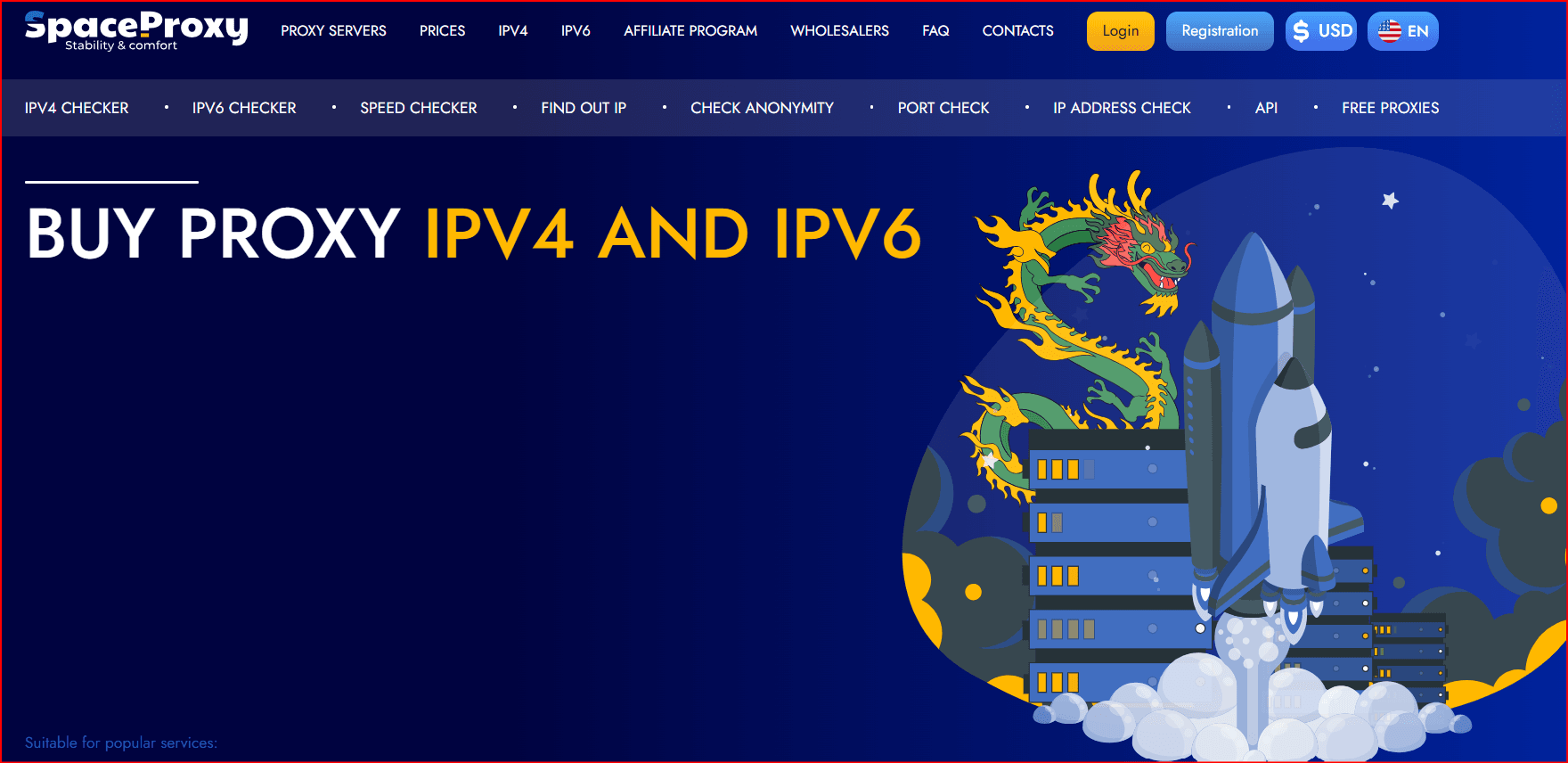
SpaceProxy is worth considering when a scraping project requires a larger number of static IP addresses without making proxy costs unnecessarily high.
The provider offers individual IPv4 proxies, shared IPv4 proxies, and IPv6 options. Its website also positions the service for SEO specialists, advertising professionals, and users involved in data collection.
SpaceProxy Scraping Features
SpaceProxy advertises:
- dedicated proxies;
- shared IPv4 proxies;
- IPv6 proxies;
- HTTP/SOCKS5 compatibility;
- manual IP selection;
- subnet selection;
- city selection;
- API access;
- automatic activation;
- unlimited traffic on several plans;
- up to 2,000 streams on its shared IPv4 offering.
API access becomes particularly useful when managing larger proxy pools.
Manually assigning, replacing, organizing, or tracking proxies may be manageable with five or ten addresses. Once a scraping infrastructure expands to dozens or hundreds of proxies, automation becomes considerably more important.
Pricing
One of SpaceProxy's key advantages is its relatively accessible entry pricing.
At the time of the original review, published pricing showed shared IPv4 proxies starting at approximately $0.99 per IP for 30 days, while individual IPv4 proxies started from approximately $1.77 per IP for 30 days, depending on quantity and configuration.
The provider also offers wholesale options for customers purchasing more than 100 IP addresses.
Because proxy pricing can change, current prices should always be confirmed directly before ordering.
Where SpaceProxy Makes Sense
In my assessment, SpaceProxy is most practical when you need a relatively large collection of static IP addresses for straightforward scraping or monitoring.
Potential workloads include:
- website monitoring;
- catalog scraping;
- public product-data collection;
- SEO tools;
- lightweight SERP monitoring;
- localized website testing;
- automated market research.
For crawlers sending many concurrent requests, distributing requests across a larger number of proxies can also help reduce pressure on individual addresses.
Pros
- Competitive entry pricing
- IPv4 and IPv6 support
- Shared and private options
- API functionality
- Larger proxy orders available
- HTTP/SOCKS5 compatibility
- Unlimited traffic advertised on selected plans
- Suitable for SEO and scraping workloads
Limitations
Static datacenter IPs can face restrictions on websites with advanced anti-bot protection.
Shared proxies may also have different reputation characteristics from dedicated proxies because the same infrastructure can be used by multiple customers.
Best For
Affordable scraping infrastructure, bulk IP requirements, SEO monitoring, public-data collection, and general web crawling.
3. ProxyStores — Flexible IP, Subnet, and Location Selection
Website: https://proxystores.com/
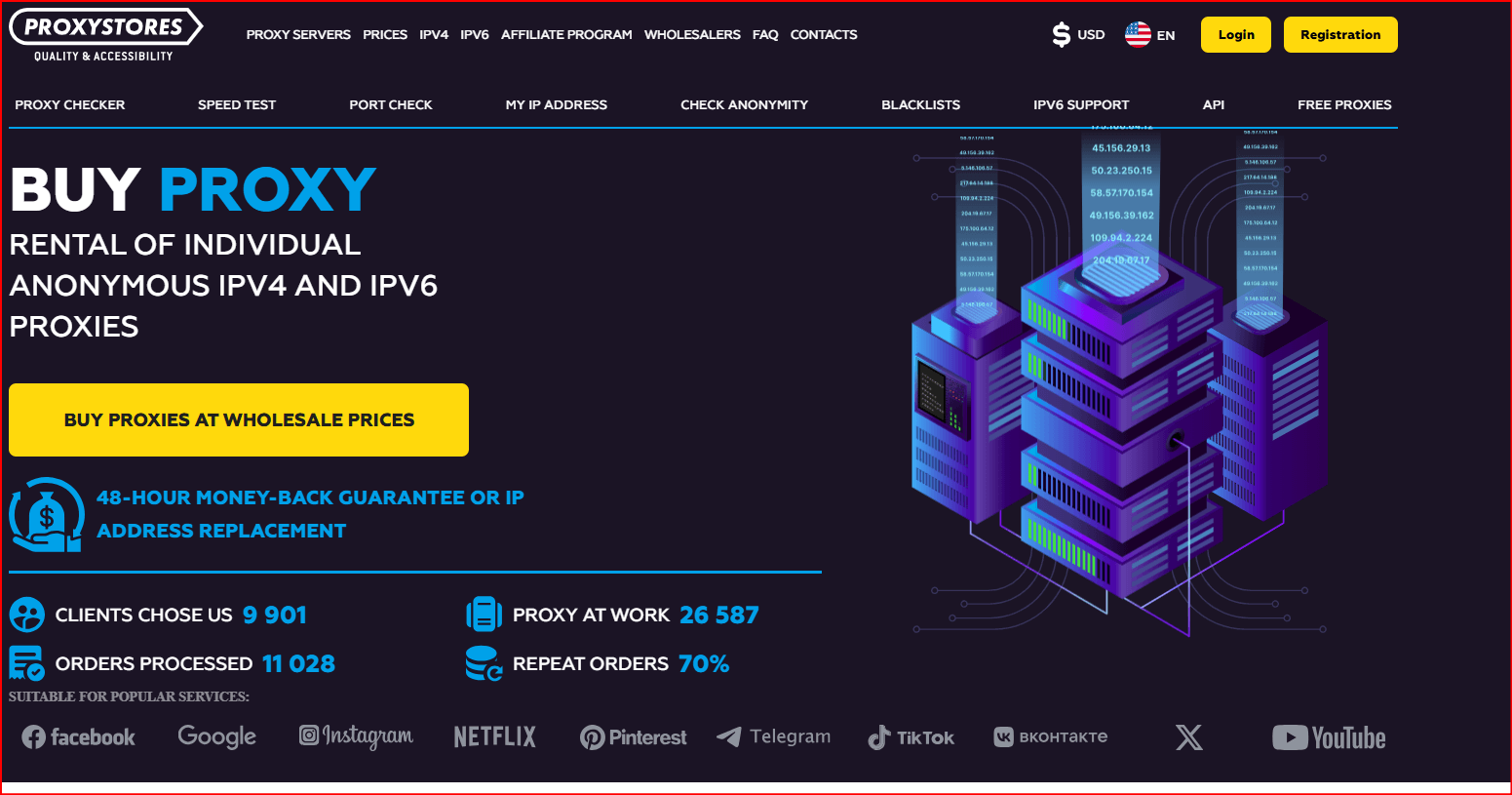
ProxyStores is another service I reviewed for projects where control over IP selection and network location is an important consideration.
The platform supports HTTP and SOCKS5 proxies and allows customers to manually choose IP addresses, subnets, and, in supported configurations, cities.
For developers managing distributed crawlers, that level of infrastructure control can be useful.
ProxyStores Features
The provider advertises:
- private IPv4 proxies;
- shared IPv4 proxies;
- IPv6 support;
- HTTP proxies;
- SOCKS5 proxies;
- manual IP selection;
- subnet selection;
- city selection;
- automatic activation;
- unlimited traffic on individual proxies;
- IP authorization;
- replacement and refund periods.
ProxyStores also lists search-engine parsing as one of its supported use cases.
That makes the service potentially useful for applications such as:
- keyword scraping;
- competitor monitoring;
- advertising intelligence;
- SEO automation;
- product-price monitoring;
- localized search analysis.
Pricing
At the time of the review, ProxyStores published pricing similar to SpaceProxy.
Shared IPv4 proxies were listed from approximately $0.99 per 30 days, while individual IPv4 proxies started around $1.77 per IP for 30 days, depending on quantity and location.
Again, users should verify current pricing directly because available packages and rates may change.
Why Subnet Selection Matters
One of the more useful features for scraping is the ability to control IP and subnet selection.
Imagine purchasing 100 proxies only to discover that most of them originate from the same limited network range.
Technically, you have 100 IP addresses. Operationally, however, the network diversity may be much lower than expected.
Being able to distribute crawler traffic across different subnets can therefore be more valuable than simply maximizing the raw number of proxy addresses.
ProxyStores also provides credentials compatible with both HTTP and SOCKS5, making integration relatively straightforward with common scraping tools and automation frameworks.
Pros
- HTTP and SOCKS5 support
- IPv4 and IPv6 options
- Private and shared proxies
- Manual IP selection
- Subnet selection
- City-level options
- Unlimited traffic advertised on individual proxies
- Suitable for search parsing
- Automatic activation
Limitations
A free pre-purchase test is not prominently advertised. Instead, the service describes testing after purchase within its refund or replacement period.
As with other datacenter-oriented services, websites with stronger anti-bot systems may require residential or mobile proxy infrastructure.
Best For
SEO agencies, geographically targeted scraping, SERP monitoring, price tracking, and developers who want greater control over their proxy subnets.
4. TakeProxy — Straightforward Private Proxy Setup
Website: https://takeproxy.com/
TakeProxy follows a simpler approach than some larger proxy platforms.
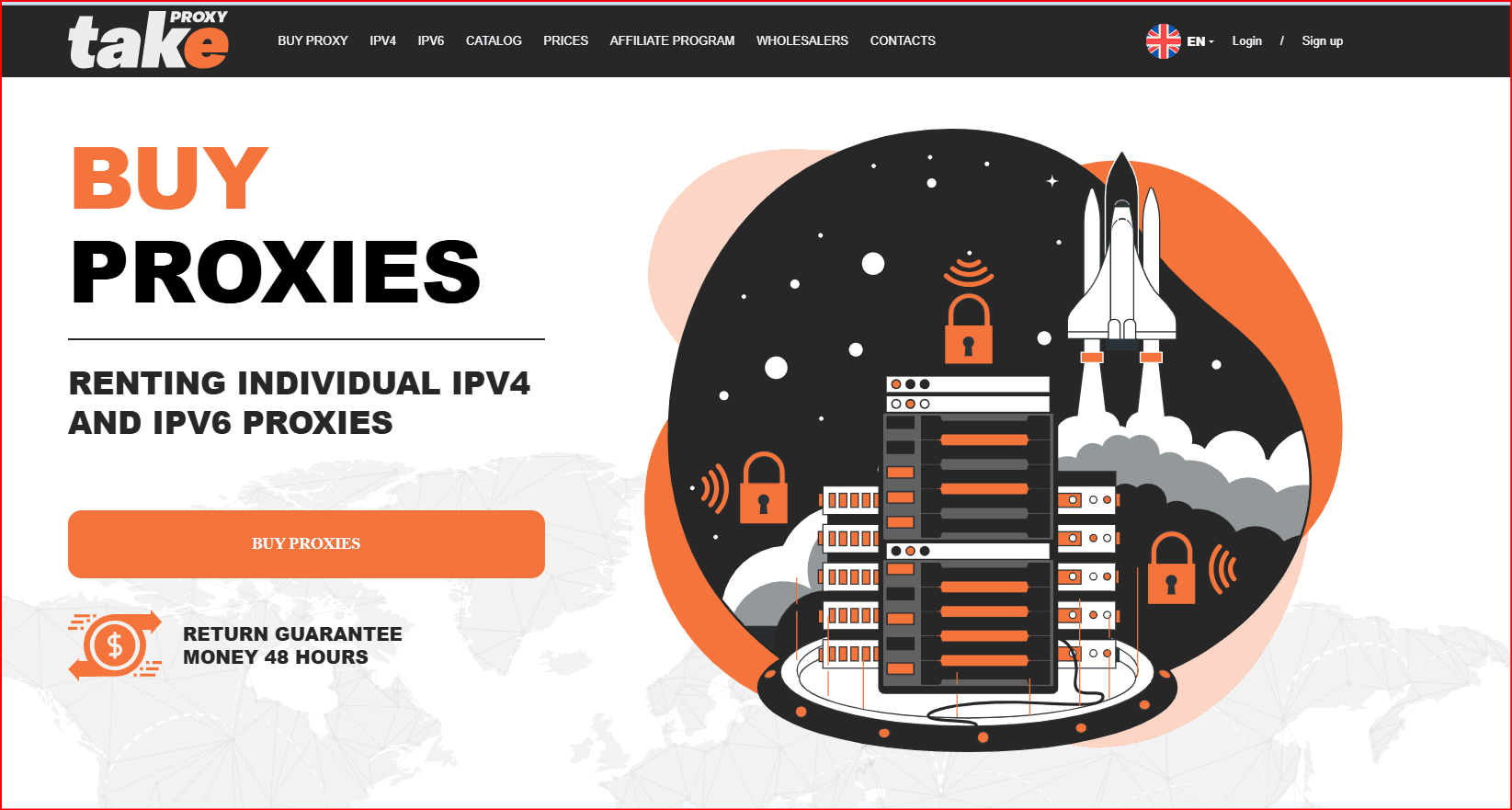
Its core service focuses on private IPv4 and IPv6 proxy rental while supporting the main protocols and infrastructure controls typically needed for automation.
For developers who do not require a highly complex rotating residential network, this can make the service easier to work with.
Main Features
TakeProxy currently advertises:
- private IPv4 proxies;
- IPv6 proxies;
- HTTP support;
- SOCKS5 support;
- unlimited traffic;
- manual IP selection;
- manual subnet selection;
- city selection;
- IP authorization;
- API functionality;
- automatic activation;
- 24/7 support;
- a 48-hour refund/replacement policy.
The provider also reports access to more than 700 networks and subnets.
Using TakeProxy for Scraping
For me, TakeProxy makes the most sense for scraping projects that require stable private proxies without the complexity or pricing structure of large residential rotation platforms.
Potential applications include:
- public website monitoring;
- business-directory scraping;
- product monitoring;
- SEO analysis;
- localized page testing;
- automation scripts;
- data aggregation.
API functionality is another useful addition because it allows proxy provisioning or management to be incorporated into a developer's own system rather than handled entirely through a dashboard.
Pros
- HTTP/SOCKS5 compatibility
- IPv4 and IPv6 support
- API availability
- Unlimited traffic advertised
- Automatic delivery
- Subnet selection
- City selection
- IP authorization
- 24/7 customer support
Limitations
Its advertised network diversity is smaller than the figure published by ProxyLine.
Additionally, private datacenter proxies may encounter more resistance on websites that rely heavily on advanced IP-reputation analysis.
Best For
Small-to-medium scraping projects, automation scripts, SEO monitoring, and developers seeking uncomplicated private proxy infrastructure.
5. OnlyProxy — An Additional Option for Proxy Pool Diversification
Website: https://onlyproxy.com/
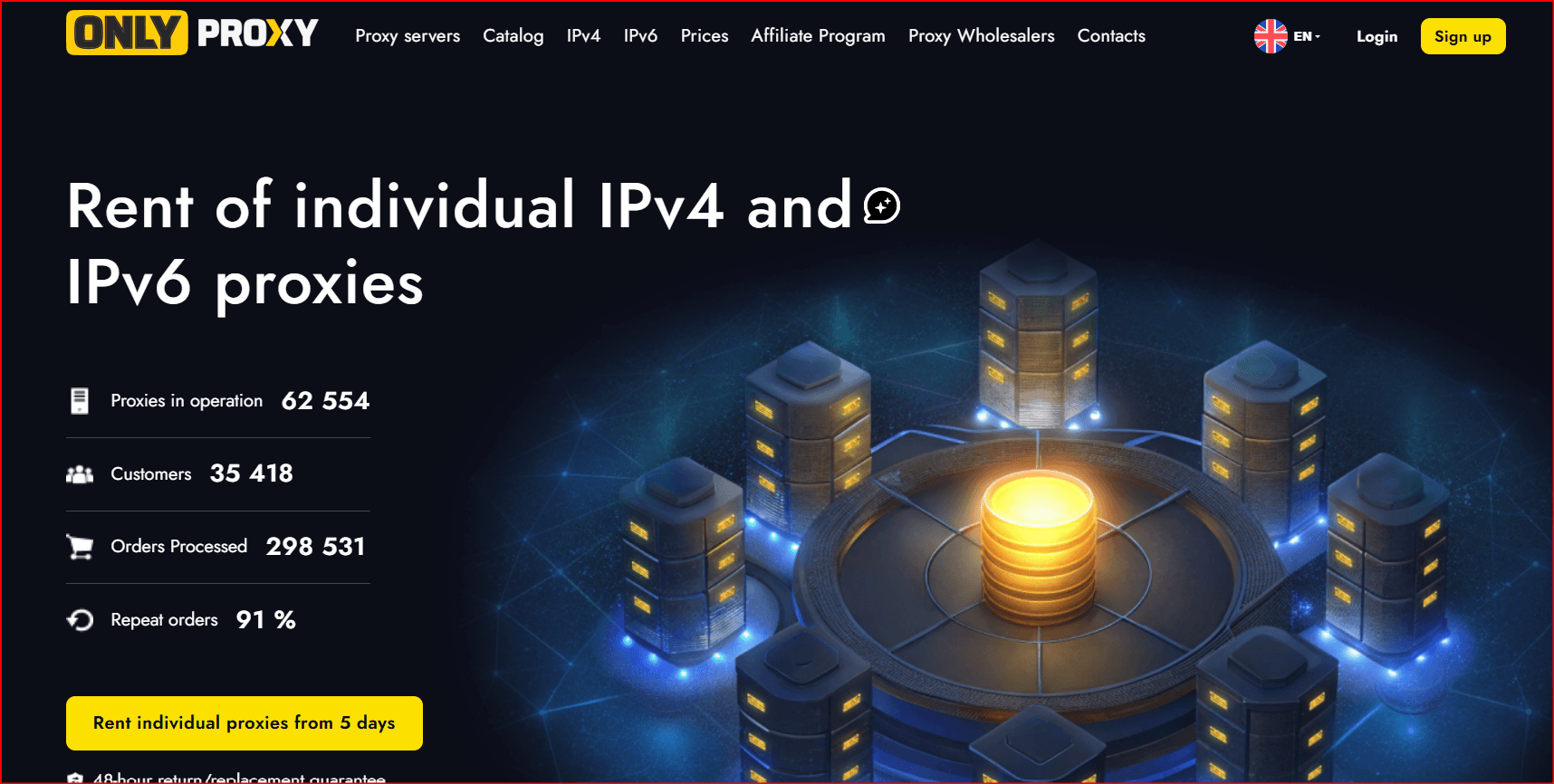
OnlyProxy completes this comparison as another proxy provider that may be considered for scraping and automation workloads.
Compared with the other services reviewed here, publicly accessible technical information was more limited during my evaluation.
For that reason, I would verify the current product catalog, available proxy types, limits, and automation capabilities directly before using the service for a production scraping environment.
What to Verify Before Purchasing
For a scraping project, I would specifically confirm:
- whether IPs are dedicated or shared;
- HTTP/HTTPS availability;
- SOCKS5 support;
- concurrent connection limits;
- bandwidth or traffic restrictions;
- available countries and locations;
- replacement policy;
- API availability;
- authentication methods;
- subnet diversity.
These details have a significant impact on whether a proxy service is appropriate for small-scale monitoring or larger production scraping.
Where OnlyProxy May Fit
OnlyProxy may be useful for:
- smaller crawlers;
- backup proxy pools;
- price-monitoring applications;
- web research;
- lightweight automation;
- geographically distributed requests;
- testing a secondary proxy supplier.
For production use, I would begin with a small package and measure real-world connection consistency, response times, error rates, and compatibility with the intended target websites before expanding the deployment.
Pros
- Provides another proxy source for infrastructure diversification
- May work as a secondary or backup proxy pool
- Can be evaluated alongside other proxy providers
Limitations
Current technical specifications should be confirmed before purchasing.
For large-scale deployments, testing connection stability and target-site compatibility would be particularly important before committing to a larger package.
Best For
Testing, secondary proxy pools, smaller crawlers, and infrastructure diversification.
How I Evaluate a Proxy for Web Scraping
When evaluating proxies for scraping, I do not focus only on advertised download speed.
A proxy can be extremely fast and still perform poorly if its IP reputation is weak, its network is unstable, or its addresses are concentrated in a small number of subnets.
These are the areas I consider most important.
1. Connection Stability
A scraping proxy should maintain reliable connections while a crawler processes hundreds or thousands of requests.
Frequent timeouts, disconnects, and connection errors can significantly increase execution time.
They can also make scraping data less consistent because failed requests must be retried.
For serious projects, I recommend monitoring metrics such as:
- connection failure rate;
- average response time;
- timeout rate;
- successful request percentage;
- retry frequency.
These measurements provide a much better picture of proxy quality than marketing claims alone.
2. IP Reputation
Two proxy servers with similar specifications can produce completely different results.
An IP address with poor reputation may encounter:
- CAPTCHA pages;
- HTTP 403 responses;
- HTTP 429 rate limits;
- temporary blocks;
- additional verification pages.
This is why proxy quality often matters more than raw bandwidth.
Testing a small group of IPs against the websites you actually intend to access is generally more useful than evaluating proxies only through a generic speed test.
3. Subnet Diversity
Subnet diversity is another factor that is sometimes overlooked.
Buying 100 proxies does not necessarily mean you have 100 meaningfully independent network identities.
If most of those proxies belong to a limited number of network ranges, websites may still identify patterns associated with that infrastructure.
For distributed crawling, broader subnet selection can therefore provide more flexibility.
ProxyLine's advertised network and subnet selection is particularly notable in this area.
4. HTTP and SOCKS5 Support
HTTP proxies are sufficient for many standard web-crawling workloads.
They integrate easily with common scraping tools and libraries.
SOCKS5 provides additional protocol flexibility and may be useful for applications that extend beyond conventional HTTP traffic.
ProxyLine, SpaceProxy, ProxyStores, and TakeProxy all advertise HTTP/SOCKS5 support in the technical information reviewed for this comparison.
5. API Access
API support becomes increasingly important as a proxy infrastructure grows.
Managing five proxies manually is straightforward.
Managing 500 proxies manually is not.
With an API, developers may be able to automate tasks such as:
- provisioning proxies;
- retrieving proxy credentials;
- updating configurations;
- managing orders;
- integrating proxy information with internal applications.
ProxyLine, SpaceProxy, and TakeProxy advertise API functionality.
Dedicated vs. Residential Proxies for Scraping
Choosing the correct proxy category is just as important as selecting the provider.
Different proxy types are optimized for different workloads.
Dedicated Datacenter Proxies
Datacenter proxies are often suitable for:
- fast crawling;
- SEO tools;
- relatively accessible websites;
- public datasets;
- high-bandwidth operations;
- automated monitoring.
Advantages
- Fast connections
- Predictable IP addresses
- Generally affordable
- Stable infrastructure
- Easy integration
Main Limitation
Datacenter IP ranges can be easier for advanced anti-bot systems to identify.
For highly protected targets, a residential or ISP-based proxy network may perform differently.
Residential Proxies
Residential proxies use IP addresses associated with consumer internet connections.
They may be better suited for:
- websites with stronger IP-reputation checks;
- geographically restricted content;
- e-commerce research;
- localized web testing;
- distributed crawling.
Because these addresses more closely resemble typical consumer traffic, they may encounter different filtering behavior than datacenter proxies.
However, residential proxies are generally more expensive and often use traffic-based pricing.
How to Choose a Proxy Provider for Your Scraping Project
There is no single proxy provider or proxy type that is appropriate for every scraping workload.
Instead, the best approach is to match the infrastructure to the project.
If subnet diversity, API integration, and flexible private proxy management are important, ProxyLine offers a broad combination of features.
If your priority is purchasing a larger number of static proxies at an accessible entry cost, SpaceProxy may be worth evaluating.
ProxyStores is particularly interesting for projects where manual IP, subnet, and location selection matter.
TakeProxy provides a relatively straightforward private-proxy setup suitable for smaller or medium-sized automation environments.
OnlyProxy can be considered as an additional supplier or backup proxy source, provided its current technical specifications are verified first.
Practical Testing Before Scaling
One of the biggest mistakes in proxy deployment is purchasing a very large pool before testing it against the real target environment.
A proxy that works perfectly on one website may perform very differently on another.
Different websites use different combinations of:
- rate limiting;
- IP reputation checks;
- session monitoring;
- bot detection;
- CAPTCHA systems;
- request-pattern analysis.
For this reason, I recommend beginning with a small proxy package.
Run your actual crawler and monitor:
- request success rate;
- HTTP 403 frequency;
- HTTP 429 frequency;
- CAPTCHA frequency;
- response latency;
- connection failures;
- session stability.
Once the proxy pool demonstrates consistent performance on the intended target, scaling becomes much more predictable.
The Role of BitBrowser in Proxy-Based Web Scraping
A proxy is only one part of a professional scraping or browser-automation setup. When a project involves multiple browser sessions, different proxy endpoints, authenticated websites, or browser-based automation, managing those environments efficiently becomes equally important.
This is where BitBrowser can complement the proxy providers discussed above.
BitBrowser provides independent browser profiles that can maintain separate cookies, local storage, proxy configurations, extensions, and browser-environment settings. In practice, this allows a developer or data team to assign a different proxy to each browser profile instead of repeatedly changing proxy settings inside one browser environment. BitBrowser's official documentation also describes Local API support for browser windows, tabs, groups, headless workflows, and integrations with automation frameworks such as Selenium and Puppeteer.
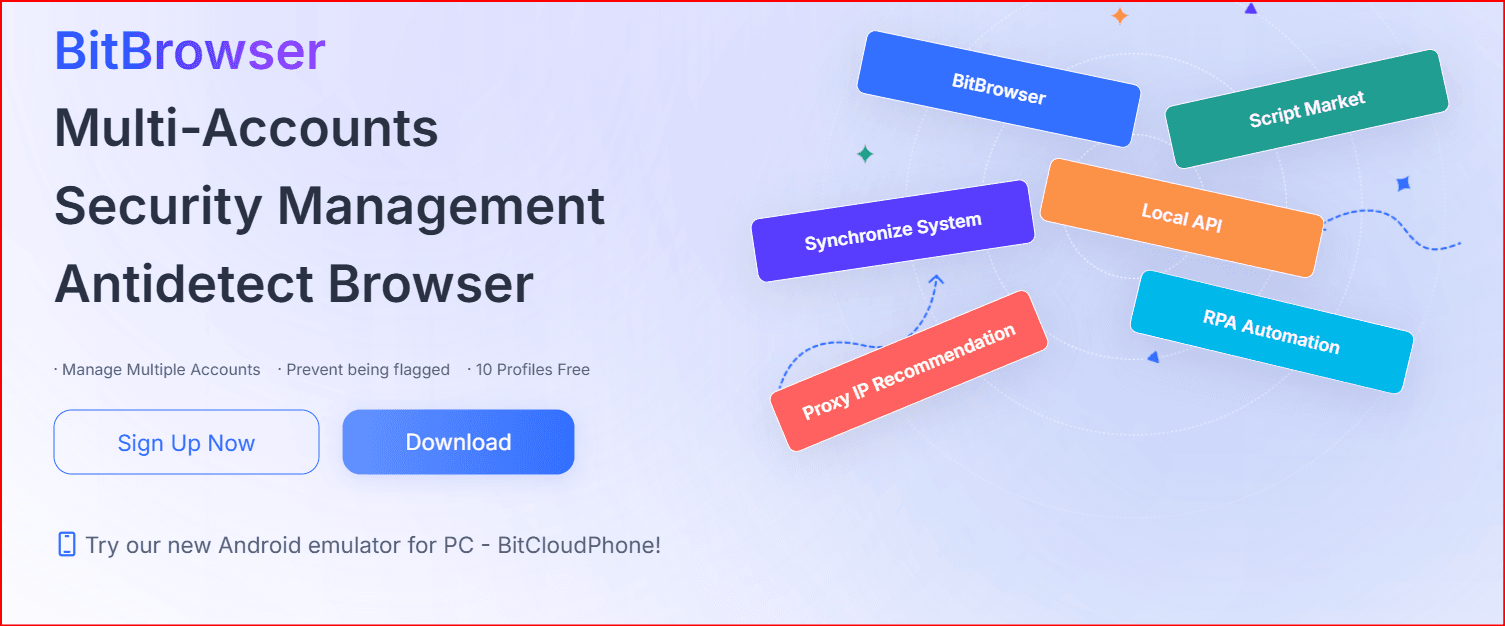
How BitBrowser Fits Into a Scraping Workflow
A typical browser-based data-collection setup can look like this:
Scraping Script / Automation Tool
↓
BitBrowser Profile
↓
Dedicated Proxy Configuration
↓
Target Website
For example, you could create separate BitBrowser profiles for different projects or proxy locations:
| Browser Profile | Proxy | Example Purpose |
|---|---|---|
| Profile 01 | US Proxy | US search-result monitoring |
| Profile 02 | UK Proxy | UK pricing research |
| Profile 03 | Germany Proxy | Localized SERP collection |
| Profile 04 | France Proxy | Regional content monitoring |
| Profile 05 | Spain Proxy | Market and competitor research |
This makes it easier to keep sessions, cookies, proxy credentials, and project configurations separated instead of rebuilding the browser environment every time.
BitBrowser Local API for Automation
For larger workflows, BitBrowser also provides a Local API that can be integrated into custom applications and automation systems.
According to BitBrowser's current documentation, its API environment can be used to manage browser profiles and automate browser operations, while the platform supports integration with tools including Selenium and Puppeteer.
A developer could therefore build a workflow such as:
Python / Node.js Application
→ BitBrowser Local API
→ Launch Browser Profile
→ Load Assigned Proxy
→ Run Selenium/Puppeteer Task
→ Collect Authorized Public Data
This structure can be more manageable than manually launching browsers and assigning proxies individually when working with dozens of environments.
BitBrowser MCP and AI-Assisted Automation
BitBrowser 7.1.5 also introduced support for the Model Context Protocol (MCP).
The update allows compatible AI clients to interact with supported BitBrowser management functions through its MCP/Local API environment. BitBrowser says MCP-compatible tools can perform operations such as launching or creating browser windows and working with profile configurations.
This creates another possible automation architecture:
AI Agent
↓
MCP Server
↓
BitBrowser
↓
Browser Profile + Proxy
↓
Web Workflow
For traditional deterministic scraping, scripts and the Local API will generally remain more appropriate. MCP becomes more interesting when an AI-assisted workflow needs to interact with browser-management tools.
Why Combine BitBrowser With Proxy Providers?
Combining BitBrowser with providers such as ProxyLine, SpaceProxy, ProxyStores, TakeProxy, or another compatible proxy service can provide several operational benefits:
- Separate browser environments for different scraping or research projects
- Individual proxy assignment for each profile
- Persistent cookies and sessions
- Easier organization of geographically distributed workflows
- Integration with Selenium and Puppeteer
- Local API support for developer automation
- Batch browser-profile management
- Reduced need to repeatedly reconfigure one browser
- Better separation between different projects and client environments
For example, instead of running 20 automation jobs through one browser configuration, a team could maintain separate BitBrowser environments with their own proxy endpoints and session data.
Proxy Infrastructure + Browser Environment
It is useful to think of the two technologies as separate layers.
The proxy provider controls the network layer:
- IP address
- country or city
- subnet
- proxy protocol
- network reputation
- bandwidth and traffic rules
BitBrowser manages the browser-environment layer:
- browser profiles
- cookies
- local storage
- proxy configuration
- extensions
- browser sessions
- automation integrations
- profile organization
Neither replaces the other.
A high-quality proxy cannot organize browser sessions, while a browser-profile manager cannot replace the IP infrastructure supplied by a proxy network.
Used together, however, they can create a more structured environment for legitimate browser automation, QA, SEO monitoring, market research, and authorized web-data collection.
Practical Example
Suppose you are monitoring public search results across five countries.
You could create five BitBrowser profiles and assign one proxy location to each:
United States Profile → US Proxy
United Kingdom Profile → UK Proxy
Germany Profile → German Proxy
France Profile → French Proxy
Spain Profile → Spanish Proxy
Each profile can preserve its own session and configuration while an automation framework controls the browser.
This makes the environment easier to reproduce and manage when compared with constantly replacing proxy settings and browser state inside a single profile.
Final Note on BitBrowser
For scraping projects based entirely on direct HTTP requests, a dedicated browser-profile platform may not always be necessary.
However, when the workflow depends on real browser sessions, JavaScript-rendered pages, Selenium, Puppeteer, persistent sessions, multiple proxy configurations, or browser automation, BitBrowser can serve as the browser-management layer around the proxy infrastructure.
Its current combination of independent profiles, proxy configuration, Local API support, automation integrations, and MCP functionality makes it especially relevant for more structured browser-based workflows in 2026.
Final Thoughts
After reviewing these five providers, the clearest difference between them is not simply price—it is the amount of control each service gives you over the underlying proxy infrastructure.
ProxyLine provides a particularly broad combination of IPv4/IPv6 availability, HTTP/SOCKS5 compatibility, subnet selection, and API-based management.
SpaceProxy and ProxyStores are worth evaluating when affordability and the ability to purchase multiple IP addresses are important.
TakeProxy provides a more straightforward private-proxy option for developers who do not need a complex residential rotation platform.
OnlyProxy may be useful as an additional or backup supplier, although its current features should be verified directly before a larger deployment.
The most important lesson from proxy testing is that there is no universally perfect proxy.
Real-world performance depends on the proxy type, IP reputation, network diversity, target website, request frequency, crawler behavior, and the anti-abuse systems used by the destination site.
For production scraping, start small, test with the actual target, measure your error rates, and scale only after confirming that the infrastructure performs consistently.
FAQ
What should I look for in a proxy provider for web scraping?
The most important factors include connection stability, IP reputation, subnet diversity, HTTP/SOCKS5 compatibility, geographic availability, API support, traffic limits, and the ability to scale the proxy pool.
Are datacenter proxies suitable for web scraping?
Yes. Datacenter proxies can work very well for public websites, SEO tools, high-speed crawling, monitoring, and general data collection. Websites with more advanced anti-bot protection may require residential, ISP, or mobile proxy infrastructure.
Should I use HTTP or SOCKS5 proxies for scraping?
HTTP proxies are sufficient for many standard web crawlers. SOCKS5 offers greater protocol flexibility and can be useful for broader automation environments.
How many proxies do I need?
There is no universal number.
A lightweight crawler might operate with only a few proxies, while large data-collection systems may require hundreds or thousands.
The appropriate pool size depends on factors such as request volume, target-site rate limits, geographic requirements, concurrency, and IP reputation.
Why does subnet diversity matter?
A large number of IP addresses does not necessarily provide strong infrastructure diversity if they originate from the same small group of network ranges.
Using proxies distributed across multiple networks and subnets can provide more flexibility for distributed crawling.
Should I test proxies before buying a large package?
Yes.
Testing a small package against your actual target websites is one of the most useful ways to evaluate a provider.
Measure connection reliability, response latency, HTTP errors, rate limiting, CAPTCHA frequency, and successful request rates before scaling.

 Multi-Account Management
 Prevent Account Association
 Multi-Employee Management
Recommended
See More