Best Dating Apps 2026 Ranking: Top 5 Picks Tested & Reviewed
 2026.08.06 07:13
 YT.Shi
Dating apps in 2026 are packed with more users, smarter matching features, AI tools, video prompts, verification steps, and subscription options than ever.
That’s great, but it also makes choosing the right app harder. You don’t want to spend weeks on a platform that doesn’t fit your goals or pay for features you never use.
This guide compares the best dating apps in 2026, focusing on what actually matters in daily use.
We’re comparing based on:
· Features and matching quality
· Pricing and whether premium is worth it
· User experience (the part nobody puts in screenshots)
· Platform support (iOS, Android, web)
· Safety and privacy basics (verification, controls, reporting)
Later, we’ll also look at how platforms handle multiple accounts and how BitBrowser can help separate sessions for users who need to manage different dating profiles.
How We Selected the Best Dating Apps in 2026
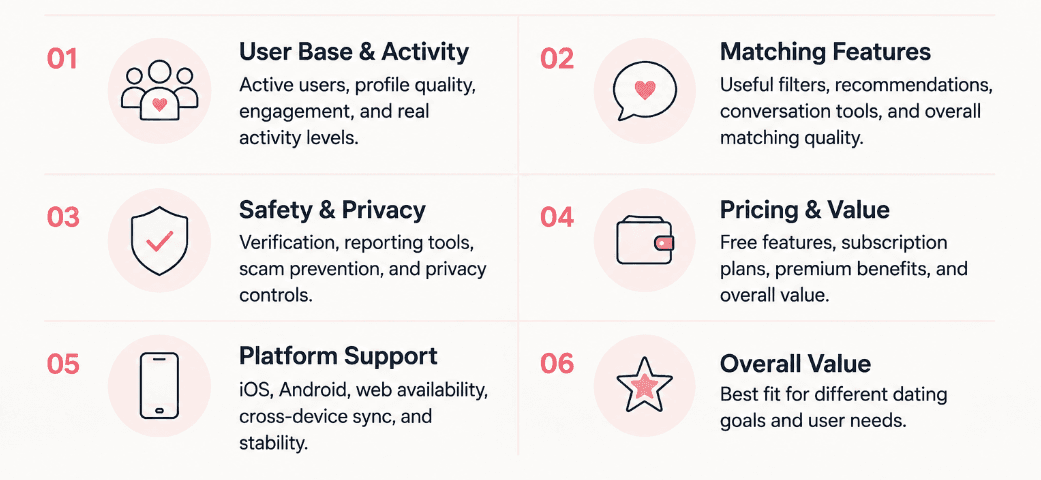
Choosing the best dating apps is not just about popularity. We compared each platform based on real user experience, including matching quality, pricing, safety features, platform support, and overall value for different dating goals.
Top 5 Best Dating Apps in 2026
1. Hinge (Best overall for relationship minded dating)
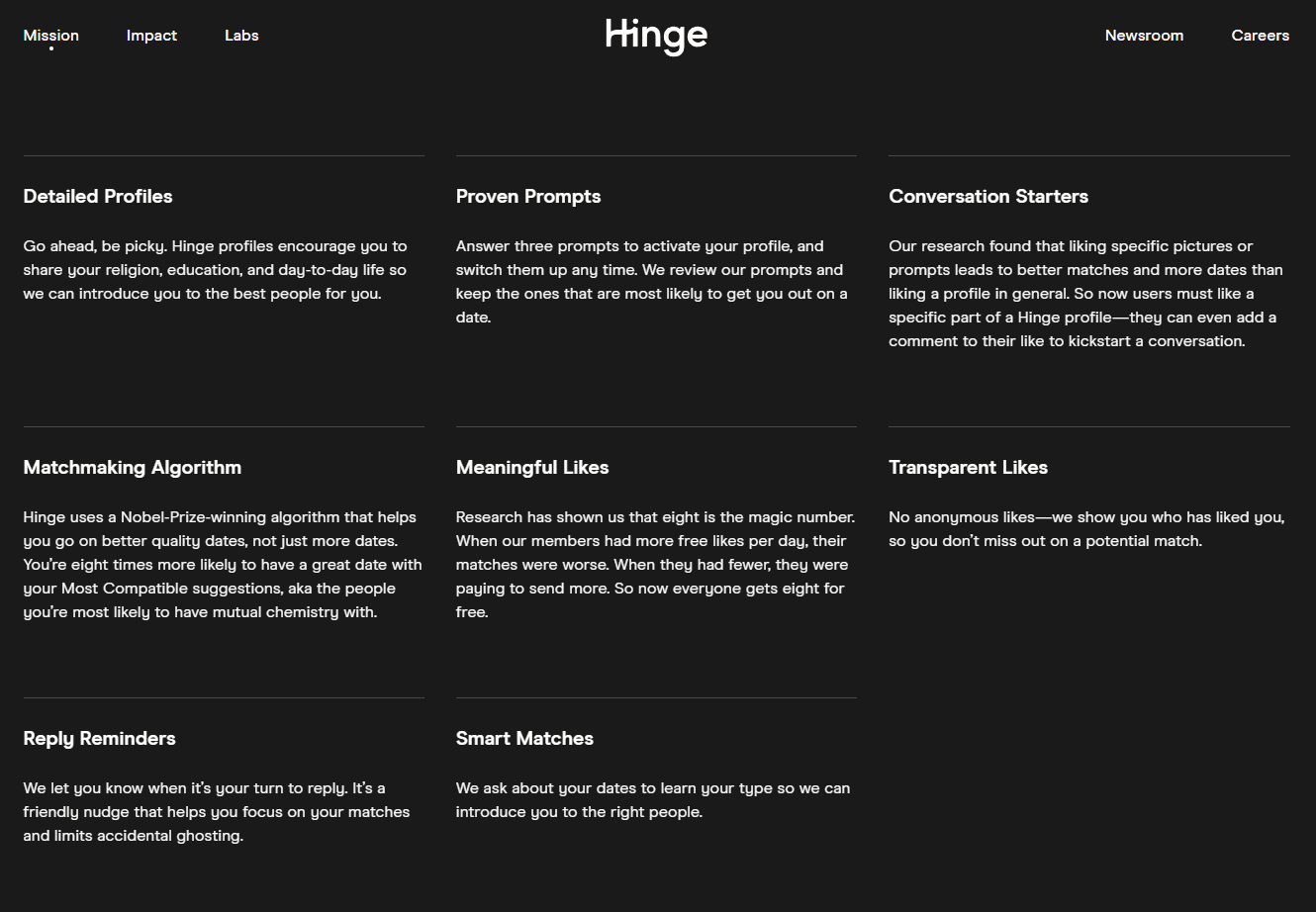
Hinge is still the app I recommend first if you want a relationship and you don’t want to spend your life swiping. It’s not perfect. But it’s consistently the best blend of “people here are trying” and “the product pushes you toward actual conversation.”
The prompt based profile system is the real win. It gives you a way in. You’re not just liking a face, you’re liking a sentence, a joke, a specific detail. That reduces the awkward opening message problem a bit.
● Best for: People looking for a relationship, users who enjoy reading detailed profiles, and anyone tired of endless swiping without meaningful dates.
● Pricing: Free plan available. Paid tiers vary by region, usually in the ~$20 to $40/month range depending on plan length
● Supported platforms: Hinge is available only as a mobile app for iOS and Android; the company has not released a desktop or web version. You can run mobile apps seamlessly on your desktop using a cloud phone.
● Active user base: Hinge has ~15 million global monthly active users (as of Oct 2025). Gen Z users make up more than half of the monthly active user base.
Standout features
1. Prompt based profiles with likes on specific sections
2. Strong profile depth (photos plus text, plus video/voice prompts)
3. Better than average match relevance in many cities
4. Decent controls for preferences and dealbreakers
Pros: The app feels more intentional than swipe-first platforms, makes it easier to start natural conversations, has less spam than larger dating apps, and works well for users aged 25+ who want more meaningful connections.
Cons: The user base can feel smaller in some regions compared with Tinder, premium features are relatively expensive and heavily promoted, and users in smaller cities may still encounter repeated profiles.
AI features: Recently introduced AI tools include match recommendations and prompt feedback to help users improve their profiles and conversation starters.
2. Bumble (Best for women-first dating dynamics and cleaner interactions)
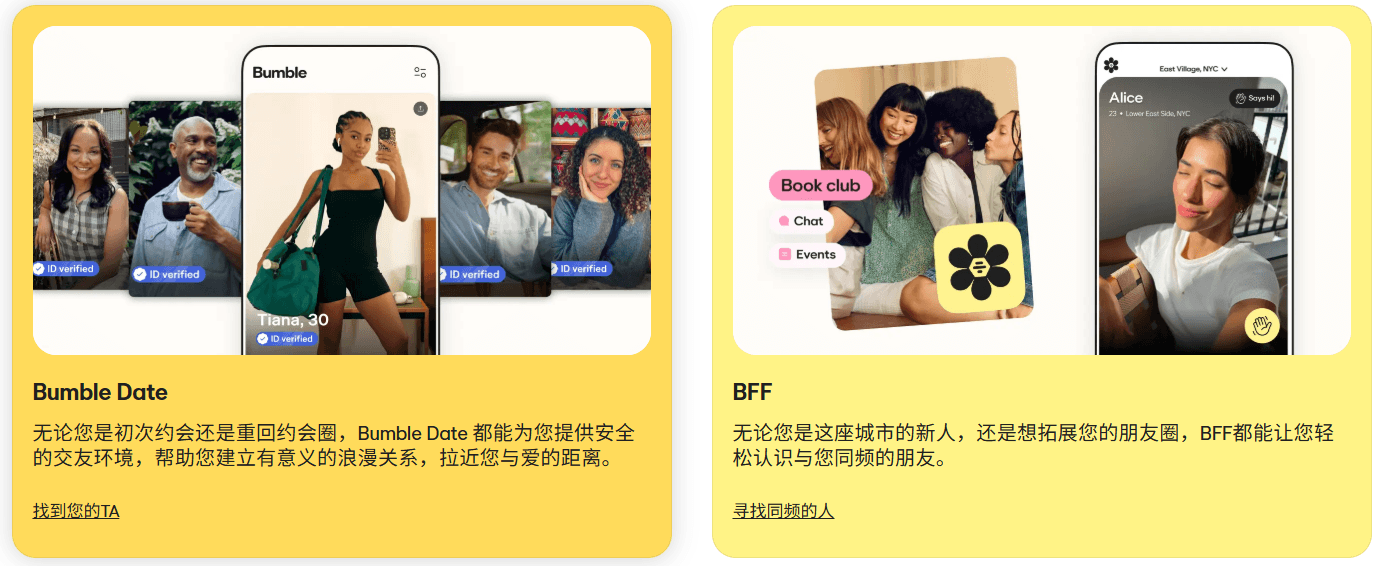
Bumble has matured into a pretty stable choice, especially if you like a more controlled conversation dynamic. In heterosexual matches, women message first, which changes the vibe. Not always, but often enough to matter.
Also, Bumble tends to have a slightly more “presentable” user base in many areas, like people are trying to look normal and dateable, not just collect matches.
Bumble also has BFF and Bizz. I’m not ranking those modes here, but it does make the app feel like a broader social tool, not only dating.
● Best for: Women who prefer more control over first contact, users looking for a mainstream dating app with stronger moderation, and people who want a friendlier experience than Tinder.
● Pricing: Free plan available. Premium usually ~$20 to $45/month depending on plan length/region
● Supported platforms: iOS, Android, limited Bumble web functionality
● Active user base: Bumble remains a major dating app in 2026 with millions of active users worldwide, although its user growth and paid subscriptions have declined in recent years. Bumble has one of the most balanced gender ratios among dating apps, with ~59% female users. Approximately 72% of users are under 35.
Standout features
1. Women message first (hetero matches)
2. Strong verification and safety prompts
3. Video/voice profile features
4. Separate modes: Date, BFF, Bizz
Pros: Bumble tends to have fewer unwanted openers, offers an easy-to-use interface with a low learning curve, and provides a good balance between serious and casual dating depending on the location.
Cons: Expiring matches can create pressure, premium plans can become expensive, and some users may not put enough effort into completing their profiles.
3. Tinder (Best for the biggest dating pool, and yes it still works)
Tinder in 2026 is still the biggest pool. That’s the reason it’s on the list. Even if you hate Tinder, your city probably still has the most people on Tinder.
It’s also the app where your experience changes the most depending on your photos, your location, and honestly your willingness to pay for boosts. The free version works, but it can feel like you’re playing on hard mode.
If you’re in a smaller town, Tinder can be the difference between seeing 30 people and seeing 300. That matters.
● Best for: People looking for casual dating, users in smaller cities who need a larger pool of matches, and anyone who prefers more options with flexible filters.
● Pricing: Free plan available, with multiple paid tiers typically ranging from around $15 to $60+ per month depending on the plan and region.
● Supported platforms: Tinder has official iOS and Android apps plus a fully functional web version
● Active user base: Tinder remains the world’s largest dating app, with around 75 million monthly active users, 26 million daily users, and 9.8 million paid subscribers, though its user base declined slightly in 2026. Tinder’s user base is mainly young, with around 60% aged 18–30 and Gen Z as the dominant group, while the gender split is about 75% male and 24% female.
Standout features
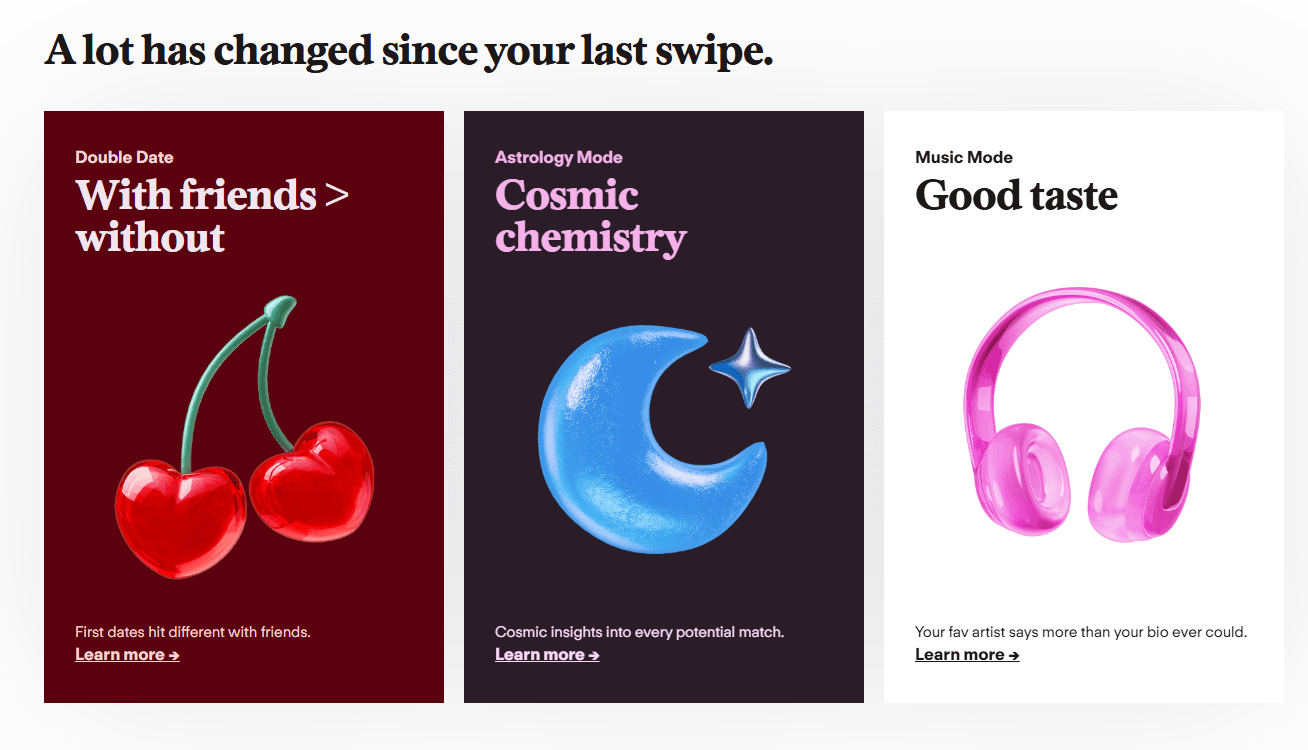
1. Combines classic swiping with AI recommendations, Top Picks, and discovery modes like Music Mode, Astrology Mode, and Video Speed Dating.
2. Offers subscriptions with unlimited likes, Super Likes, Boosts, Passport, and Likes You features to improve matching efficiency.
3. Provides a full desktop web version for swiping, chatting, and profile management without relying only on mobile.
4. Safety and verification features: Includes Face Check, AI-powered message safety tools, and contact blocking to improve trust and reduce harmful interactions.
5. Uses Events and experimental features like Missed Connections to help users move from online matching to offline interactions.
Pros: Tinder has one of the largest user pools in most regions, works for both casual dating and relationships, and offers a simple and efficient experience.
Cons: It has more spam and scams compared with some competitors, can feel pay-to-be-seen, and many profiles may lack detailed information.
Major 2026 features (Sparks 2026 event): Tinder unveiled its biggest product overhaul in years with 10+ new features, including: AI matching, photo analysis, face verification, astrology and music-based matching, video speed dating, local events, and AI-powered safety tools.
4. OkCupid (Best for detailed matching and nontraditional preferences)
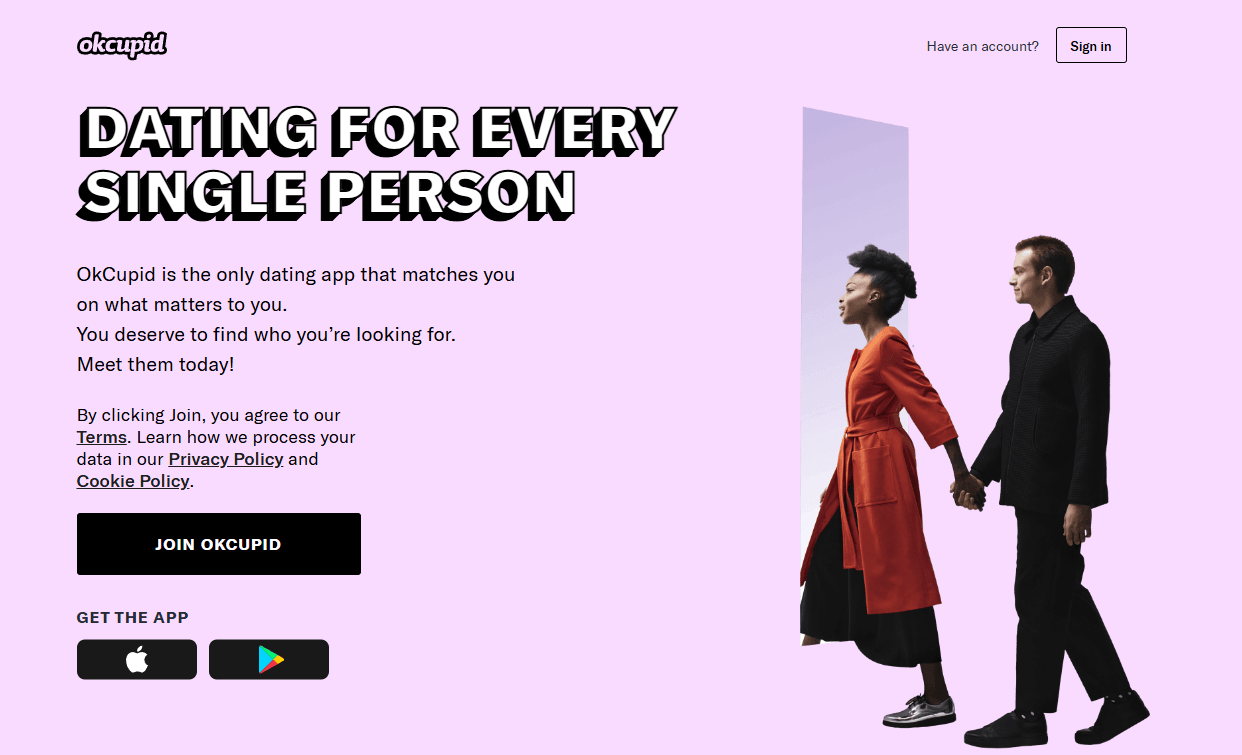
OkCupid is not the trendiest app anymore, but it’s still one of the best if you want depth. Questions. Compatibility. People stating what they want clearly. It attracts users who are more likely to fill things out, which automatically improves your odds if you’re picky.
It’s also a strong pick for people who want more nuanced identity, orientation, and relationship style options, depending on region.
● Best for: People seeking meaningful matches based on lifestyle, identity, and relationship goals.
● Pricing: Free plan available. Free plan available with generous free messaging (you can message anyone on the free tier). Premium plans typically cost around $20–$40/month depending on region and duration.
● Supported platforms: OkCupid is available on iOS, Android, and web (desktop browser).
● Active user base: OkCupid has over 50 million registered users, around 10 million monthly active users, and about 1 million daily logins, making it smaller than Tinder and Bumble in overall scale. OkCupid’s users are mostly 25–34 years old, with a 65% male and 35% female split, while its wide range of gender and orientation options makes it one of the most inclusive dating apps.
Standout features
1. Large question bank and compatibility scoring
2. Cupid's Picks: Algorithm-selected highly compatible profiles based on preferences and answered questions
3. Strong profile fields and intent options
4. Good filtering if you’re specific about lifestyle, politics, etc.
5. Web experience is solid
Pros: Focuses more on values and compatibility, supports diverse dating preferences, and feels less swipe-focused.
Cons: Smaller user base in some areas, occasional spam, and a busier interface than some competitors.
AI integration: OkCupid uses ChatGPT to generate new profile prompts
Hebrew version launch (2026): New personalized questions for diverse lifestyles
5. Coffee Meets Bagel (Best for slower, curated dating and less burnout)
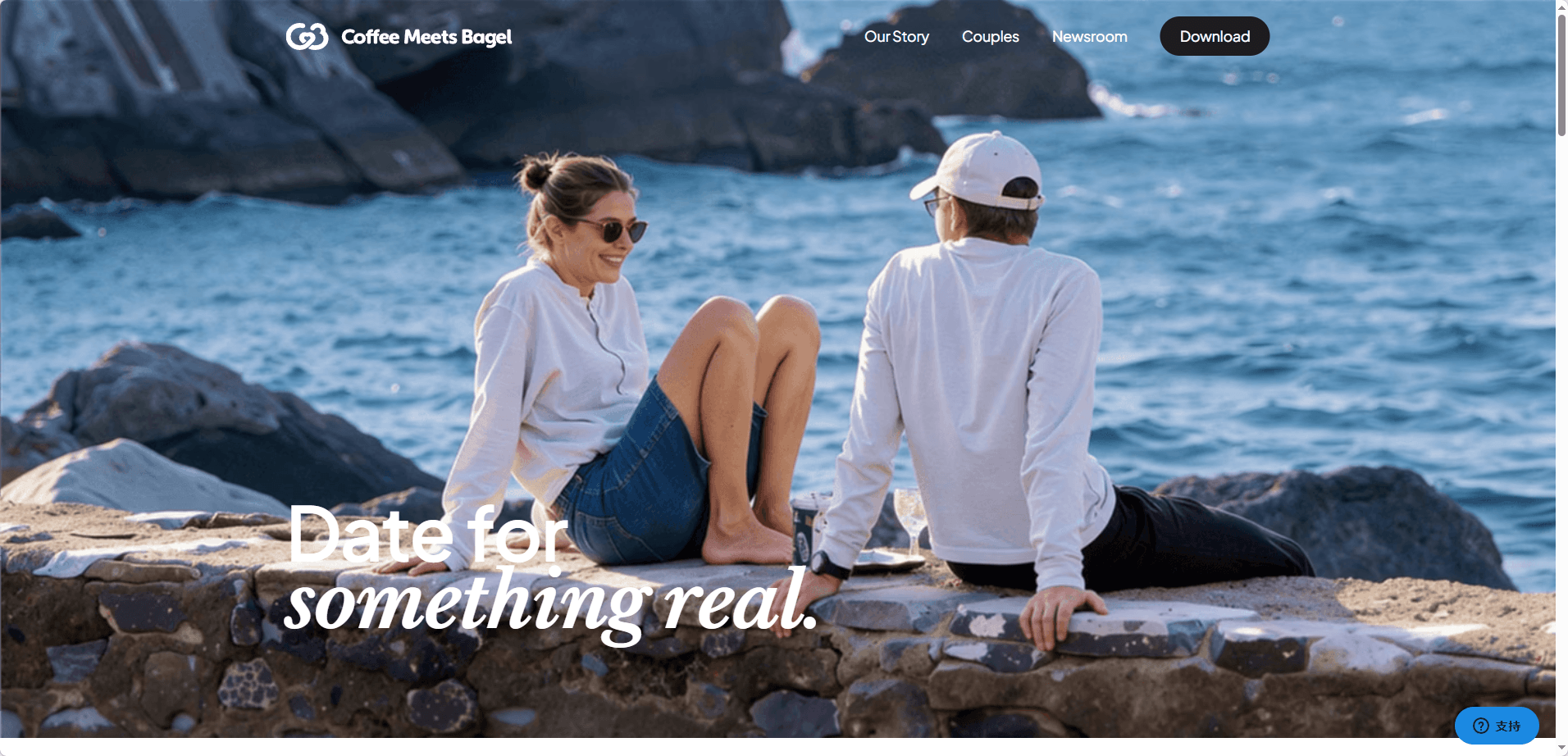
Coffee Meets Bagel is the anti doomscroll app. It’s slower. More curated. Less “here are 500 faces, good luck.” That’s why it works for some people.
If you get overwhelmed by Tinder or even Hinge, this can feel calmer. You get a smaller set of suggested matches, and you’re nudged to actually look at them. Which sounds obvious but apparently isn’t, in modern dating.
● Best for: People who prefer quality matches, slower dating, and less swipe fatigue.
● Pricing: Free plan available, with premium plans typically costing around $25–$45/month depending on region and plan.
● Supported platforms: Coffee Meets Bagel is exclusively available on iOS and Android. There is no official web or desktop version.
● Active user base: Coffee Meets Bagel has around 10 million registered users, with a smaller active user base of about 137,600 Android MAU and roughly 40,000–60,000 monthly downloads, making it a niche dating app compared with larger platforms. Coffee Meets Bagel attracts older, educated users, with around 60% aged 30–49, a 62.5% male and 37.5% female split, and most users seeking serious relationships rather than casual dating.
Standout features
1. Provides limited, personalized matches each day to reduce overwhelm and encourage more intentional decisions.
2. Uses detailed profiles, prompts, and AI suggestions to help users start better conversations and find compatibility.
3. Features like chat limits and date suggestions encourage users to move from online chats to offline meetings.
4. Offers selfie verification, ID verification, and AI moderation to reduce fake profiles and improve user safety.
Pros: More intentional dating pace, higher quality conversations, and a good fit for busy professionals.
Cons: Smaller user pool in some areas, fewer daily matches, and premium features may feel necessary.
Dating Apps at a Glance: Top 5 Picks for 2026
How to Choose the Right Dating App for You
The best app depends on what you want:
● For relationships: Start with Hinge. Bumble is a good alternative, and OkCupid works well if you care about values and compatibility.
● For casual dating: Tinder still offers the largest pool. Bumble can also work depending on your location.
● If you hate swiping: Try Coffee Meets Bagel or set limits on Hinge to avoid endless scrolling.
● For specific preferences or identities: OkCupid offers the most detailed options and filters.
● If budget matters: Use free plans first. Consider one month of premium as a boost, but avoid paying for multiple apps at the same time.
● For privacy and safety: Look for apps with photo verification, blocking tools, reporting systems, and visibility controls. Enable features like two-factor authentication when available.
Can I Use Multiple Accounts on the Same Dating App?
From my experience, dating apps usually don’t rely on a single signal to detect multiple accounts. Instead, they combine different technical and behavior patterns to estimate whether accounts are connected.
Common signals include:
● Device and browser information: Device model, OS version, app identifiers, browser fingerprint data, fonts, WebGL, timezone, and language settings.
● Network signals: IP address, approximate location, VPN or proxy detection, reused IP ranges, and signup timing patterns.
● Profile similarities: Reused photos, similar bios, prompts, or personal information.
● Behavior patterns: Similar swipe habits, activity schedules, messaging styles, and location patterns.
● Account details: Reused phone numbers, emails, or recovery information.
If accounts are linked, possible consequences include reduced visibility, additional verification requests, feature restrictions, or account suspension if the platform believes there is a policy violation. In some cases, issues on one account may also affect related accounts.
Check Your Browser fingerprint
How to Manage Multiple Dating Profiles Safely with BitBrowser
There are legit reasons to keep separate dating profiles.
There are several reasons people may want separate dating profiles, such as different dating goals, protecting privacy online, or keeping online identities separate.
Doing this in a regular browser can get messy. Cookies, sessions, and browser data can overlap, making it easy to switch into the wrong account.
This is where a tool like BitBrowser comes in. The core idea is simple: it helps you create separate browser environments manage multiple dating profiles with its own cookies, cache, local storage, and fingerprint configuration.
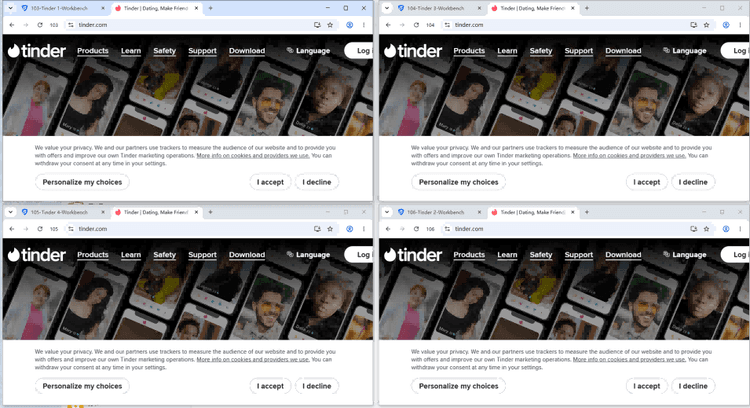
What BitBrowser helps with (practical version)
● Separate sessions: Each dating account stays logged in to its own isolated browser profile.
● Cookie isolation: No accidental cross-login, fewer “why am I suddenly logged out” issues.
● Fingerprint separation: Different browser profiles can present different fingerprint parameters, which helps reduce obvious linkage on the web.
● Team and profile management: If you’re managing multiple environments, it’s easier to keep organized.
Conclusion
Choosing the best dating app in 2026 depends on what you actually want. Hinge is a strong choice for relationships, Tinder offers the biggest pool, Bumble provides a more controlled experience, OkCupid is better for detailed matching, and Coffee Meets Bagel suits people who prefer slower dating. The “best” app is not always the biggest one. It’s the platform that matches your dating goals, budget, and preferred experience.
FAQ
1. Which dating app is best in 2026?
Hinge is the best overall choice for relationship-focused dating, while Tinder remains the best for the largest user pool.
2. Are paid dating app subscriptions worth it?
They can help with visibility and extra features, but try the free version first before paying.
3. Can I use multiple accounts on a dating app?
Some people manage separate profiles for different reasons, but platforms may detect linked accounts through device, network, and behavior signals.
4. Which dating app has the most users?
Tinder remains the largest dating app globally, with around 75 million monthly active users.
5. How can I improve privacy when using dating apps?
Use verification features, control profile visibility, avoid sharing unnecessary personal details, and enable two-factor authentication when available.
6. Can BitBrowser help manage multiple dating profiles?
BitBrowser helps users organize separate browser environments by isolating cookies, sessions, local storage, and browser settings for different profiles. It is useful for keeping accounts organized, but users should always follow each dating platform’s rules and policies.

 Multi-Account Management
 Prevent Account Association
 Multi-Employee Management
Recommended
See More