Cloud Phone Farm vs Physical Phone Farm: Which One Should You Choose in 2026
 2026.08.18 06:14
 YT.Shi
If you have been researching ways to manage multiple social media accounts, run automated marketing campaigns, or test mobile apps at scale, you have probably come across the term "phone farm." You might have seen images of racks filled with dozens or even hundreds of smartphones, all connected to chargers and running tasks around the clock.
But here is the reality in 2026: physical phone farms are becoming outdated. Cloud phone farms have emerged as a smarter, more affordable, and far more practical alternative for most users.
This guide will break down everything you need to know about cloud phone farms and physical phone farms. We will compare the costs, the maintenance requirements, the flexibility, and the real-world use cases.
Top 10 Phone Farming Apps in 2026
Real-World Applications
Both physical and cloud phone farms are used for similar purposes:
· Social media management. Running multiple accounts on platforms like TikTok, Instagram, Facebook, and Twitter without triggering detection systems.
· App testing. Testing mobile applications across different device configurations and operating system versions.
· Automated marketing. Running scripts for following, liking, commenting, and posting at scale.
· Crypto operations. Participating in airdrops, managing multiple wallets, and farming rewards.
· Market research. Gathering data from multiple geographic locations and device types.
Cloud phone farms are particularly well suited for social media and marketing operations because they provide complete account isolation. Each instance has its own unique device ID, Android version, screen resolution, and network environment. Platforms treat each account as a distinct real user, reducing the risk of bans and restrictions.
What Is a Phone Farm?
A phone farm is simply a collection of multiple smartphones organized and controlled together to perform scaled mobile operations. These operations can include managing multiple social media accounts, testing apps across different devices, running automation scripts, or participating in crypto airdrops.
The concept is straightforward: more devices mean more accounts and more output. The challenge has always been how to manage all those devices effectively.
What Is a Physical Phone Farm?
A physical phone farm is exactly what it sounds like. You purchase real smartphones, set them up on racks, connect them to power sources, and run your operations directly on the hardware.
Building a physical phone farm takes serious planning and investment. Here is what you need:
· The devices themselves. Most operators buy budget Android phones, often used or refurbished models, costing around $30 to $50 per device. For a farm of 50 phones, that is already $1,500 to $2,500 just for the hardware.
· Power infrastructure. You need charging hubs, power distribution boards, and surge protection. Fifty phones can draw around 200 to 300 watts of continuous power. That adds up on your electricity bill.
· Organization and cooling. Racks to hold the phones, cable management systems, and ventilation to prevent overheating are all essential. Without proper cooling, your devices will fail prematurely.
· Network connectivity. You need reliable WiFi, sometimes multiple routers, and often individual proxy configurations for each device to ensure unique IP addresses.
· Maintenance and monitoring. This is where physical farms become a nightmare. Batteries degrade. Devices fail and need troubleshooting. Cables wear out. Someone has to physically interact with devices that get stuck or need resets. Above 20 devices, you are looking at daily maintenance work.
The Pros of Physical Phone Farms
Physical phone farms offer one major advantage: authenticity. Because you are using real hardware, the device signals are genuine. There is no emulation layer for platforms to detect. For operations where detection resistance is absolutely critical, physical devices provide the highest level of trust.
The Cons of Physical Phone Farms
The downsides are significant. The upfront costs are high. The ongoing maintenance is relentless. Scaling up means buying more phones, finding more space, and managing more cables. And when your needs decrease, you are left with idle hardware that continues to depreciate.
What Is a Cloud Phone Farm?
A cloud phone farm replaces physical hardware with virtual Android environments hosted in data centers. You access these cloud phones remotely through your browser or desktop application.
Instead of buying phones, setting up racks, and dealing with cables, you simply rent cloud phone instances on demand. Each instance runs on real ARM architecture, the same CPU type found in physical phones, which means they produce hardware identifiers much closer to real devices than traditional PC emulators.
What Does a Cloud Phone Farm Require?
The requirements are remarkably simple:
· A cloud phone provider. You choose a platform that offers cloud-based Android environments (like BitCloudPhone).
· An internet connection. You access your cloud phones through a web browser or app.
· A dashboard. You manage all your cloud phone instances from a single control panel, assigning unique device fingerprints, IP addresses, and configurations to each one.
That is it. No hardware. No power bills. No cooling systems. No physical maintenance.
The Pros of Cloud Phone Farms
· Low startup costs. Instead of spending thousands on hardware, you pay a subscription fee. Cloud phone environments typically cost around $7 to $10 per month per device.
· No maintenance. The provider handles device health, power, cooling, and connectivity. You focus on your operations, not on fixing broken phones.
· Instant scaling. Adding a new phone to your farm means creating a new profile in your dashboard, not buying and setting up a new device.
· Team collaboration. Multiple team members can access and manage cloud phone instances from anywhere, with proper permission controls.
· Geographic flexibility. Cloud phones can present various geographic profiles when paired with location-matched proxies, regardless of where the data center is located.
The Cons of Cloud Phone Farms
Cloud phone farms have an ongoing subscription cost rather than a one-time hardware purchase. Additionally, some advanced platforms may query sensor data that cloud phone instances cannot fully replicate. However, for the vast majority of use cases, these limitations are not dealbreakers.
Top 10 Best Cloud Phones in 2026
Physical Phone Farm vs Cloud Phone Farm
Compare the main differences between physical and cloud based phone farms.
Factor | Physical Phone Farm | Cloud Phone Farm |
|---|---|---|
Hardware | You buy and own the phones | Hardware is managed by the provider |
Initial Setup | Requires purchasing and connecting devices | Usually much faster |
Physical Space | Required | Not required |
Power and Cooling | Your responsibility | Usually handled by the provider |
Maintenance | You handle repairs and replacements | Provider handles infrastructure |
Remote Access | Requires additional tools | Usually built in |
Scaling | Buy and configure more devices | Add more devices through the service |
Team Access | Can require extra management tools | Often designed for shared access |
Hardware Control | Very high | Depends on the provider |
Upfront Cost | Usually higher | Usually lower |
Long Term Ownership | You own the equipment | You pay for ongoing access |
Which Solution Should You Choose?
Choose a Physical Phone Farm If:
· You need absolute maximum detection resistance and cannot tolerate any risk of detection.
· You have the physical space, the electrical capacity, and the staff to maintain the hardware.
· You plan to run the farm continuously for several years and want to amortize the hardware costs over a long period.
Choose a Cloud Phone Farm If:
· You want to start quickly with minimal upfront investment.
· You do not want to deal with hardware maintenance, battery degradation, or cable management.
· Your team needs to collaborate remotely on the same set of devices.
· You need the flexibility to scale up or down based on your current needs.
· You value your time and want to focus on your actual business operations rather than on fixing phones.
For the vast majority of users in 2026, cloud phone farms are the better choice. They eliminate the operational headaches of physical hardware while delivering the same core capabilities.
Why BitCloudPhone Is a Top Choice for Cloud Phone Farming
If you are looking for a practical cloud phone farm solution, BitCloudPhone is worth considering. It lets you manage multiple mobile environments from one dashboard without buying, connecting, and maintaining a large number of physical phones.
Realistic Android Environments
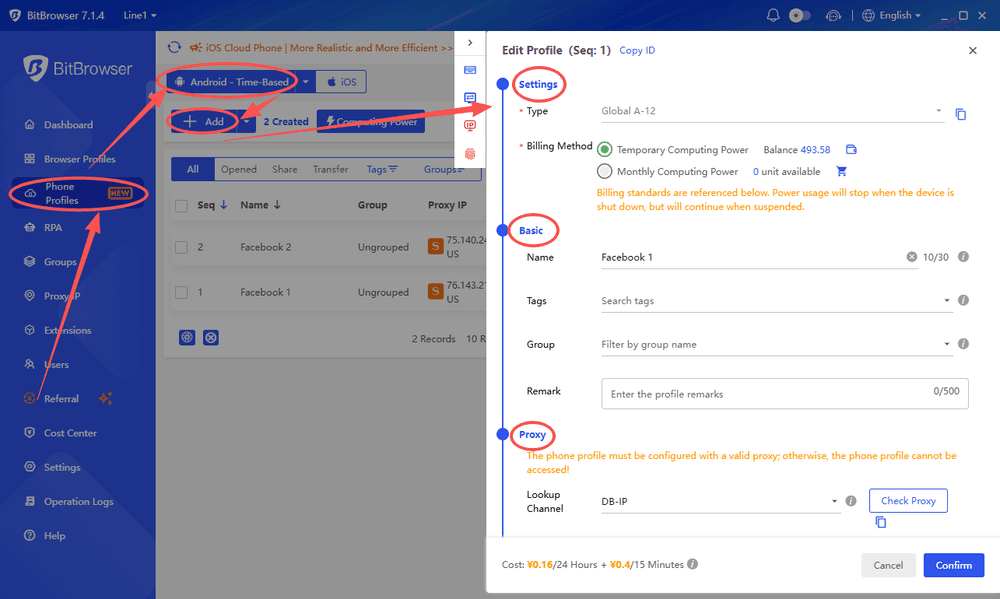
BitCloudPhone provides independent cloud Android instances based on ARM architecture. Each instance has its own device environment and identifiers, making it suitable for tasks such as app testing, social media management, and other multi device workflows.
You can create new cloud phones in minutes, configure a proxy, install apps, upload files, and manage devices remotely from your computer.
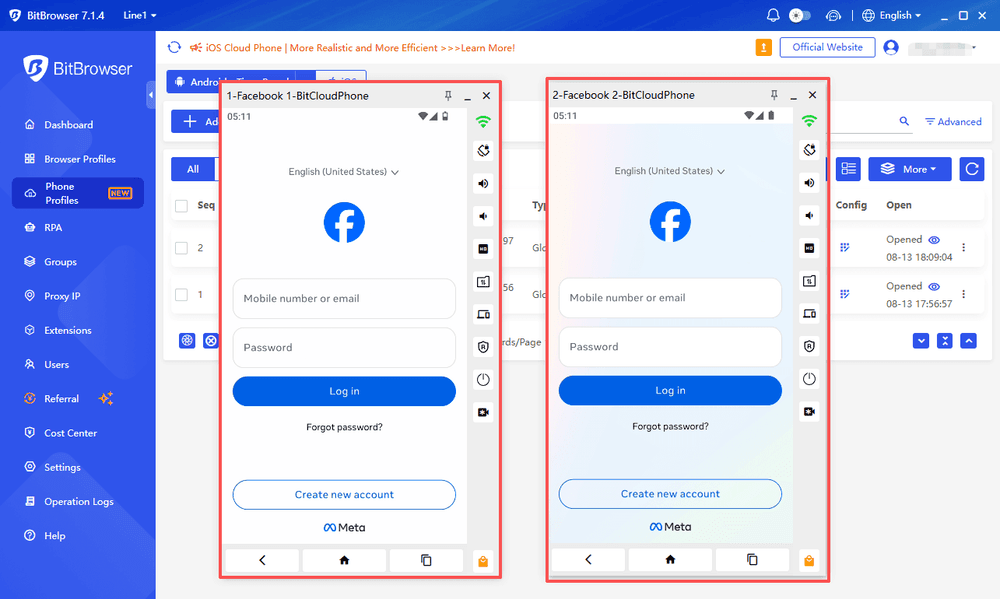
For example, you can easily create a second Facebook account using a cloud phone.
Easy Management and Automation
The control panel makes it easy to monitor multiple instances in one place. You can take screenshots, manage files, and handle repetitive tasks with built in automation features.
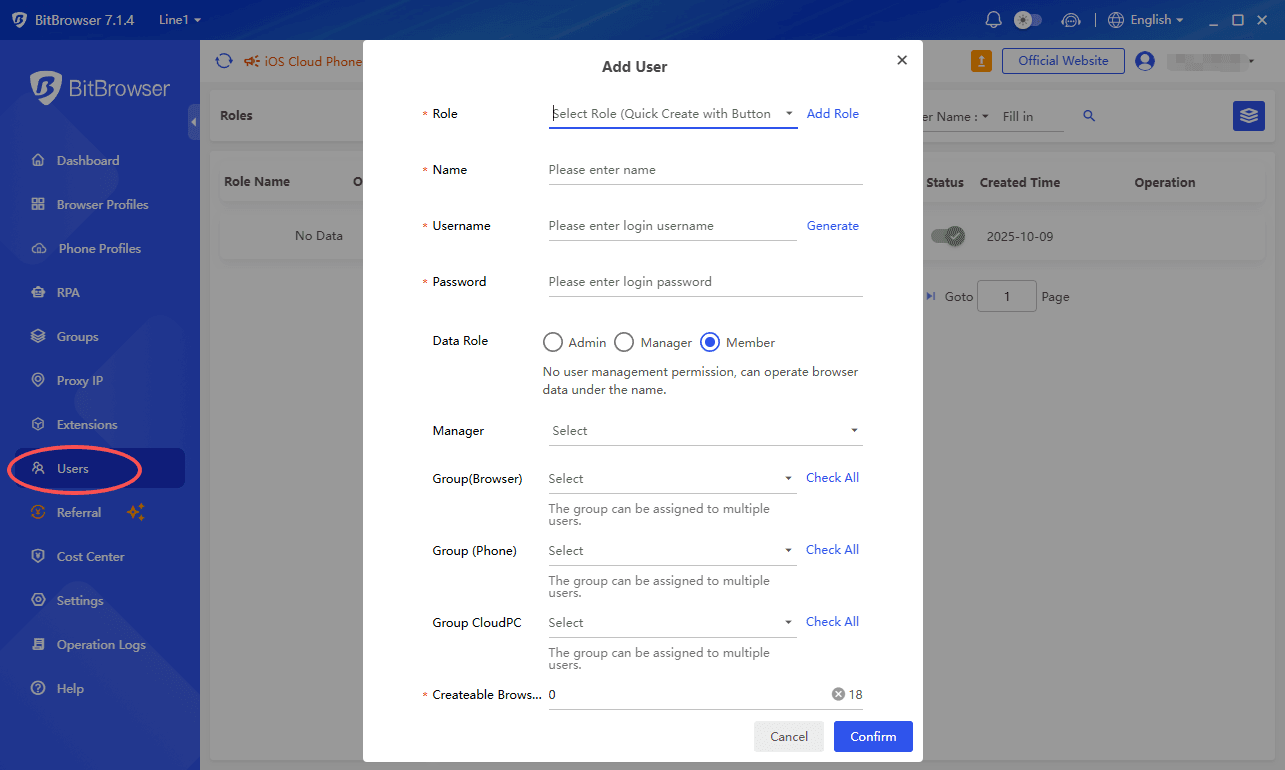
For teams, shared access and permission controls also make collaboration easier. You can add more instances as your workload grows without buying additional hardware.
BitCloudPhone for iOS
BitCloudPhone also offers an iOS cloud phone solution for users who need iOS environments instead of Android.
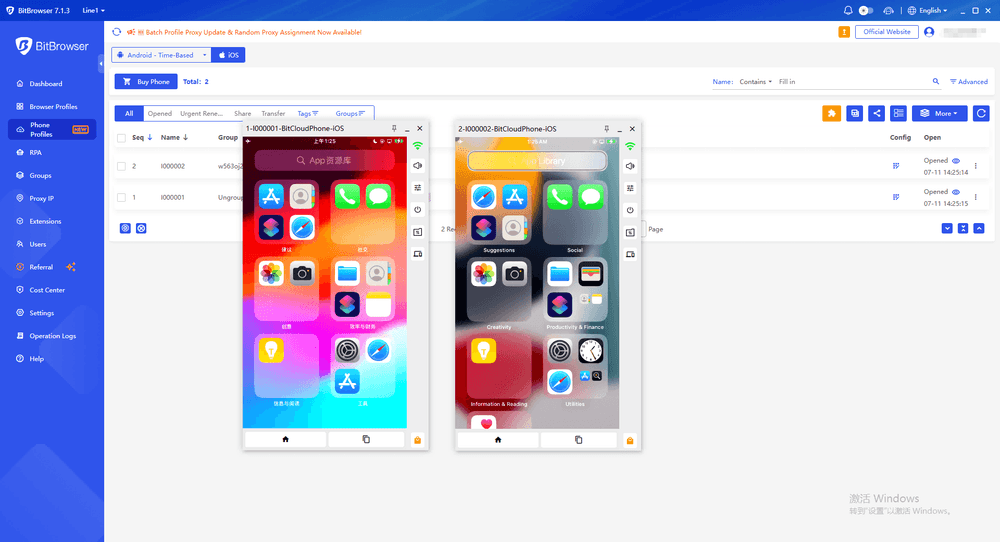
Its iOS cloud phones use real device based technology and provide access to dedicated A series chip resources, device identifiers, and sensors. You can manage multiple iOS environments from your computer, with features such as proxy support and centralized device management.
This gives users more flexibility when their workflows require both Android and iOS devices.
Learn more about BitCloudPhone iOS
Conclusion
The choice between a physical phone farm and a cloud phone farm ultimately depends on your budget, workflow, and need for hardware control. Physical phones can make sense when you need direct access to real hardware, but they also come with higher setup costs, maintenance work, and limited scalability.
For most users, a cloud phone farm offers a more flexible approach. You can start quickly, manage devices remotely, scale when needed, and avoid the everyday hassle of cables, batteries, power, and physical space.
If you want to manage multiple Android or iOS environments without building a large hardware setup, BitCloudPhone is worth exploring. Its cloud Android and iOS solutions provide a convenient way to manage multiple mobile environments from one platform.
Frequently Asked Questions
1. What is a phone farm?
A phone farm is a group of smartphones or cloud based mobile environments managed together. They can be used for app testing, social media management, automated workflows, market research, and other tasks that require multiple mobile environments.
2. Is a cloud phone farm better than a physical phone farm?
For many users, yes. Cloud phone farms usually require less upfront investment, take less time to set up, and are easier to scale and manage remotely. Physical phone farms can still be better when direct access to hardware is essential.
3. How much does a cloud phone farm cost?
The cost depends on the provider, device type, configuration, and subscription plan. Cloud phone services commonly charge a monthly fee per instance, while a physical phone farm requires upfront spending on phones, power equipment, networking, storage, and maintenance.
4. Can I use BitCloudPhone for both Android and iOS?
Yes. BitCloudPhone provides both Android cloud phones and an iOS cloud phone solution. This allows users to manage different mobile environments based on their specific workflow and app requirements.
5. Can a cloud phone farm replace physical phones?
For many software based tasks, it can. Cloud phones are especially useful when you need remote access, multiple independent environments, centralized management, or flexible scaling. However, physical phones remain preferable when your work depends on hardware features that a cloud environment cannot fully reproduce.

 Multi-Account Management
 Prevent Account Association
 Multi-Employee Management
Recommended
See More